

Posted on September 9, 2026
NIGHT HEAD synopsis – episode 16-17
Episode 16 – A Saint
broadcast date: february 4th 1993
Director / Screenplay:
Masayuki Ochiai (落合正幸) / George Iida (飯田譲治)
Naoto Kirihara – Etsushi Toyokawa (豊川悦司)
Naoya Kirihara – Shinji Takeda (武田真治)
additional cast can be viewed here

trigger warning: invasive, non-consensual medical procedures, including abortions and hysterectomies
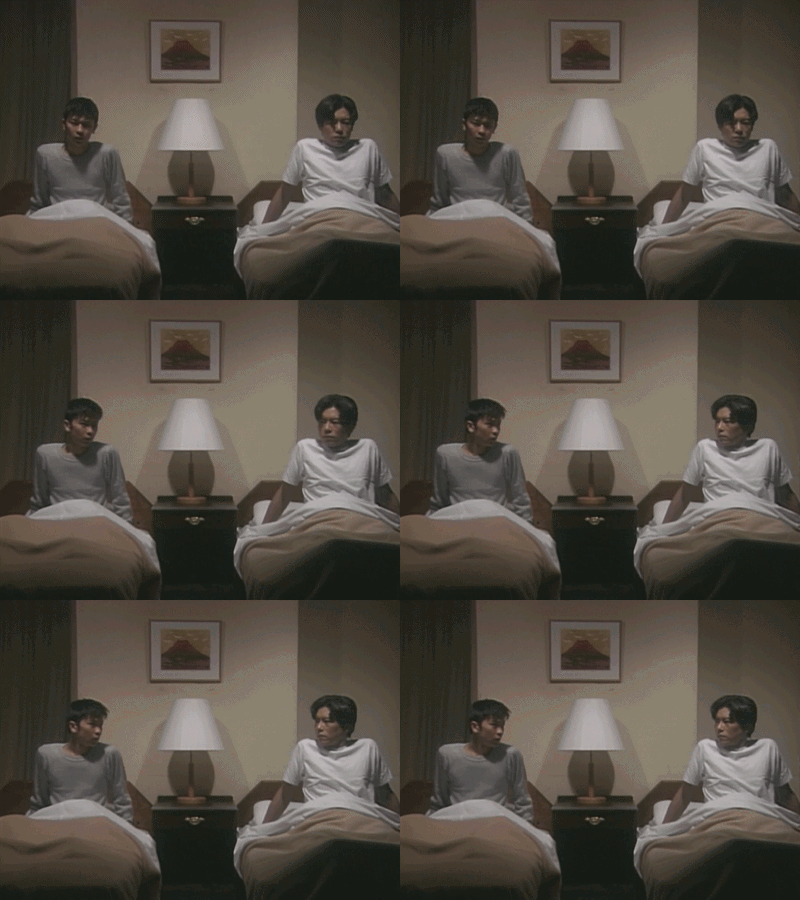
Through an inky blackness, the lone figure of Elder Misaki approaches. We see him reach the foot of the lads’ beds, stranded in the void, where he makes his usual gesture – a gnarled, pointed finger – providing the brothers with a vision of a cityscape. They both wake with a start, turning to look at each other. They know where they must go next.
Rain-soaked and wandering the winding alleyways seen in their dream, Naoto questions if they’re in the right place, but Naoya feels they are. They stumble on a curious hand-written sign – “If you’re looking for Shotaro Hanawa, go straight along this road” – and decide this must be what they’re looking for.
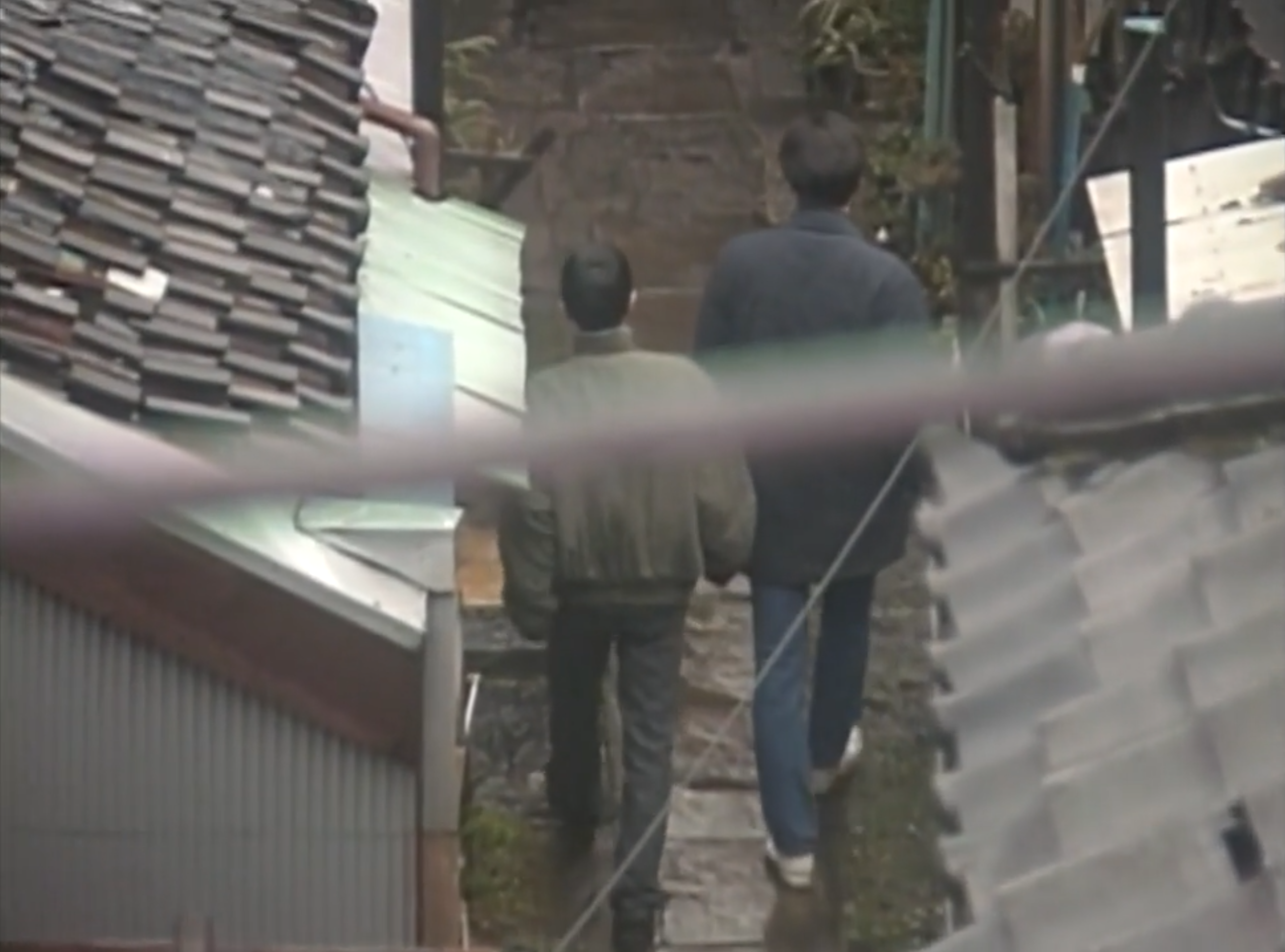
At their destination, a seedy journalist is seen pressuring a young man to allow him to interview Hanawa Sensei, but the young man politely insists that Hanawa doesn’t wish to see him. The journalist, annoyed, says that if Hanawa knows he’s doing something good for people, he really ought to let him write about it. But the young man holds firm, and the irritated journalist heads off – but he’ll be back, he quips over his shoulder. He faces off with the brothers as they approach the door, looking at them curiously as he passes by.
Glancing at another handwritten sign – Shotaro Hanawa Consultations – Naoto asks if this is the right place, and Naoya confirms. They call out to the young man, who promptly greets them before cutting himself off in shock at the sight of them. Eagerly, he asks them to stay where they are before bolting up the stairs, leaving the bewildered brothers in the foyer. He ambles back, inviting the brothers inside. He says that his employer is currently busy with a ‘consultation’, but that he would still like to see them. Without an introduction, he invites the two in by name – he already knows who they are.
The lads are ushered into a small room where an unconscious man lies on a sickbed, surrounded by his wife, son and Hanawa – the man they’re looking to meet. The wife, distressed, explains that her husband was fine until recently, but after multiple surgeries, doctors have told her that there’s no hope. Hanawa tells her that his powers are modest – the same that everyone has, an ability to make what one truly wishes become reality, a similar spiel to what Shoko has given them before. Hanawa waves his hands over the poorly man while everyone watches, Naoto seeming particularly suspicious – but nothing happens. The wife and son become increasingly distressed, crying and pleading over their unresponsive loved one.
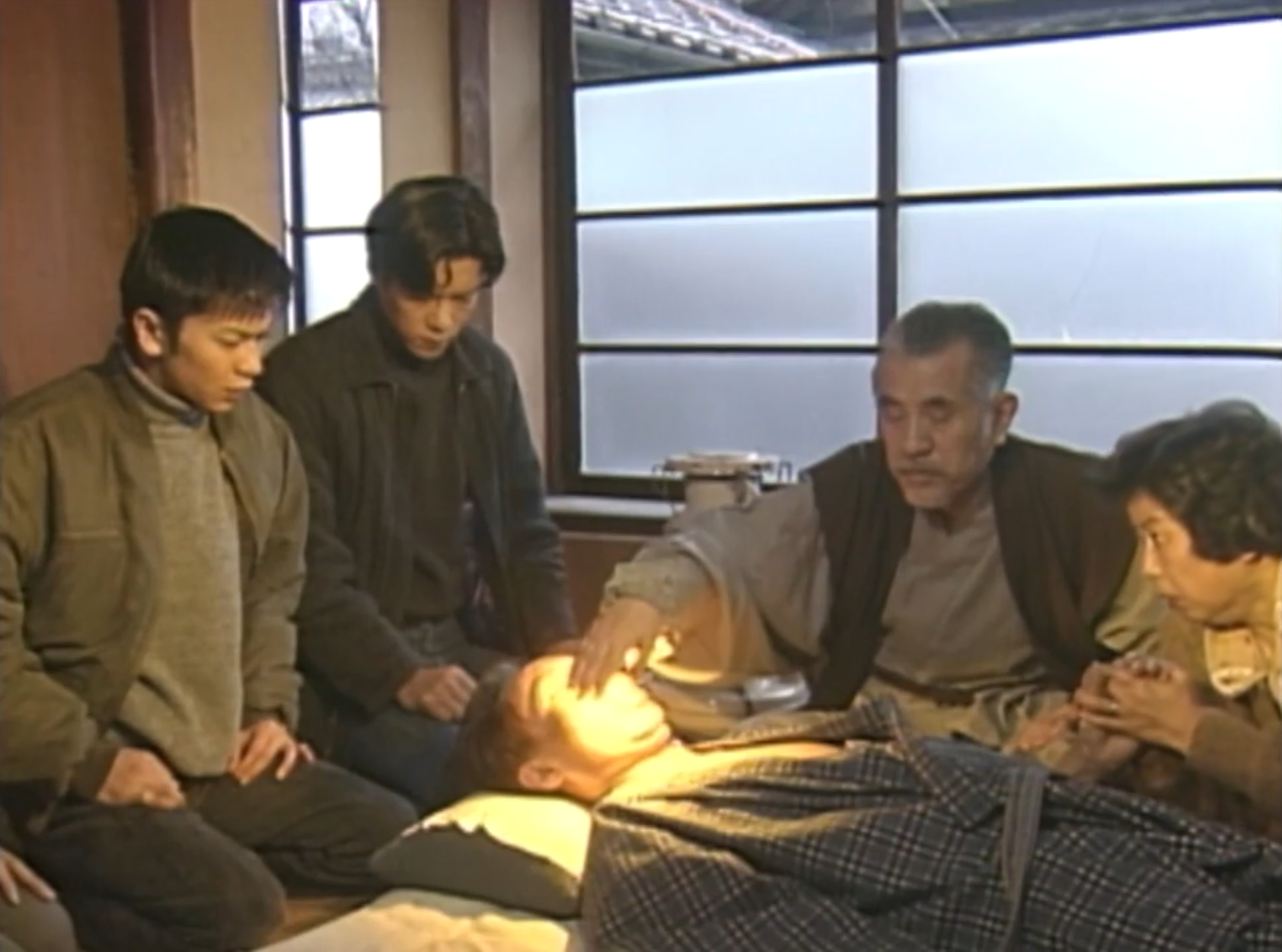
Suddenly, Hanawa’s outstretched hand begins to glow, and he smiles. The man opens his eyes, and Naoto turns to Hanawa in shock. As the reunited family cry in each others’ arms, Naoya looks like he’s also on the verge of tears, while Naoto’s expression remains one of consternation. Hanawa quietly turns to the brothers and cracks a wide, toothy grin.
Shortly after, Hanawa invites them to make themselves comfortable, and the three of them sit down at a low table and are served tea by the young man, Tanokura. Naoto asks Hanawa if he knew they would be coming to visit him, which Hanawa confirms – though he only knew vaguely. Naoya asks him how he knew their names, but Hanawa’s answer is cut off by Tanokura lavishing his employer with compliments. Hanawa politely asks him to head out to do some chores, and he happily complies. Once he’s gone, Hanawa says that Tanokura has stayed on to assist him after he was healed of a fatal spinal condition.
Naoto abruptly changes the subject, asking Hanawa why they were called here. Dreamily, Hanawa tells them that it’s because he spoke with Elder Misaki, which seems to agitate Naoto. He blurts out his next questions in desperation – just when did he speak with him? Hanawa clarifies that it’s better to say he “touched upon his consciousness”, and that Elder Misaki spoke to him about “the great flow”, and how he began his healing consultation service after this.
Naoya tells Hanawa that it’s wonderful to have the power to help others – bitterly, he looks away, saying that their own powers are nothing in comparison. But Hanawa cuts him off, firmly telling him that this isn’t true. With Naoya looking on eagerly and Naoto glaring with apparent skepticism, Hanawa explains to them that he doesn’t only give healing through his power, but receives energy in return, insisting that the power of this world is cyclical. Hanawa tells them that the difficulty lies in turning one’s heart toward positive forces – whether through his own work with healing, or their own trials and tribulations. While there are times where one learns through experiencing suffering, it’s important to hold onto hope. Hearing this, Naoya appears overjoyed, and tells Hanawa that he’s glad they were able to meet him, and Hanawa chuckles heartily in agreement.
On leaving, Naoya is on cloud nine – delighted to have met Hanawa, who he feels is just incredible. Naoto seems more reticent – when asked why, he says that while he agrees that Hanawa is impressive, “We are who we are. There’s no need to compare ourselves to others, right?” 1
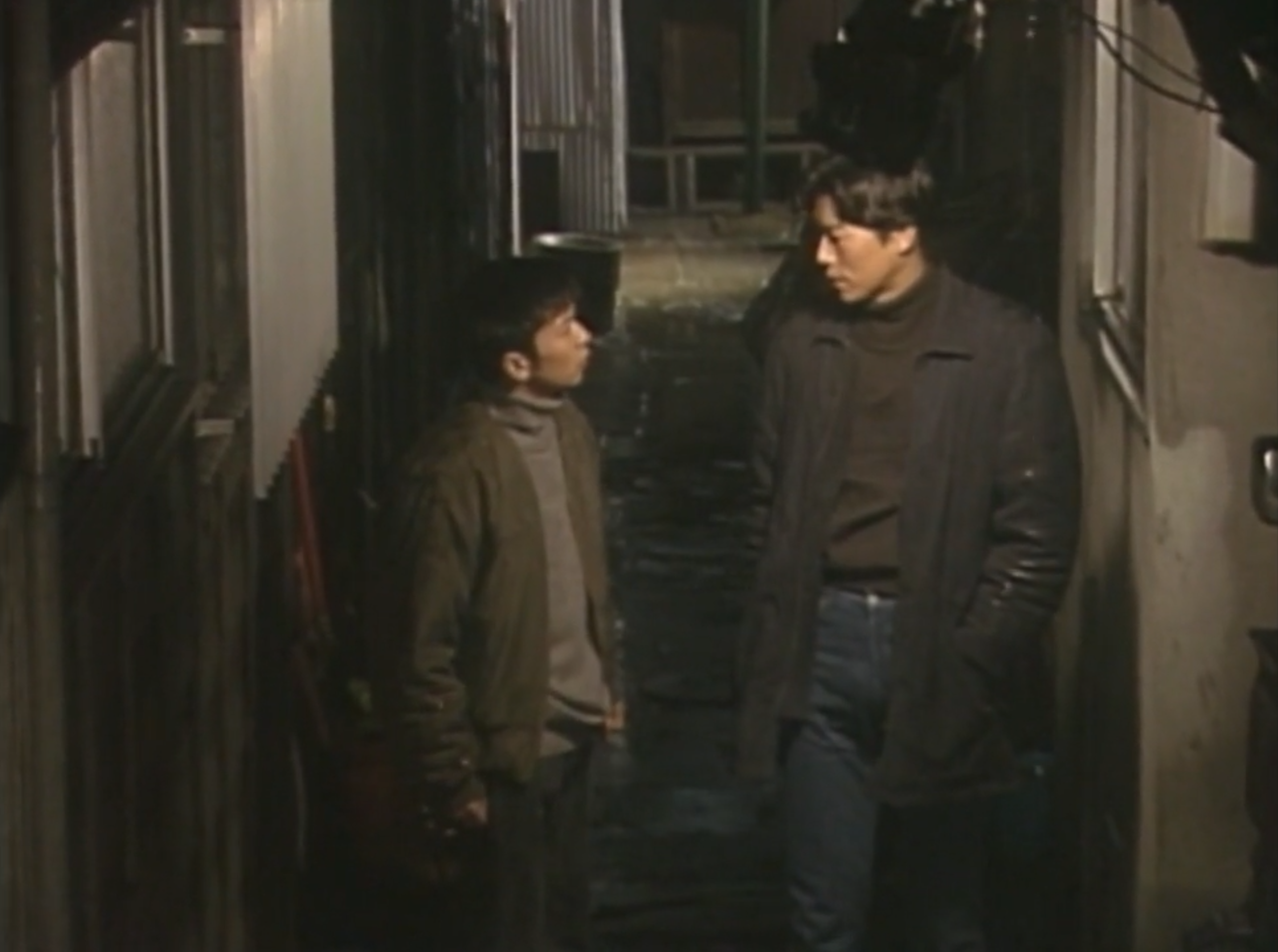
Just then, a flash – the journalist from before, Isaka, has just taken their photo. He approaches the brothers, asking after their relationship with Hanawa. He says that they don’t look like bad people, so he figured he could ask them some questions – sarcastically, he suggests that he’d like to know just what methods he’s using for his ‘consultations’. Naoya is incensed, piping up that Hanawa is no fraud, but Isaka persists – why won’t Hanawa give him an interview, then? The brothers, disgusted, start to leave, only to have Isaka stop them in their tracks. He wonders – do they know anything about the mysterious incident that happened in the area?
They stick around to hear more – Naoto intrigued while Naoya seems cautious. Two months ago, an obstetrician suddenly passed away, despite being in perfectly good health otherwise. At the same time, her son went missing. From his investigations, Isaka learned that this doctor was a known menace – misdiagnosing patients with cancer, or performing non-consensual hysterectomies – but her crimes were covered up through political connections and money. Her son was no better; having gotten a local girl named Mitsuko pregnant, he forced her to get an abortion at his mother’s clinic – a botched procedure which left her unable to conceive again.
Hearing all this, the lads are distressed, but Isaka tells them the neighbors are happy about the fate of the doctor and her son, saying it’s “divine retribution”. Suspicious, Naoto asks how this is connected to Hanawa, to which Isaka acts coy. No connection, really – he just finds it strange that so many odd things could happen in a town this small. Naoya says they should go and his brother agrees, and they push past, while Isaka tells them it’s rude to listen to his story without reciprocating. Naoto snaps at him that Hanawa is the real deal, and they don’t have anything more to say. As they retreat, Isaka smirks and strokes his camera.
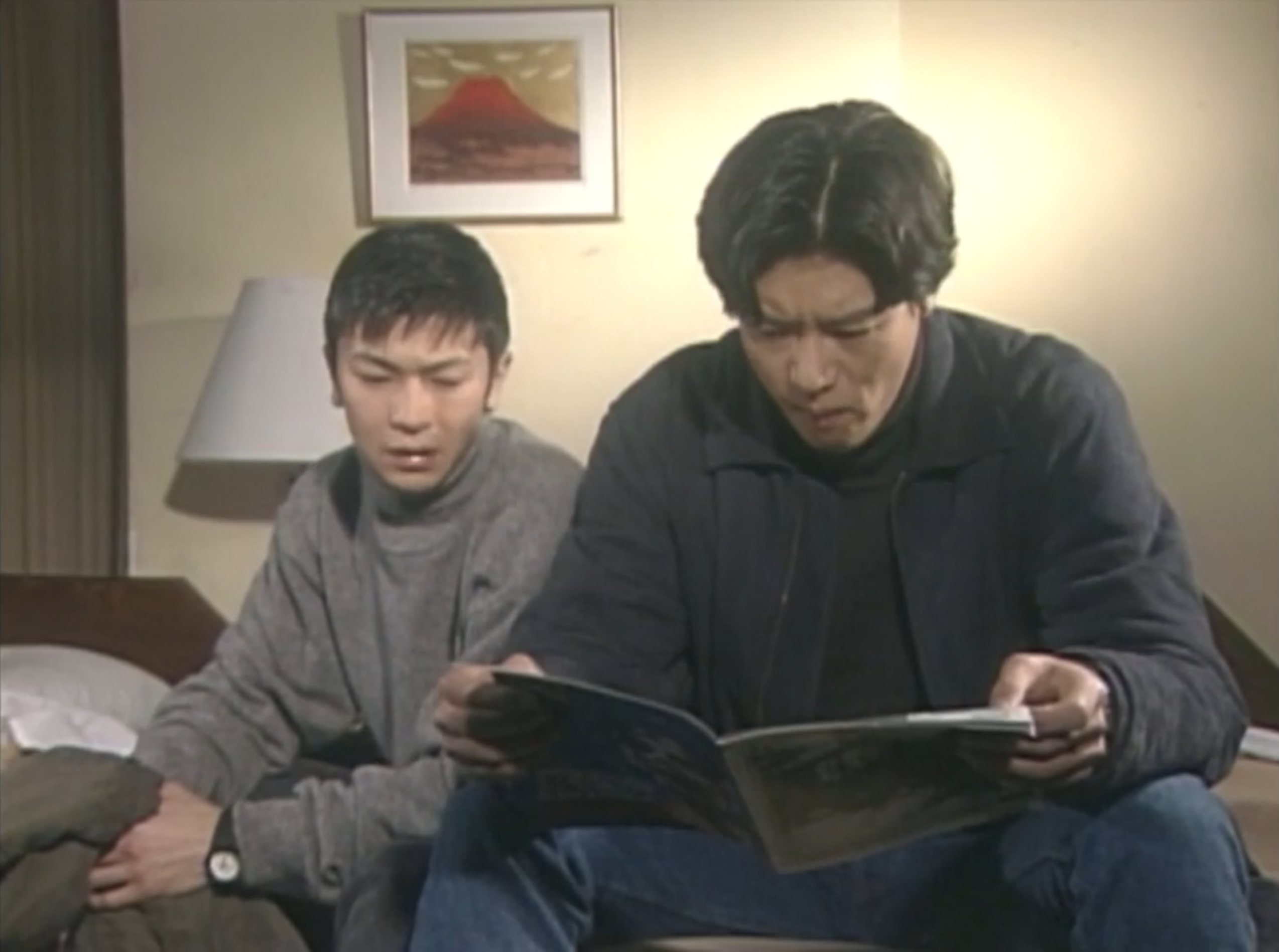
The next day, an article is published featuring photographs of the consultation the brothers sat in on. The brothers leaf through the magazine in disgust – publicizing Hanawa’s practice and location without his permission will lead to all sorts of people turning up, and who know what other consequences this will lead to.
At the entrance to Hanawa’s consultation office, a crowd of people looking to be healed has gathered, eagerly clamoring to be let in. Tanokura stands in the doorway, politely turning them away as Hanawa’s power lose their efficacy when he uses them too much. The lads arrive to see the chaos, remarking that it’s just as they’d feared.
Appearing as if from nowhere, Isaka approaches them – looking at the crowd, he says that it’s amazing what a little publicity can do – isn’t the world a scary place? He asks, grinning. Naoya, irritated, tells Isaka that he’s the one who made this mess. But Isaka insists that it’s Hanawa’s fault for being too good-natured, and lacking political savvy. “The nail that sticks out gets hammered down, after all.” Naoto is riled up enough to try and fight Isaka, much to his amusement, but Naoya stops him and they part ways.
Over at Hanawa’s, Tanokura has nearly collapsed in despair, saying he finally understands why his master didn’t want to publicize his abilities. Naoto remarks that, with powers like Hanawa, it won’t be long until people start calling him a God – and by then, people who feel threatened will try to interfere with his work. The crowd outside, held back from Hanawa’s healing, seems to be growing increasingly irate.
Meanwhile, we cut to a group of children jumping rope at a nearby canal. One of the girls stops, suddenly, gasping – floating in the water below is a dead body. Tanokura runs into Hanawa’s room to tell him the news – the doctor’s son has been found. Tanokura seems pleased, saying that it must really be divine retribution, but Hanawa tells him off for being flippant about the misfortune of others. Just then, a bellowing voice amplified by loudspeaker makes its way to them – the crowd outside has become an angry mob, protesting against Hanawa’s treatments.
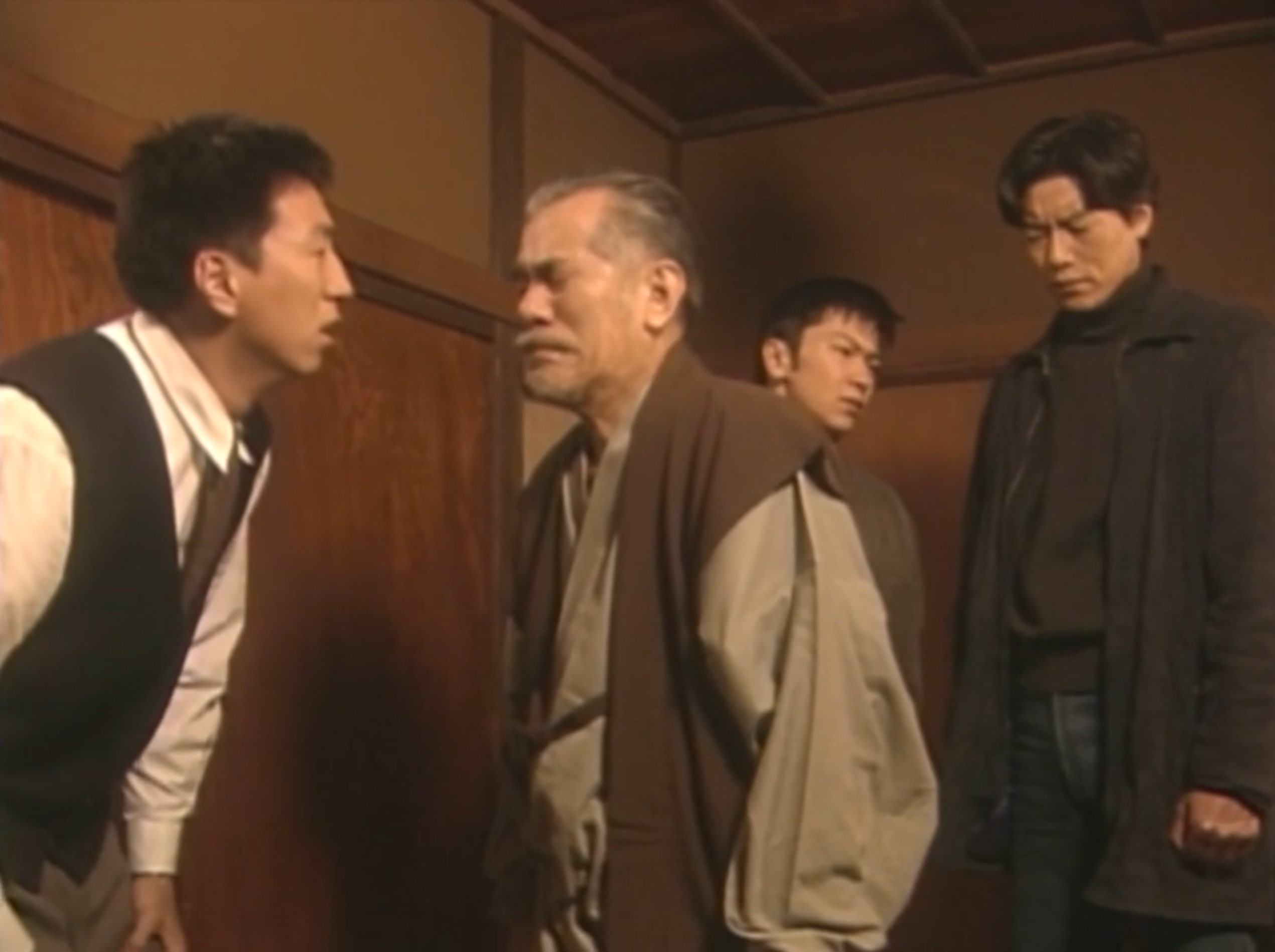
Just then, the lads arrive in a rush, asking if Hanawa is alright. Naoya, frustrated to the point of anger, can’t see why this is happening when Hanawa does so much good for the community – is it so wrong to save people? But Hanawa remains calm, saying this must be part of the ‘flow’ Misaki told them about – only now, he feels he’s faced with a choice. The crowd outside grows even more irate as they begin throwing rocks, smashing through windows.
Tanokura stands to try and stop the mob despite Hanawa’s protestations. Shouting out the window, he’s hit in the face by a protestor and falls to the floor in agony, clutching his bleeding eye. Naoto leaps to attention, but again, Hanawa tells him to stop – “nothing good comes from hurting others. I know this better than anyone.” Quickly, he pulls Tanokura’s hand away from his face and heals him. The crowd outside continues to bellow, but Hanawa is only upset that this will be a nuisance to the surrounding neighbors. Glancing up, he seems to exert some force over the crowd – they immediately calm down and begin wandering away quietly.
Seeing this, Naoto understands – Hanawa’s powers aren’t limited to just healing, after all. Standing, Hanawa says that it all began over the last six months – he’s begun to change in ways even he finds surprising. Tanokura is overwhelmed at the results of both his healing, and the calm dispersal of the crowd – he just knew Hanawa was a great man, and this proves it. But Hanawa turns away from him sadly, saying that isn’t the case. Quietly, he tells them that he’s the one responsible for the death of the obstetrician and her son.

Episode 17 – Utopia
broadcast date: february 11th 1993
Director / Screenplay:
Masato Hijikata (土方政人) / George Iida (飯田譲治)
Naoto Kirihara – Etsushi Toyokawa (豊川悦司)
Naoya Kirihara – Shinji Takeda (武田真治)
additional cast can be viewed here
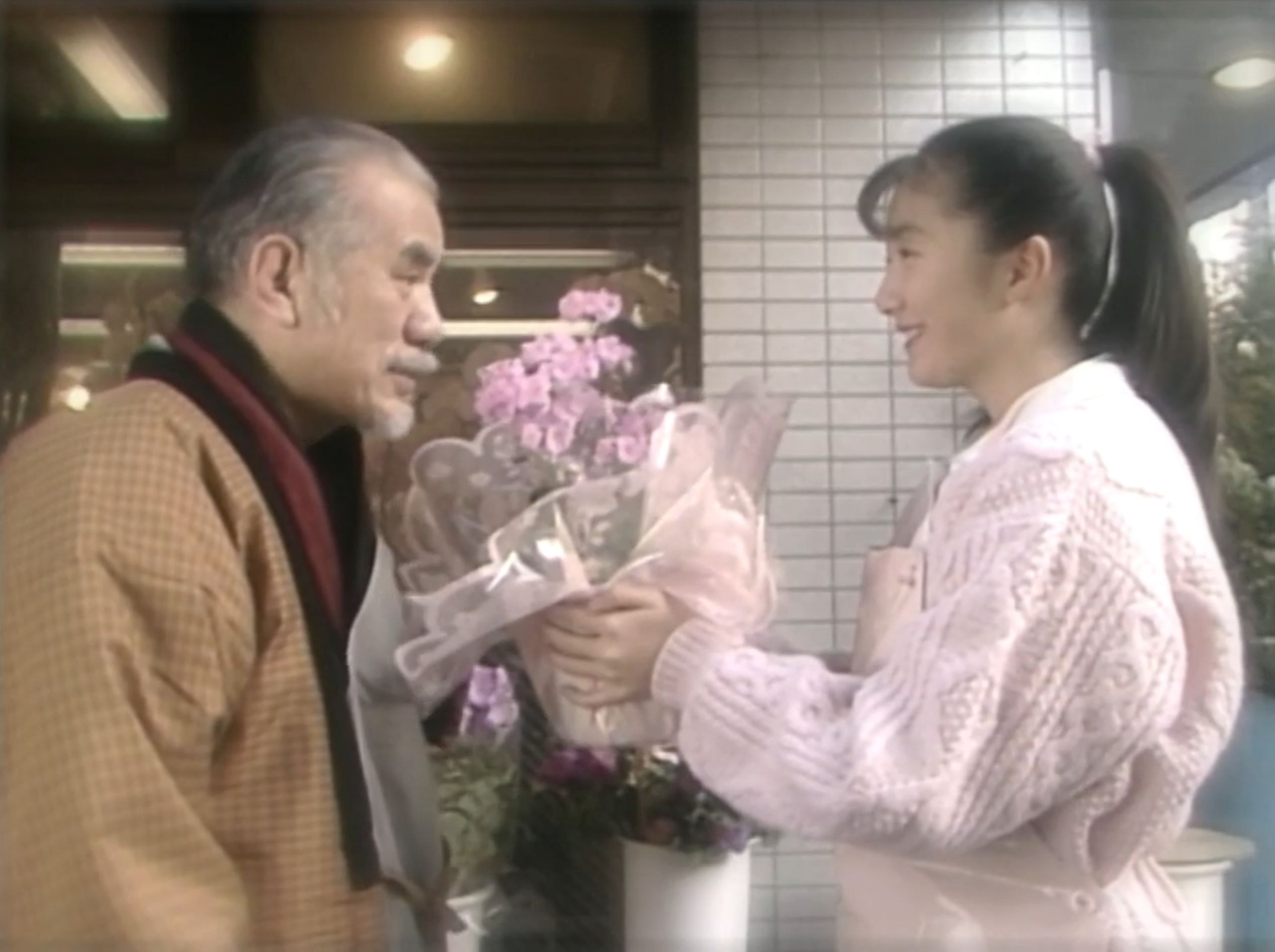
We open on a continuation of the previous episode, where Hanawa tells them about the events that led to his involvement in the death of the obstetrician and her son. At the same time, we see Isaka sneaking in to listen with a small tape recorder. Hanawa says that six months previously, he met Mitsuko, the young woman who the pair deceived, when she showed him kindness on Respect For the Aged Day. Feeling a fondness for her, he observed as she fell in love with the scoundrel, but felt he couldn’t intervene – it just wasn’t his place to do so.
After getting her pregnant, the scoundrel convinced her to go to his mother’s clinic. The abortion that was forced on her was a further deception that they had claimed was only a checkup, which was then botched – leaving her unable to conceive again. Following this, Mitsuko left town, and Hanawa laments that he wasn’t able to help her, though at the time he was unaware of his own powers.
At this point, he didn’t wish for the death of the two that hurt Mitsuko – not until he happened upon them both practicing their golf swings without a care in the world. At that moment, he felt – from the bottom of his heart – that he wished they were dead. And that very night, it came true. Without his even knowing it would happen, his wish for their deaths came about. Hanawa regrets this deeply, feeling that nothing good can come of murder, and feels this shows his inherent weakness as a person – to have succumbed to that temptation without his own knowledge.
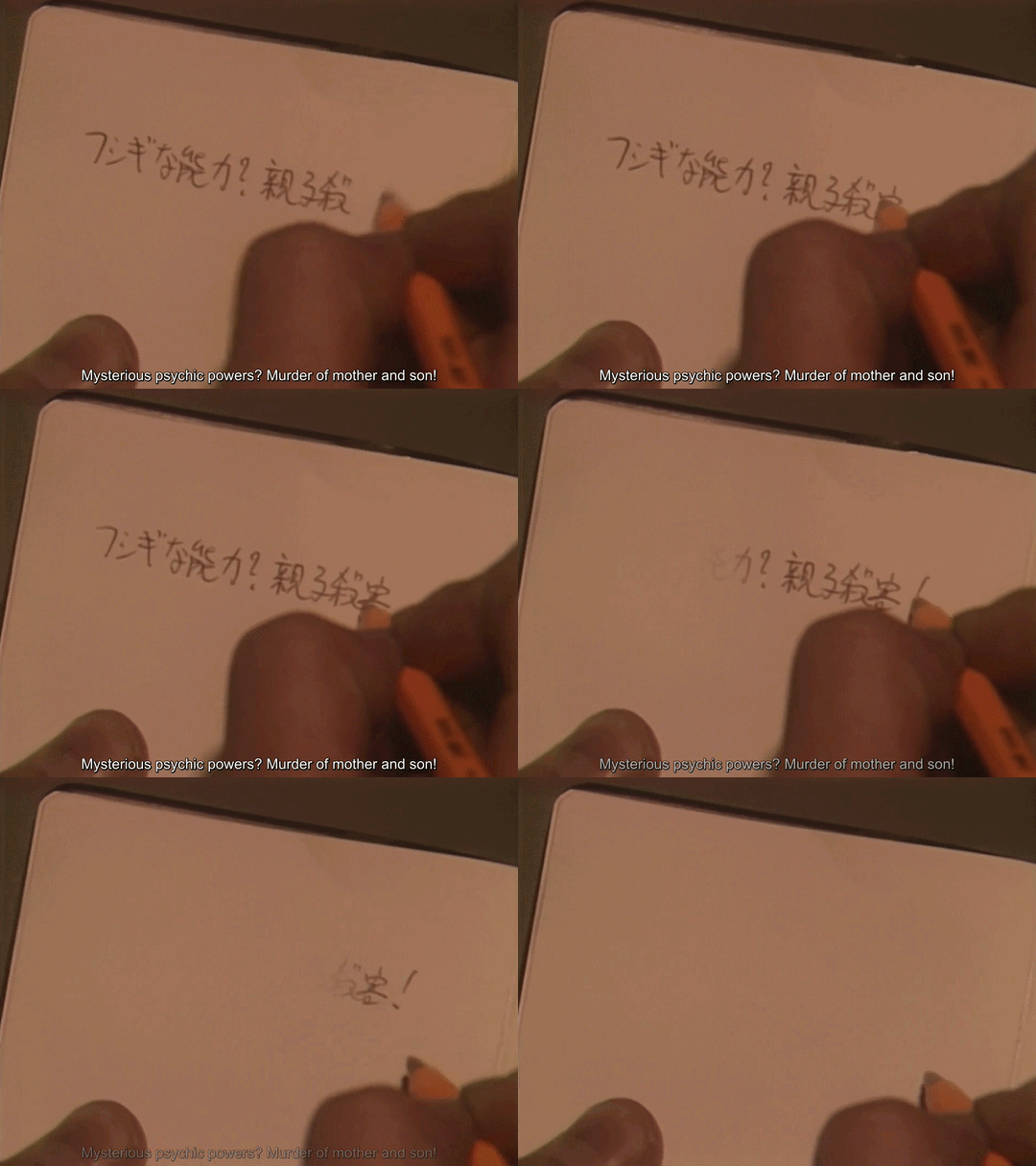
Hanawa sits down, a golden aura of power enveloping him. Outside the room, Isaka’s tape recorder begins to malfunction, spitting out its contents in ribbons. He switches to paper and pen, only to see his very notes disappear from the page. Naoto and Naoya are floored by the immensity of Hanawa’s psychic power, and he replies that he’s only growing stronger.
Tanokura, who moments ago had been distraught at the notion of his being a murderer, has reverted back to his elation at Hanawa’s strength. Effusively, he tells Hanawa that he doesn’t just heal injuries or illnesses, but is someone who can guide the world in a better direction – but Hanawa disagrees. Naoya sides with Tanokura, telling Hanawa that even if he were to be called a God, he thinks that would be a good thing – but Hanawa does not concede, firmly stating that he is a murderer. He says that he is at a juncture where he needs to choose his own future. He turns, asking Naoya his opinion – surely, he can also see the future that should be chosen.
Most of the rest of this episode takes place in a call and response format, where Naoya will predict the future, Tanokura will say that it sounds great, and Naoto will explain why it isn’t. Helping heal people leads to more press which leads to religious groups trying to use him for their own purporses, then everything devolves into minor conflicts. Using his powers in ways other than healing – such as precognition – would lead to his being asked to intervene in politics. Great, says Tanokura – an opportunity to make Japan a better place! In fact, he gushes, Hanawa could probably even put a stop to war!
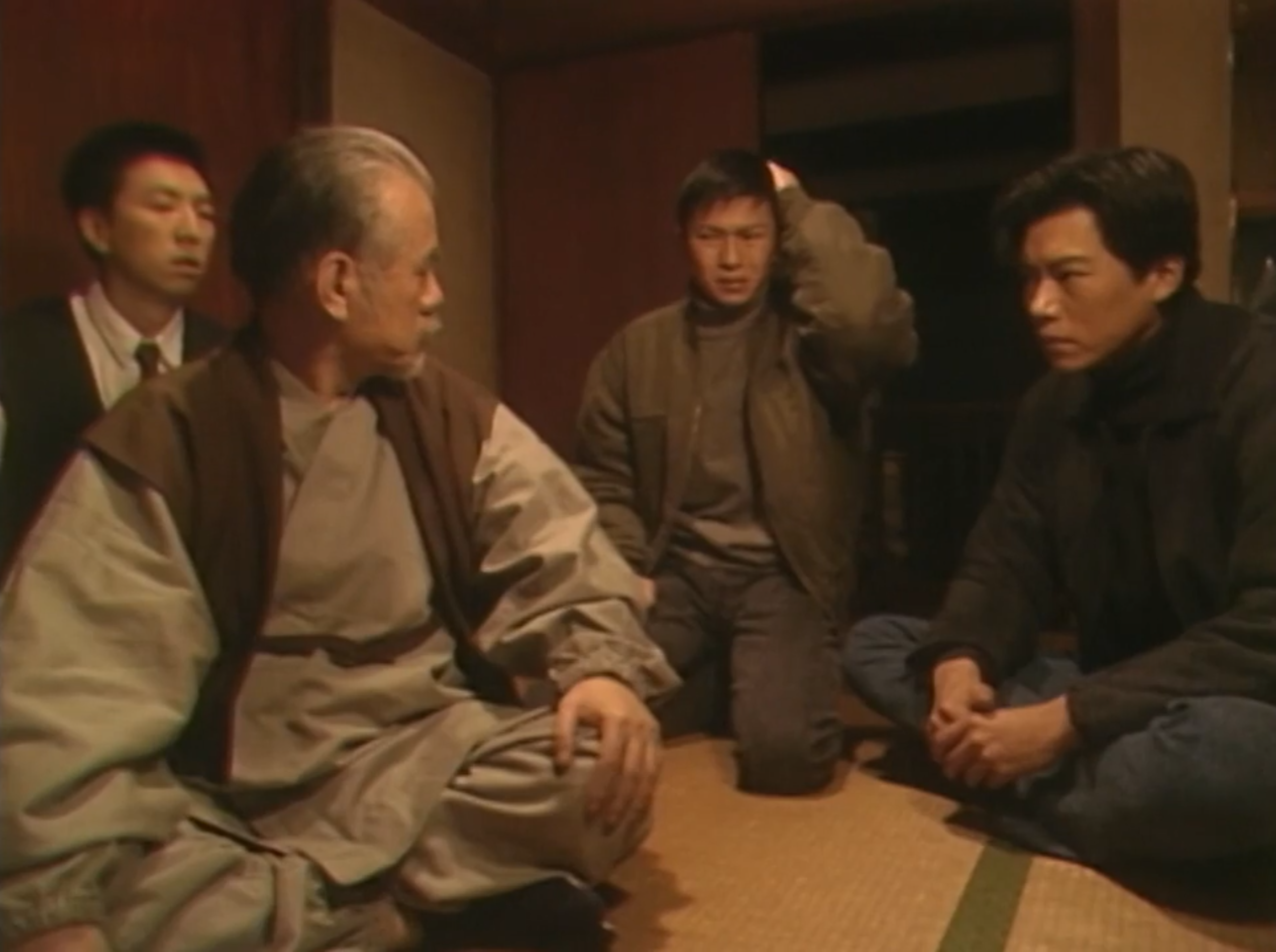
But no – inevitably, by stopping any war, Hanawa would be siding with one party in a conflict, and would need to constantly suppress the dissatisfaction of whichever side wished to keep fighting. “If that were to happen, Hanawa-san wouldn’t be a God – he’d be a dictator.” But Tanokura still says he’d be alright with that – so long as it was Hanawa. Except, Naoto reminds him, Hanawa still has a normal human lifespan – once he passes away, those conflicts would all erupt again, full force. The government wouldn’t look kindly on him no matter what he did, because the system would be undermined by the sheer potential of his power to topple it, and would eventually attempt to eliminate him.
Tanokura collapses under the futility of the situation. Hanawa calmly says that accepting his power means casting aside the values of this world dominated by material things – and the world just hasn’t advanced that far yet.
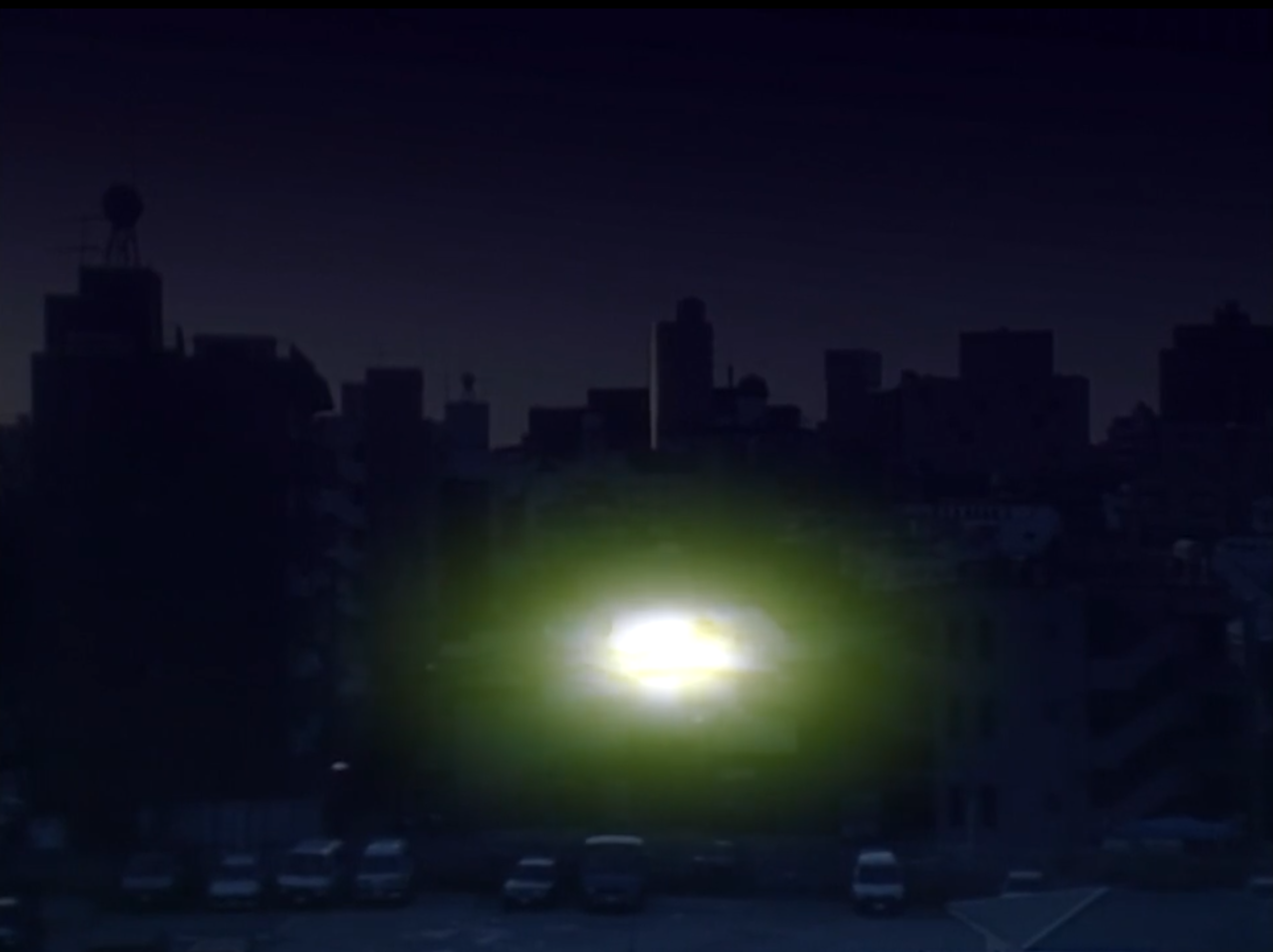
He says that he will not become a God, but will instead choose to create a barrier where all malevolent things – all ill intent and crime – will vanish. Those who need his power may enter, where those who should not enter may not. A place where everyone will find happiness. He raises his hand – much like Elder Misaki – and the golden aura of his power absorbs the surrounding area. Isaka, scuttling away to write a new article, suddenly finds himself washed over by the barrier and cannot remember why he’s there and begins to wander away.
Hanawa will stay here within this barrier until he dies – again, much like Elder Misaki – and continue treating people with his powers. He chuckles heartily while explaining this to the brothers, but Naoto seems concerned, asking for Hanawa’s guidance regarding their powers and their place in the world. He responds, “Every human being possesses both positive and negative consciousness … To possess that power means exerting a strong influence on many things. Human thoughts inevitably influence reality – in your case and mine, that influence is exceptionally strong. You must not forget that.”
Naoto seems confused at this, but Hanawa continues. In their case, as a result of their powers, the negative consciousness that everyone harbors in their hearts has taken concrete form as a distinct personality. With a start, the brothers realize that their nemesis – Y – is a construct of their own negative consciousness. Smiling, Hanawa confirms, saying that he’ll stop manifesting as they themselves grow. But then, the time will come for them to make a choice. Bewildered, they ask him what he means, but he only says that they’ll certainly choose something different than what he did.
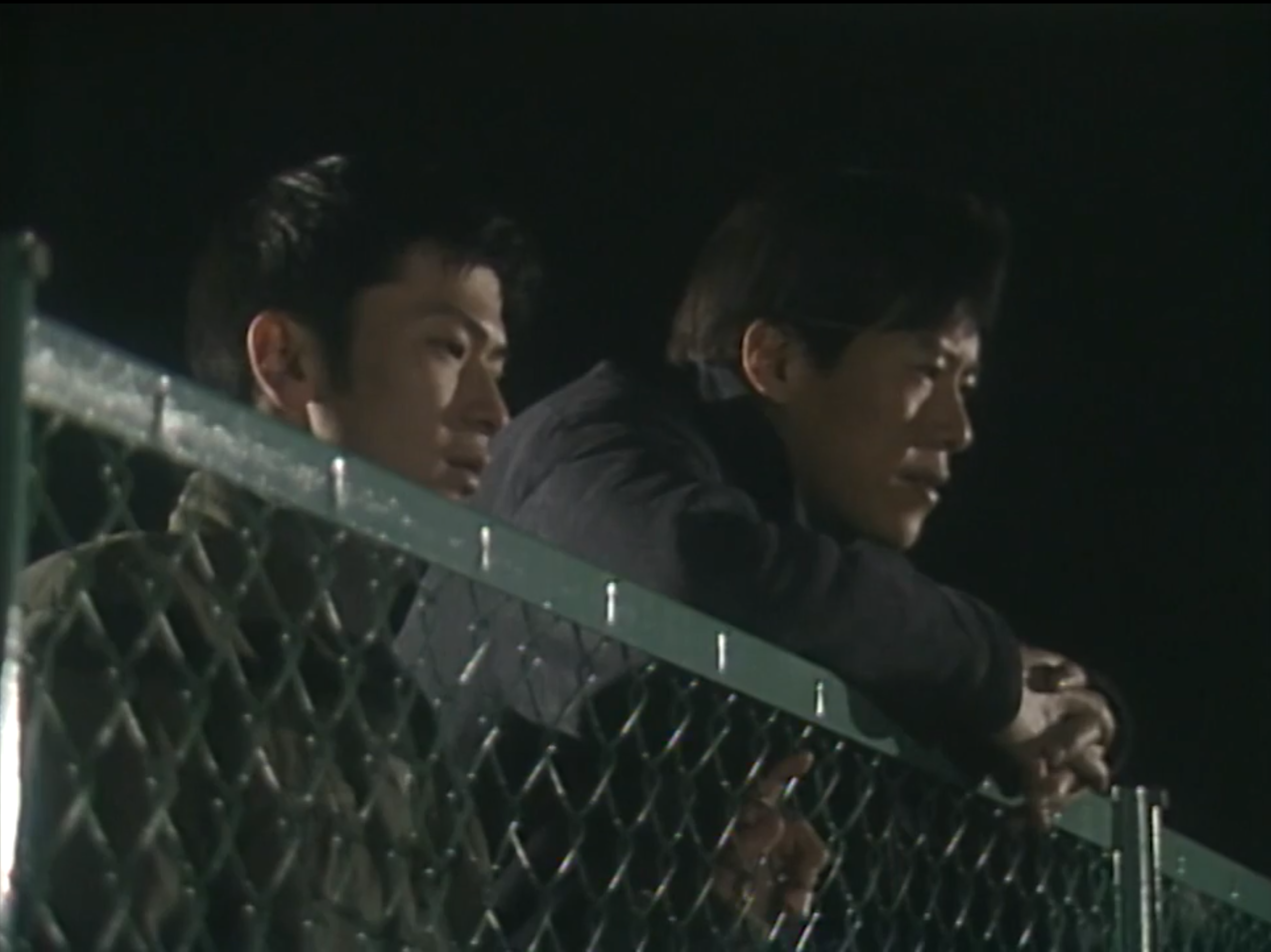
Outside, the lads stare out at the darkened cityscape. They ponder this new barrier, and Naoya questions if it was the only way. Naoto says it’s a way for those with power to coexist with the world – but he’s sure they’ll find their own way. Contemplatively, Naoto asks his brother what he thought about Elder Misaki – Naoya responds that he liked him, and felt a real connection with him. Naoto agrees, and wonders aloud if they were being protected by him, rather than merely confined – until they could find a way to coexist with the world.
———————————————
These were two episodes I found beyond frustrating – right off the bat because I didn’t think it needed to be a two-parter. We got two episodes of tell-don’t-show, but they never went to find that girl from episode 12? eesh. These were also the first two written by George himself in a long while, and yet they didn’t match up with what I’d expect from the characters at all.
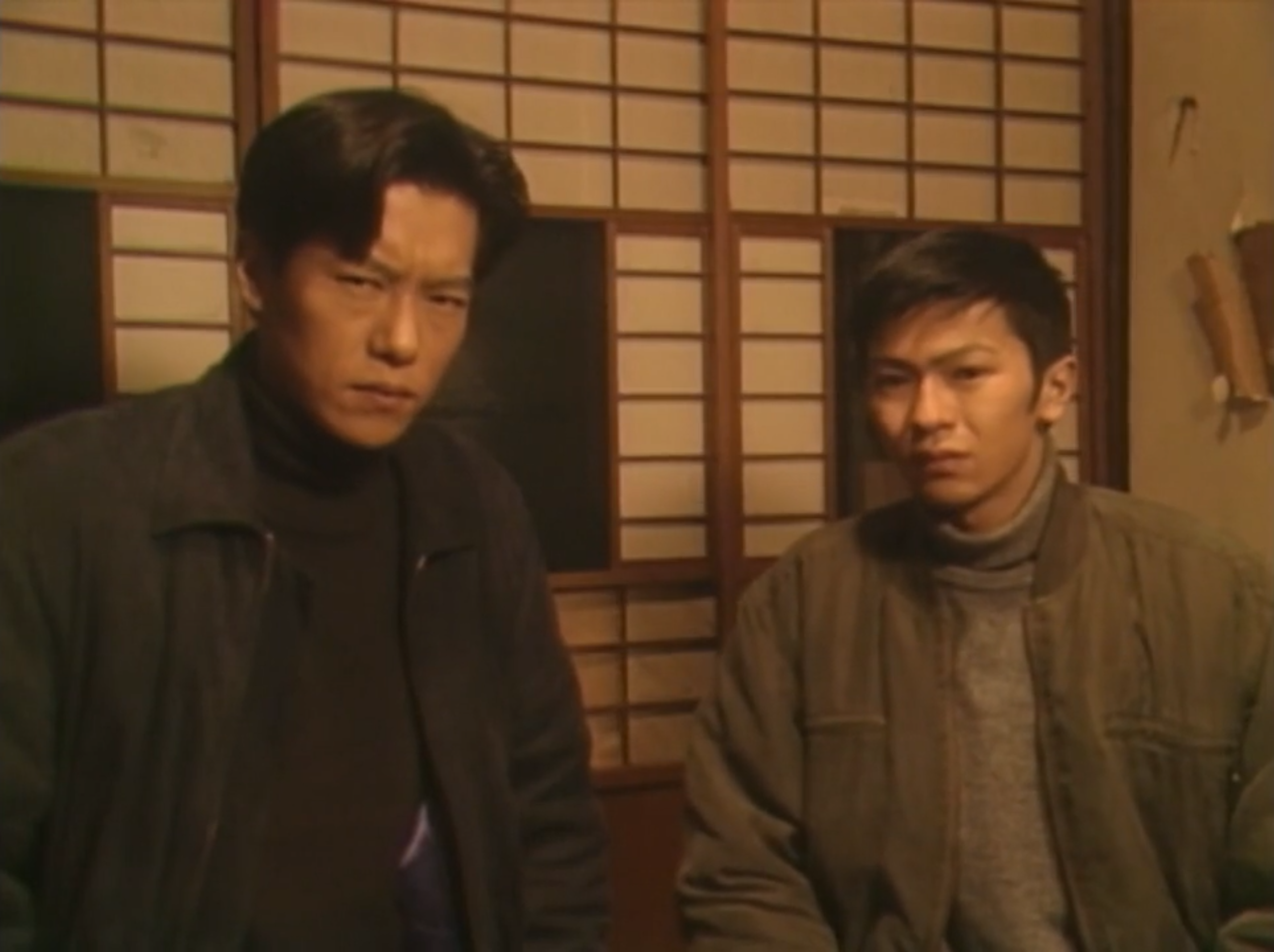
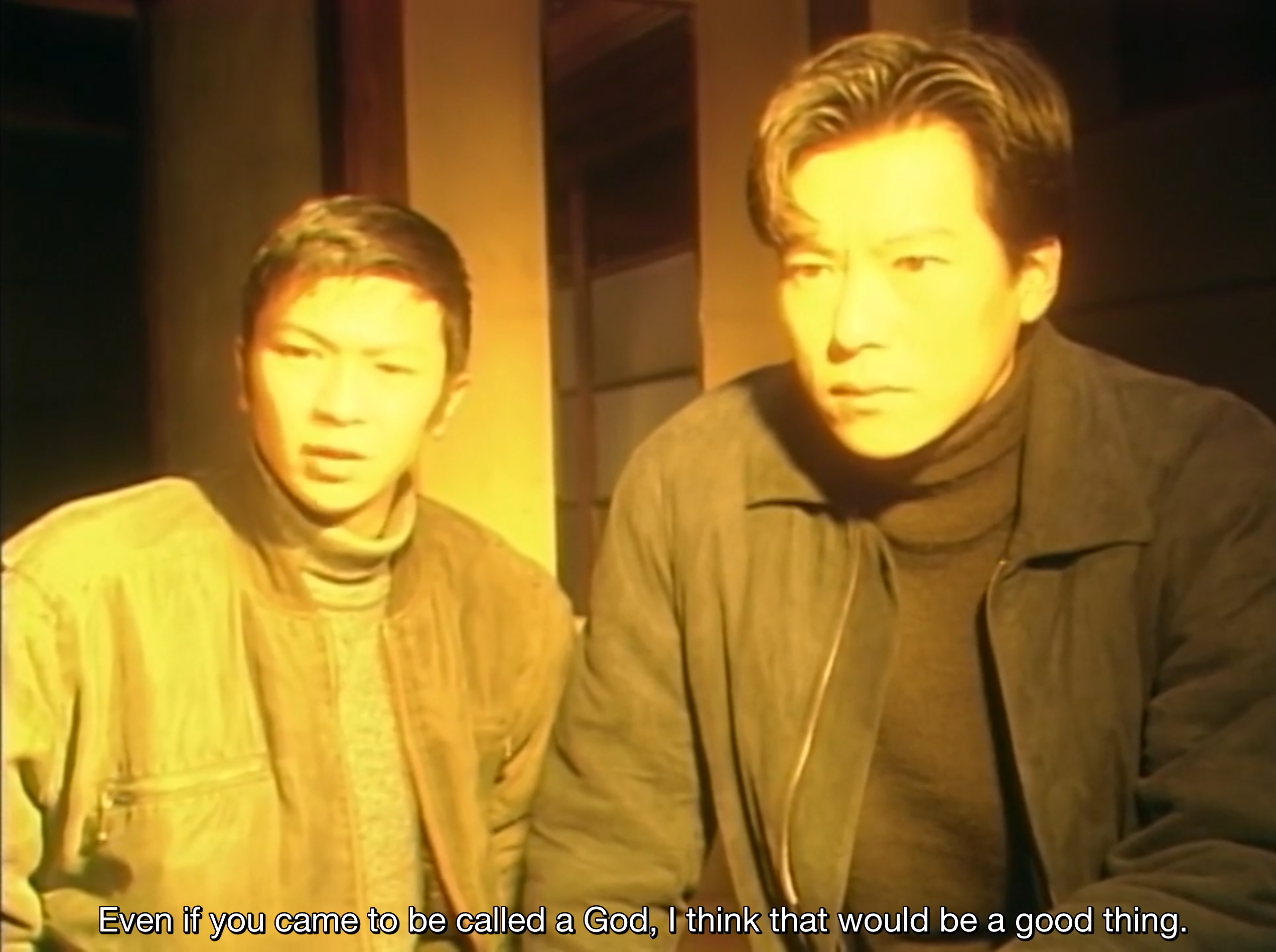
Seeing them lavishing praise on Hanawa – a man they barely know – was irritating at best, but it explicitly goes against much of the established character traits we’ve had so far. Naoto is consistently reactive with people who make claims towards Godliness, and even Etsushi Toyokawa’s performance felt discordant – the amount of suspicious glances and consternation from Naoto feels at odds with his lines, as if he didn’t quite agree with the characterization shift,2 and he spends much of the two episodes either glowering or looking like he’s dissociating.
Both brothers hated Kamiya enough to leave him out to dry in the previous episode, but he’s actually a character that’s easy to compare Hanawa with. This is, in part, because Kamiya and Hanawa were both inspired by the same person – only, split into two different characters. George has said that Kamiya was a creation of himself and Takeo Kasai, one of his co-writers, and was “inspired by a real-life individual who performed healing using special abilities while working as a salaryman”3 – if you’re at all familiar with ESP-related public figures from Japan in the era this show came out, you may have sussed out who he means, but I can confirm from another source4 that the person in question is Hikaru Takatsuka, a strange fella who I plan to talk about in more depth in a future post.
I don’t know much about the decisions behind splitting him into two different characters, except that George also claims to have been inspired by two other sources: the protagonist of Ryo Hanmura’s Misaki Ichiro no Teiko5, as well as his own real life guru figure (someone else I plan to discuss in more detail in future). I suspect the necessity of the split comes in partially from Kamiya’s role as a power-hungry salaryman, where his prognostication serves as a more appropriate narrative tool for delineating his position in corporate power structures, as well as society more generally, whereas healing leans more ‘sacred’, and therefore lends itself better to a kindly old person who wants to help his community.6
It’s kind of overkill for them to also give Hanawa other powers, but that hardly seems to matter when it’s apparently his personality that makes the brothers accept him. In the original script for episode 16, Naoto’s initial comment that Hanawa’s powers will lead to others calling him a God is part of a conversation between Naoto and Naoya alone:
Naoya: “He’s like a God. If he could become a God, I think that would be fine…
He’s completely different from someone like Kamiya.”
The fact that Naoya still feels this way after the murder reveal in episode 17 is what irritates me the most. Naoya is shown to have the anti-murder moral compass between the two, repeatedly telling Naoto not to finish people off when he lets his powers loose (just for example, episodes 1, 11, 12, 15) and even as recently as episode 14 he had to leave the ICU for a rescue mission to prevent Naoto from letting his rage negative consciousness get the best of him. In a fight against an objectively cartoonish villain, Naoya still tells Naoto that he can’t decide who gets to live or die. Yet he suddenly trusts that Hanawa – a man who already succumbed to that very weakness on an instinctual level – is somehow primed for Godhood? His partial basis being someone who was no doubt very important to George is almost certainly a factor in the way Hanawa is treated. However, it swerves so far away from what I expect from these characters that it feels like a drag to analyze.
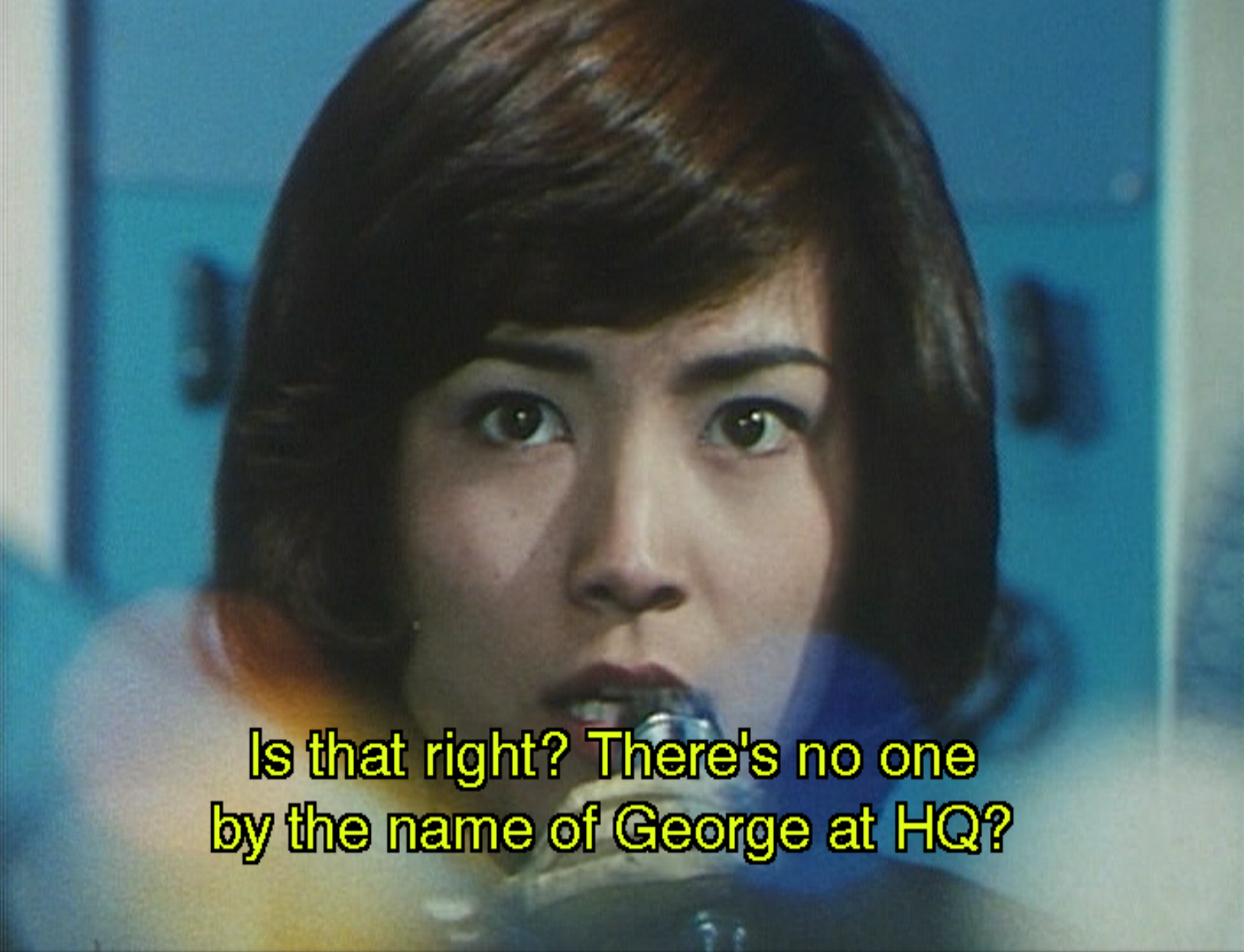
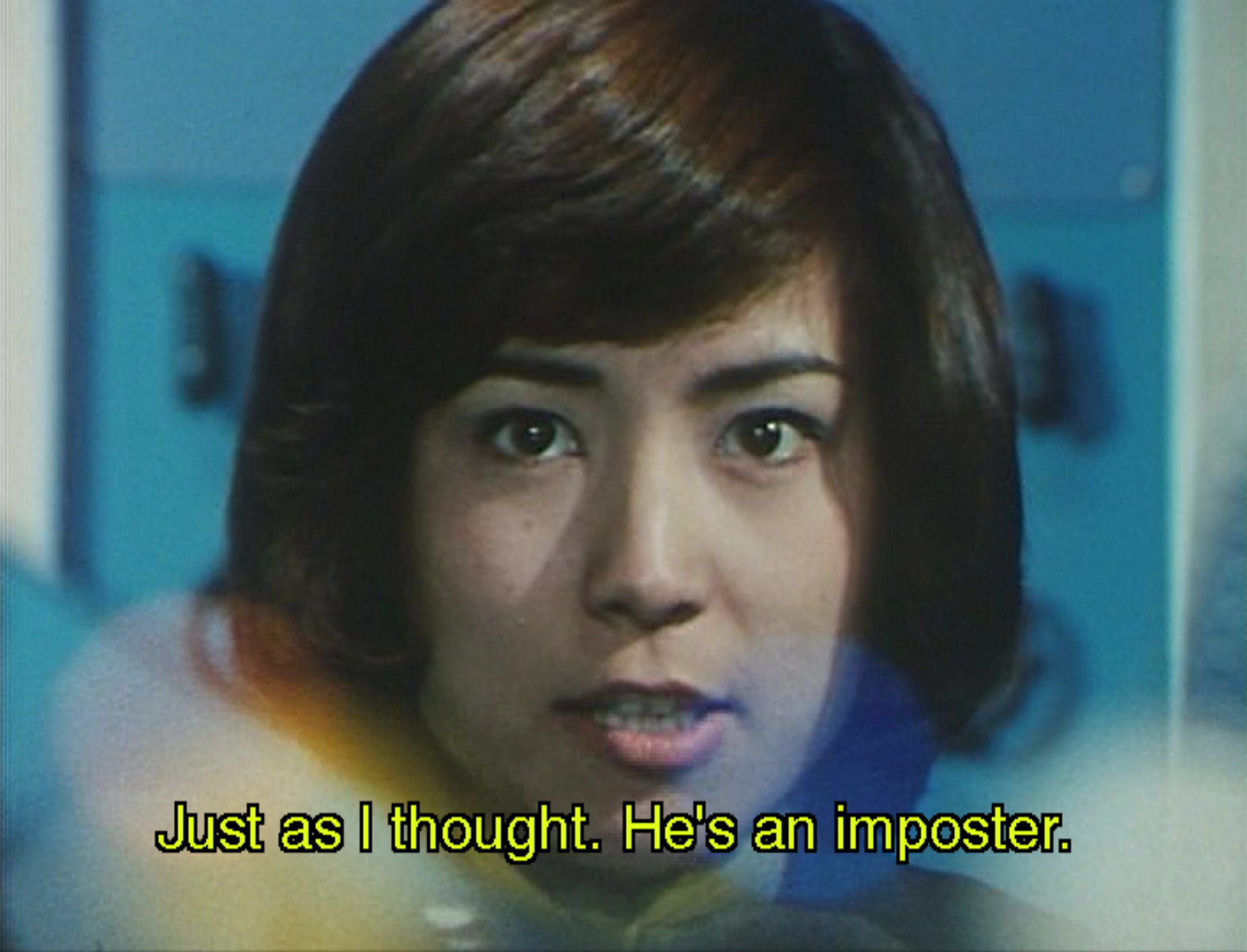
Another major issue I have with this arc is that I just have no tolerance for concepts around “healing”. Like, what is healing? What is “health”? Are we talking about homeostasis? What about autoimmune disorders? The man he healed at the beginning had cancer – does that mean that he impacted him on a genetic level? Then we’re getting into eugenics territory, which I don’t like at all. I would be interested in a story that went into the details of the implications and ramifications of hyper-specific psychic genetic modification (especially because I don’t think it would go well at all), but to have it be as basic as “healthy” and “unhealthy” feels uncomfortably simplistic.
To make matters worse, the whole thing is under the umbrella of psychic healing. Described by Hanawa as “the same power that everyone has, an ability to make what one truly wishes become reality”, he further describes the difficulty of his work to be in “steering a person’s heart in a positive direction”. At first I wondered – he can heal injuries, but where’s the cutoff? Why couldn’t he help Mitsuko, the young woman who had the botched abortion? Was it an issue of it being among the more invasive procedures the obstetrician performed, such as a hysterectomy? Could he not magically recuperate an entirely missing uterus and cervix? But no – the problem here appears to be that, as he mentions, he “couldn’t turn that girl’s feelings of despair towards the positive.” I’ve alluded to my discomfort at the trajectory of this Law of Attraction plot element before – it falls into a category of faith healing that blames those it fails to help as themselves being the problem, a pernicious sentiment I just can’t abide.
I also found Hanawa’s solution to the problem pat at best, and wonder why he considers his barrier in a residential urban environment anything other than a hyper-local dictatorship, when compared to the examples they already gave in the episode. Is it “malevolence” for vigilante mowers to undo a rewilding scheme? Is, say, graffiti a “crime” if there’s no “ill intent”?
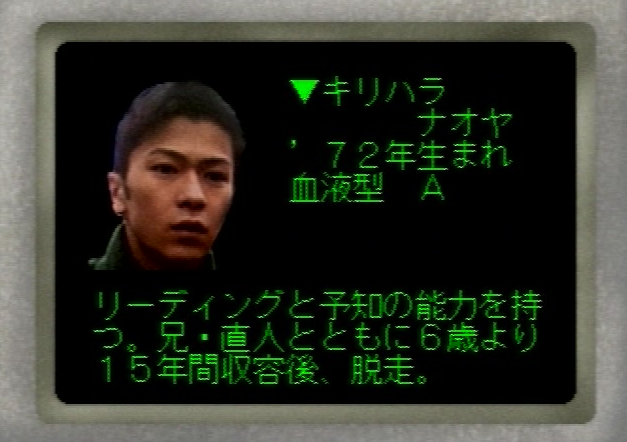
I’m also unsure about the notion that this solution is comparable to Misaki’s barrier. Just doing some fiddly math, we do have some semblance of a timeline here to pick apart. It’s been established that Mikuriya conducted research Soviet ESP research between 1965 and 1970. It’s unclear exactly when the lab was opened, but if we accept that the show is meant to be occurring contemporary to its broadcast (1992), then 15 years in the past – the length of their confinement – would be 1977. Is 7 years enough time to set up both a functioning lab, as well as somewhere that could effectively raise children? As far as we know, they were the only kids at the lab – were the Kirihara brothers Mikuriya and Misaki’s first and only attempt at doing so? Because they certainly don’t seem like they’re adjusting well, which is likely a consequence of the fact that they weren’t provided an environment that could give them the tools to integrate into society, let alone find happiness.
As I’ve mentioned before, their confinement feels like it was something that at best didn’t help them prepare for the world outside, and at worst actively hindered their ability to grow as people. Any progress they’ve made at socialization has been eked out by them alone, and while it may be true that Misaki tried to protect them in addition to confining them, it’s somewhat tragic to see Naoto justifying this as having been put on them “until they could find a way to coexist with this world”. Given they still haven’t found such a way, their ability to leave seems like it was more an issue of the timing of Misaki’s death than something preordained. My take is that, as kind a man as Misaki may have been, he only really got one chance at helping them – and he didn’t quite manage it.
The biggest reveal is, of course, that their nemesis Y is a construct of their own negative consciousnesses. This has some pretty crazy implications – thinking chronologically, crazy enough that I wonder if this is something George decided later, after the character had already been put into the show. Y is first introduced in episode 6 in ways that don’t really track with their involvement – why would he have been standing ominously in Miki’s room before they’d even met her? Why would he have such specific, contrary information to what they’re given by Shoko? When Shoko requested that they protect Miki from being killed by Y, did she know that she was actually asking the brothers to protect her… from themselves? It would also be particularly sad if their own inner darkness took over Miki in the hospital to goad Naoto into throttling a bedridden teen girl, especially given his remorse afterwards. And why would they have a shared inner darkness? Is this that codependence thing again?
Y as their own inner darkness seems to make the most sense once we get to episode 11. I can absolutely see a bad trip making an incisively cruel vision of your estranged mother taunt you with all your worst fears before unhinging her jaw to blast you with ectoplasm… but this would also mean that the drugs, in the end, didn’t work after all. Y tells them that he was the one that made them think their powers were back, an advantage against them while the drugs are still ‘working’. But then, the drugs wouldn’t be working, would they – if he’s part of themselves. This reveal gives episode 11, at least, a sad (though interesting) nuance to look back with.
Based on this new logic – that the world is built up of consciousness, and that everyone has both positive and negative versions of this – what exactly are negative forces, and why did Mikuriya tell them they would attract them? A Japanese fan of the show, in their synopsis of episode 1, had an interesting take:
“Is this – where the darkness within people rises to the surface – what it means to “attract negative forces”? If Naoto and Naoya hadn’t walked in, would the restaurant have continued as usual, maintaining its relationships without its secrets being exposed?”
Is the point not that they “attract negative forces” so much as bring the negative consciousness of those around them to the fore? Are they like Picasso, as Naoto spoke of before? And if so… why?
One thing that I really enjoyed in this episode is a brief moment when Isaka, the journalist, mentions there being a strange incident in the area. Naoto perks up, his interest piqued, and Naoya looks like he’s trying to get him to hold back his enthusiasm.
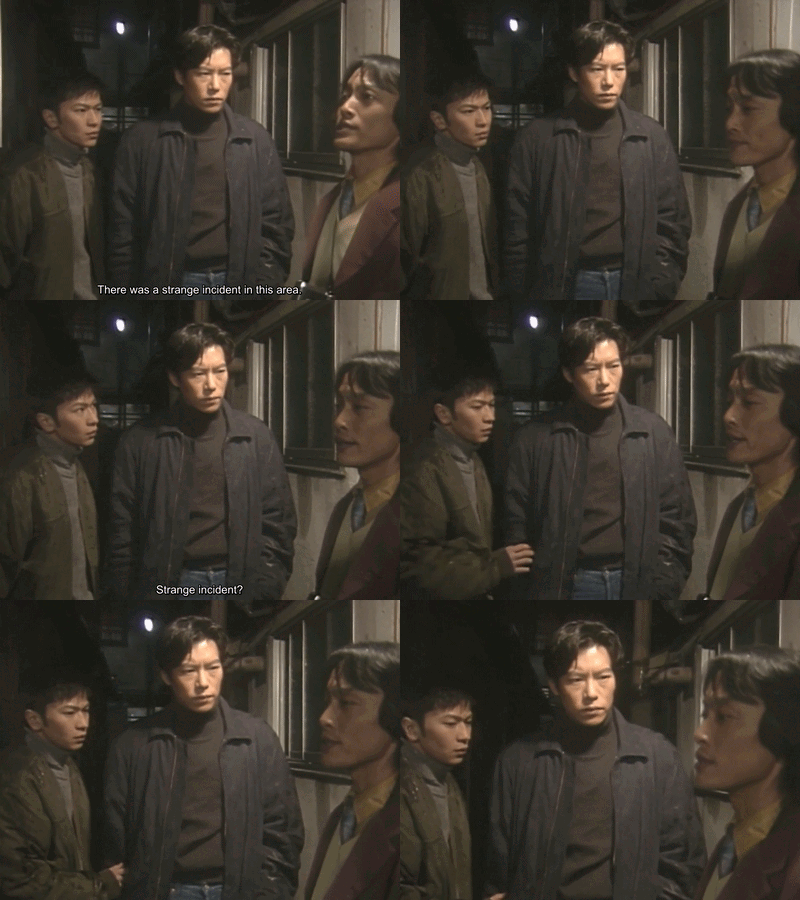
This felt like a very real character moment for Naoto, given his eagerness to solve various mysterious incidents through the show, such as Reiko’s murders in episode 2, or the spate of suicides in episode 5 (again, to Naoya’s dismay), and I would have loved to see more of it throughout the series. Perhaps this is another way in which their powers could be put to use! Kirihara Investigations Inc. – sounds like a blast.
One last anecdote to go out on: from the May 1994 issue of June magazine, we learn that Shinji Takeda was likely in agony for most of this shoot:
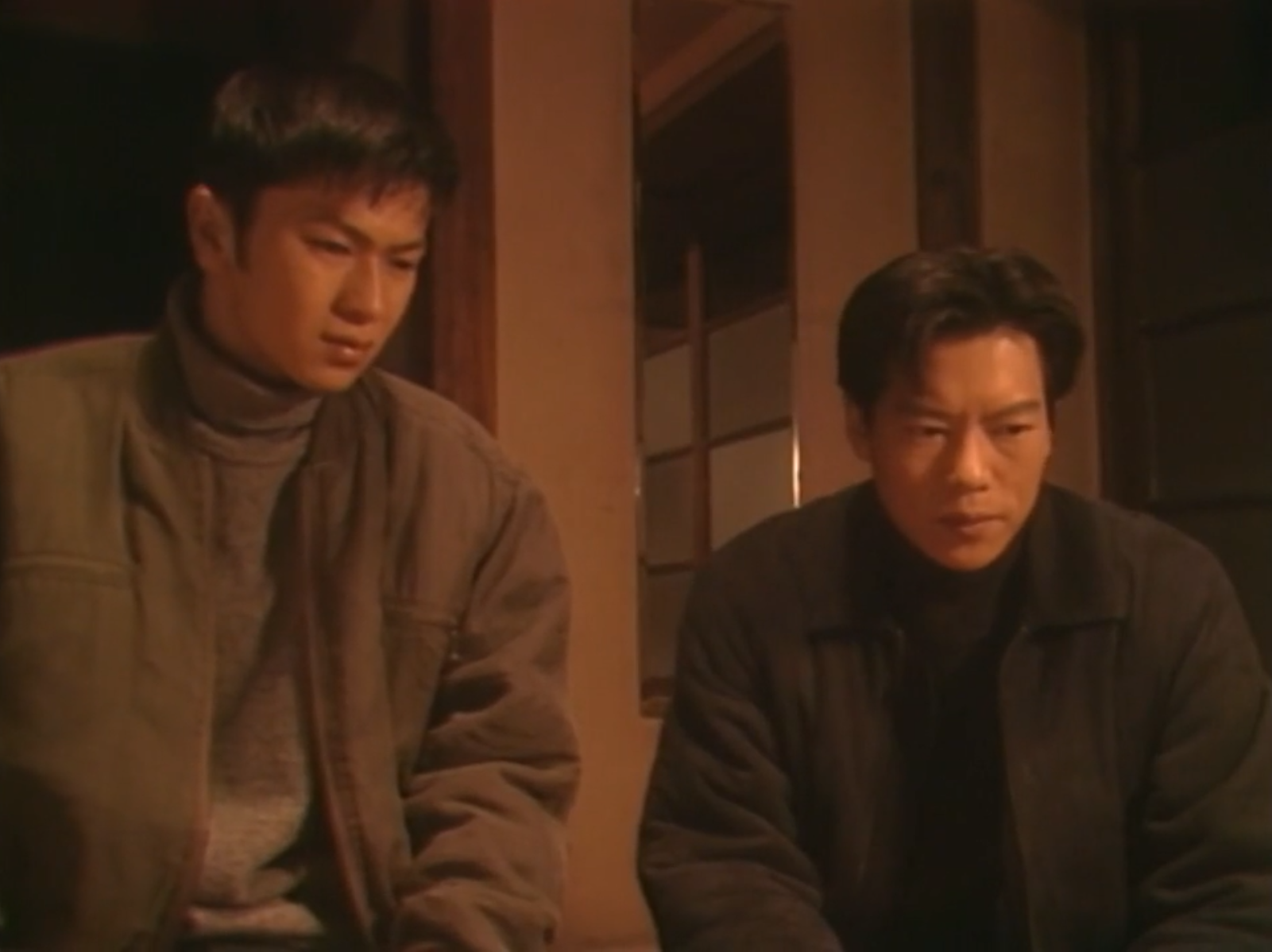
Takeda: There were plenty of tough moments, weren’t there? There wasn’t a single easy shoot. Maybe the Shotaro Hanawa arc was the only exception.
Toyokawa: That’s because it was all seated acting.
Takeda: That brings up the kind of mundane struggles – like how painful it is to sit in seiza (kneeling formally). Because of the height difference between the two of us, we had to adjust our postures to match; if he sat cross-legged, I had to adopt a “subordinate” stance – resting my butt on my slightly raised heels, the way you often see in period dramas. That was tough.
Still, the fact that it was tough is exactly what made it fun, you know?
- Pretty sure you can see the lighting rig just floating over Toyokawa’s head, here ↩︎
- This wouldn’t surprise me – I have citations that I will discuss in future for other times he gave George pushback on Naoto-specific character lore ↩︎
- George Iida talks about NIGHT HEAD chapter 21 ↩︎
- this citation is a secret until we’ve at least finished the show…! ↩︎
- Though I haven’t read it, these two episodes appear to have an almost egregiously derivative plot… plus, Misaki? really? ↩︎
- I wonder if the irony of George’s spiritual guide himself being a prognosticator was lost on him ↩︎