

Posted on August 17, 2026
NIGHT HEAD synopsis – episode 11

Episode 11 – Drug
broadcast date: december 17th 1992
Director: Katsuyuki Motohiro (本広克行) Screenplay: George Iida (飯田譲治)
Naoto Kirihara – Etsushi Toyokawa (豊川悦司)
Naoya Kirihara – Shinji Takeda (武田真治)
additional cast can be viewed here
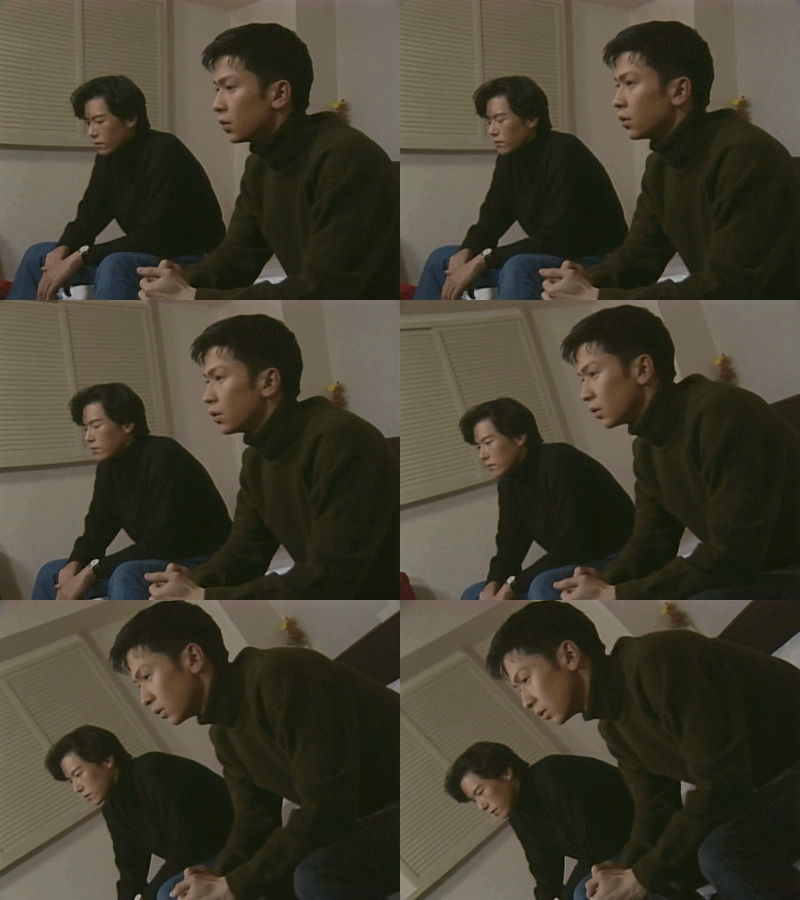
The lads have received a package from Mikuriya – it contains trial samples of a newly developed drug he’s been working on that may help to suppress their powers for a limited period of time. Naoya is immediately elated at this, wondering if now they “won’t have to suffer anymore”, but Naoto is skeptical – are they just Mikuriya’s lab rats, yet again? Despite Naoya’s eagerness, his older brother cautions him that the medication, created from hallucinogens, has potential side effects. More importantly to Naoto, he’s concerned that if they rely on medication, they’ll never be able to break free from Mikuriya. Sternly he reminds his brother, “Our goal is to be able to control our powers on our own.” And yet, crestfallen, his younger brother begs him to let them try the medication – together.1 And so, Naoto relents.
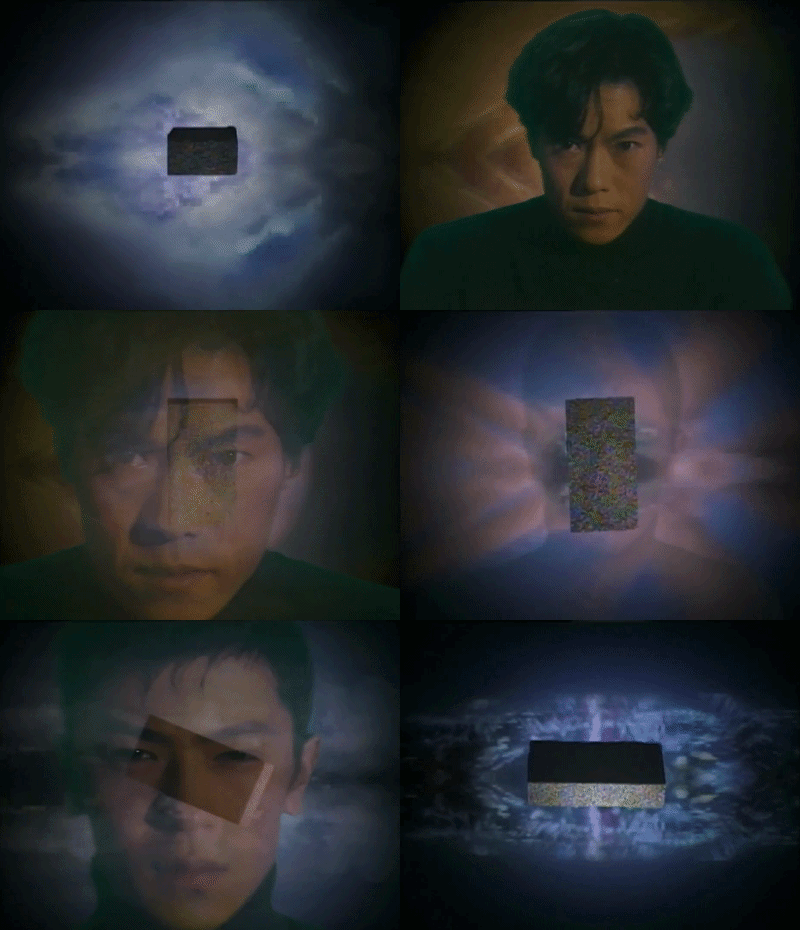
Needless to say, the lads have a rotten old trip, and it’s the best thing I’ve ever seen. They tour through the solar system, have a confrontation with their mother, and meet my new lizard best friend – Naoya screaming all the while. Collapsed on the floor of their hotel, the lads reemerge from their harrowing ordeal. They check in with each other, then they take a walk – as the script describes – “confirming to themselves that this is not a hallucination”. Eerie music and an uncomfortable atmosphere pervade the scene, and the brothers seem tense with anticipation.
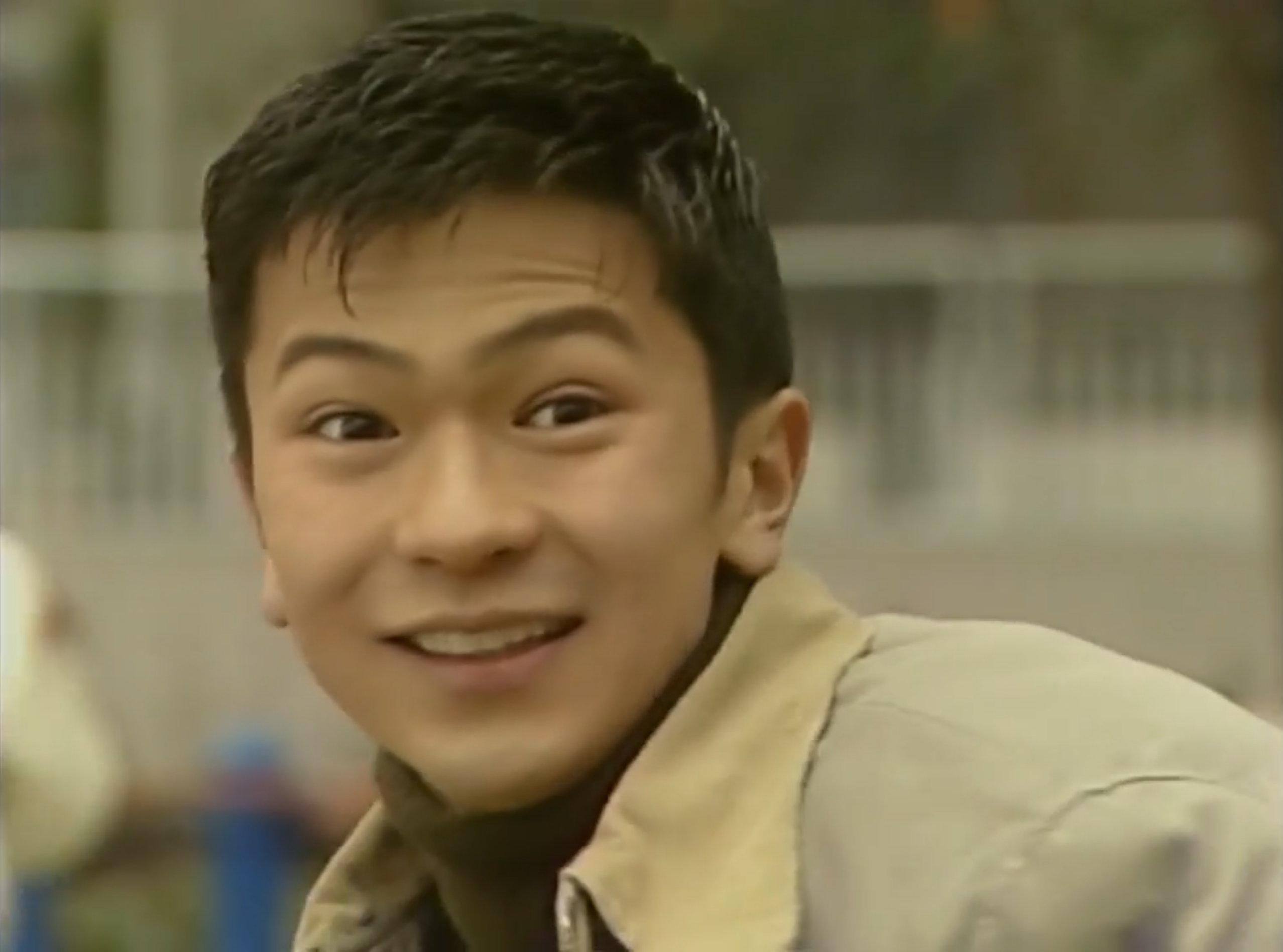
They enter a playground and take a seat on a bench.2 A young girl’s ball goes flying in their direction, and Naoya kneels to get it for her. As he hands over the ball, Naoya tentatively pats the girl on the head3 – and feels nothing. With a look of ecstatic delight on his face, Naoya turns to his older brother – they’re gone! Without his powers burdening him, he suddenly wants to explore all kinds of places. Excitedly, he drags Naoto to his feet, insisting they head out where there’s crowds – surprised, but not displeased, Naoya agrees. As they head out, the camera lingers on a fellow park visitor – a young woman4 – who appears to have had her eye on them.
“City bustle (Daytime—a pedestrian zone, or perhaps Harajuku or Shibuya)
Crowds of people are coming and going. The city is bustling with activity everywhere. Naoto and Naoya walk through the midst of it all. There is a raw, moving quality to everything they see. The two walk slowly, taking in all the sights around them. They observe the varied expressions of the passing crowds.”
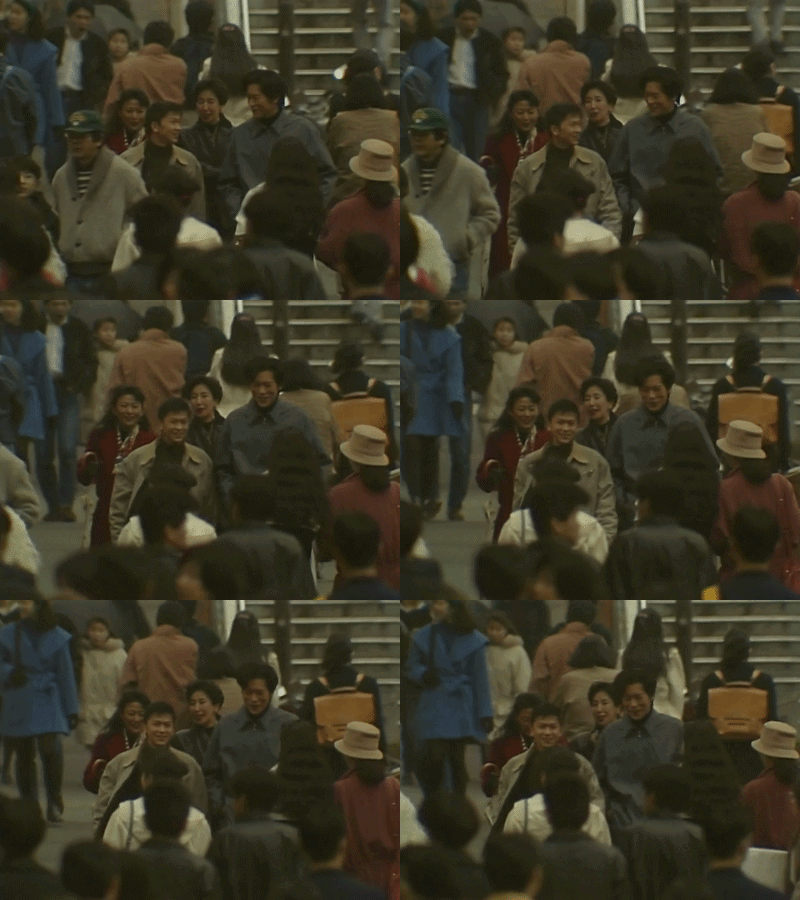
Naoya spots a street stall selling handmade accessories, and delightedly crouches to look. He holds up a necklace, remarking that it’s made of crystal, but the vendor corrects him – it’s just glass. That’s ok, he stammers, and says he’ll take it. As they walk away, Naoto asks him why he bought something like that, and Naoya replies that he just wanted to. It’s a nice memento, he thinks – because “this is the best day ever.” Naoto, looking off into the distance, agrees. Teasingly, Naoya says they should keep shopping. Behind them, the girl from the park is shown – still watching, with a strange grin on her face.
At a small cafe, the lads sit and discuss how they’re feeling. Naoya says that for him, it’s like a dream – for once, he has absolutely no idea what anyone is thinking! He asks after Naoto in return, who says that he realizes he’d been keeping his emotions locked up all the time, but now he can “think about things without feeling anxious”. Unlike his younger brother, however, Naoto isn’t reveling in the feeling quite as much – leaning back in his seat, he says he wants to get to a point where he can feel this way through his own control, without relying on medication.
Noticing the time, Naoto thinks they should head back soon – despite there still being four hours left of their advised ‘safe’ period. Naoto remains cautious about the potential side effects, but Naoya resists – they negotiate for one more hour. Just then, a group of young women enter the cafe, one of them accidentally bumping into Naoya. For the briefest moment, he sees a sour look on her face, glaring at him – but in a flash it’s gone, replaced by a polite apology and a smile. Nervously he watches her go past, and Naoto notices the sudden tension, asking if he’s alright. Naoya denies anything is wrong, despite the invasive thoughts of others starting to seep their way into his mind. He looks up at his older brother and sees – yet again – the lizard from before.
“The inner voices of everyone around him flood relentlessly into Naoya’s mind.
They grow increasingly intense.
Naoya grimaces and clutches his head.
Naoto is frantic.
Sweat pours from Naoya.
Inside him, the inner voices of the people roar like deafening noise.“
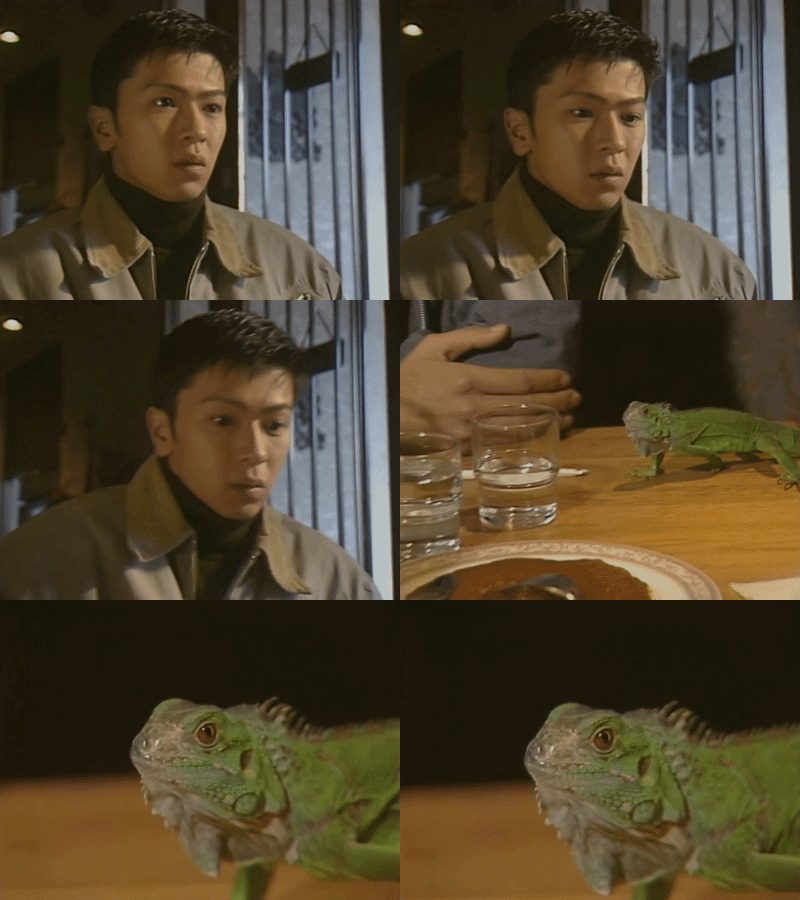
Suddenly, the internal gripes of every patron at the cafe overwhelm Naoya, who tries to cover his ears in agony. He finally admits to his brother that the very problem he took the medication to avoid appears to have gotten even stronger than before. Naoto calls out to his brother in concern, and a glass on the table explodes, much to his surprise – and then it happens again. The other cafe customers all turn to look at them, their thoughts turning to disdain – independently, they all glower and think to themselves that there must be something wrong with these two weird brothers. As their respective powers continue to strengthen (and their control worsen), Naoto realizes this must be an unknown side effect of the medication.
Just then, a gentle voice cuts through the cacophony, telling Naoya that he mustn’t be afraid. Huddled in pain, he looks up to find the source: the girl who has been following them. Speaking to each other telepathically, she continues to admonish him not to be afraid, but doesn’t answer any of his questions. As she leaves the cafe with a smile, he follows her, leaving his older brother behind in agony. Seeing him leave, Naoto attempts to follow, but finds his feet psychically ‘glued’ to the floor.
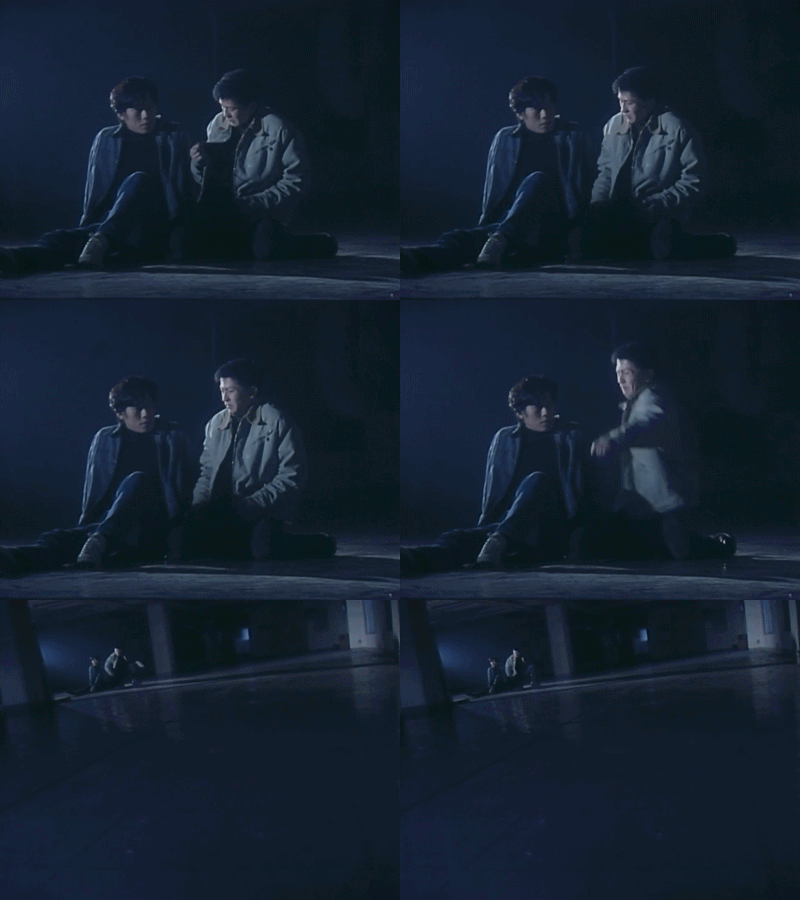
Dreamily, Naoya follows after the beautiful young woman, who leads him “somewhere safe”, she says – a place where no harmful thoughts can reach him. Meanwhile, having lost sight of his younger brother, Naoto is staggering along somewhere behind in the grips of the medication’s side effects. Naoya and the young woman have reached their apparent destination – a disconcertingly dark and empty floor of an office building.
Naoya, cautiously, tells her this is the first time he’s met someone where he can read their mind without seeing “ugly things”. Flirtatiously, she calls him over, telling him that it would even be alright for them to touch without negative feedback. He approaches, reaching out for her outstretched hand, and he delights that he can’t feel anything bad at all. “I’ve always wanted to meet someone like you” he says quietly, and she thanks him – then wonders aloud: doesn’t he think it’s strange? Does he really think a person like that exists? Playfully she slips behind a pillar, and Naoya tries to spot her, a nervous smile on his face. Much to his dismay, the one who reappears isn’t the young woman – it’s their nemesis, Y. At this, Naoya screams, falling to the floor.
As Y cackles maliciously, Naoto finally arrives on the scene, bursting through the door in a rage. As he lobs questions at Y about his intentions, he finds himself suddenly contorted with psychic pressure – and can’t return fire with his own powers. Y, grinning, reminds him that he doesn’t have powers since he took Mikuriya’s medication. He taunts him – back at the cafe when he felt his powers were exacerbated, it was actually Y who shattered all that glass. Though he remains psychically debilitated, Naoto still rushes Y, lifting him by the throat with his normal human strength.5 Y remains amused, and begins to transform into the young woman from before, now distressed – begging Naoya for help. Yelping that Naoto is scaring him, Naoya pulls his older brother away from the young woman – who turns back to Y, with another uproarious laugh.
Naoto runs back into the fray, slamming Y against the wall, only for him to transform again – this time into their mother. They vacillate back and forth with this, agitating both brothers – riling up Naoto to a frothing rage, which only distresses Naoya more at the sight of his brother attempting to strangle their mother to death. ‘She’ begs them to stop, saying all the things that would hurt them most, as if she can read their innermost fears. As Y claimed before, ‘she’ says that the brothers themselves are to blame for her and her husband’s disappearance – that they have only suffered because of their sons’ powers, who even went so far as to erase them from this world with sheer hatred.
Naoto, again told he’s to blame for things he cannot remember and doesn’t think are true, is now unsure what to believe any longer. He falters, letting go of the woman claiming to be his mother – claiming he’s the one who hurt her – and he stares at his own hands in dismay. But not for long, as he decides that even without psychic powers, his own internal sense of the truth is worth protecting with a violence that could kill. Naoya watches on in horror as his brother ends the woman in the guise of their mother, Naoto howling that she isn’t.
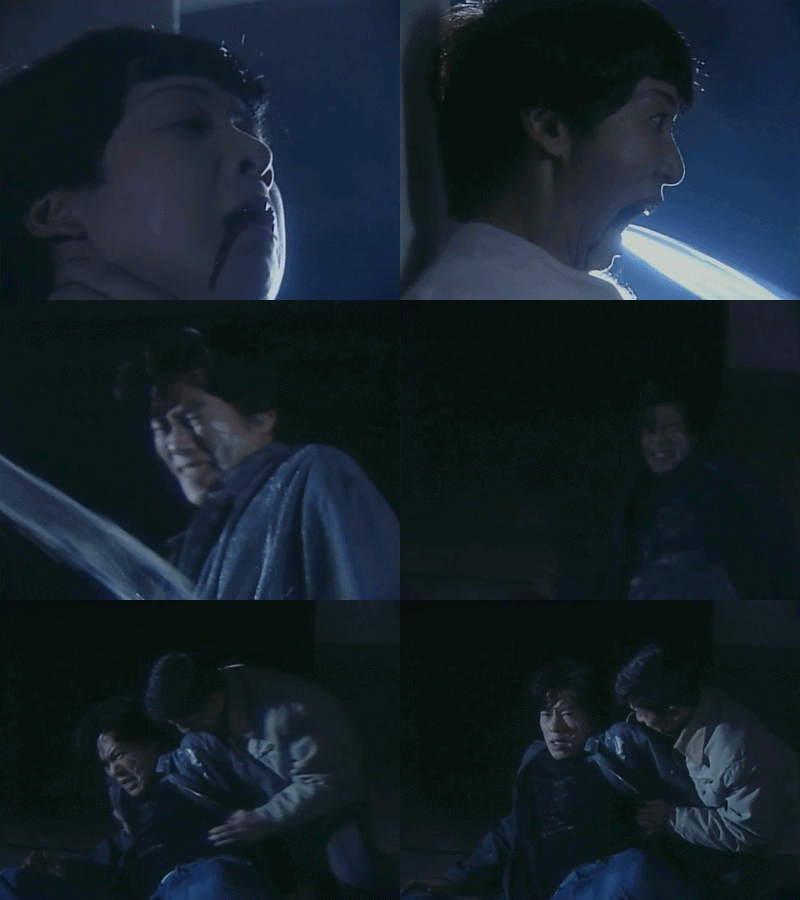
But the woman isn’t really dead, of course – what follows, as per the script: “The next instant, [their mother]’s eyes snap open. She wrenches her mouth wide open. The viscous fluid spewing from her mouth splashes onto Naoto’s face. The fluid pours out endlessly. Unable to bear it, Naoto recoils and falls backward.”6 Covered in muck, he yells at their nemesis – why is he doing this to them? Still as their mother, he simply replies – “Because I hate you. You’re the ones who should have disappeared.”
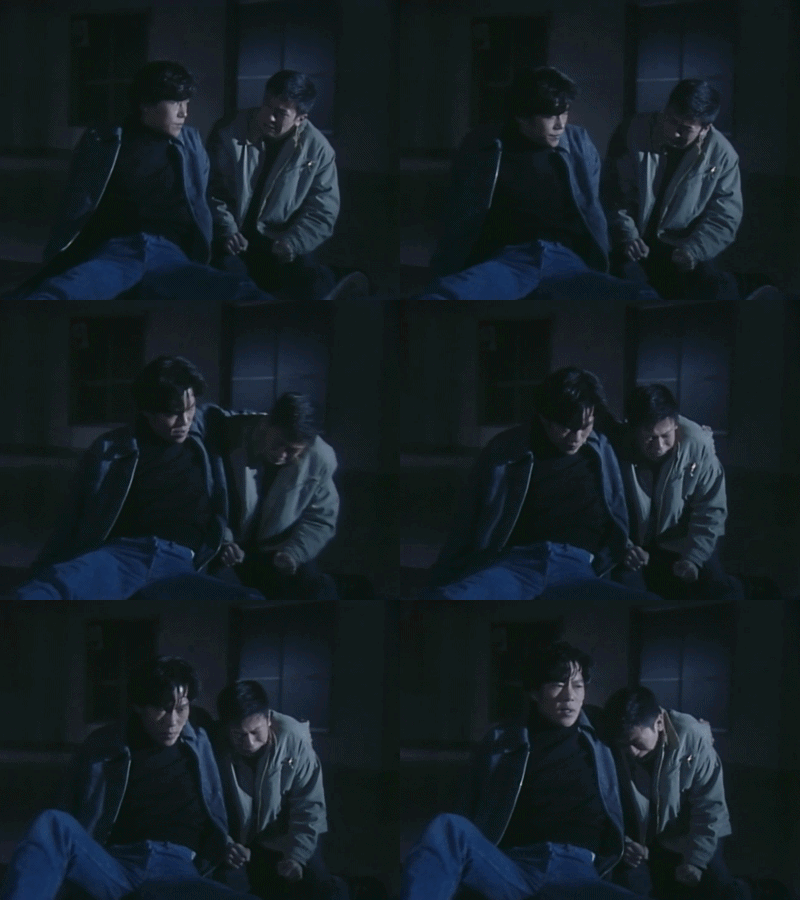
Finally, this pushes Naoto too far – and he bellows with rage as his powers lash out, returning full force. Naoto has a psychic standoff with Y, who falters back to his own form before blipping out. Naoto falls back, exhausted. Naoya clutches at him, worried – they both ask if the other is okay.
The events of the last hour or so finally begin to hit Naoya, and he begins to sob. He thinks that everything Y said about their parents must be true, but his brother tries to reassure him as he pulls him in for a hug. Heaving a sigh, Naoto remarks that they really can’t rely on medication after all – presumably because he feels he, at least, can’t protect himself or his brother without his own powers.
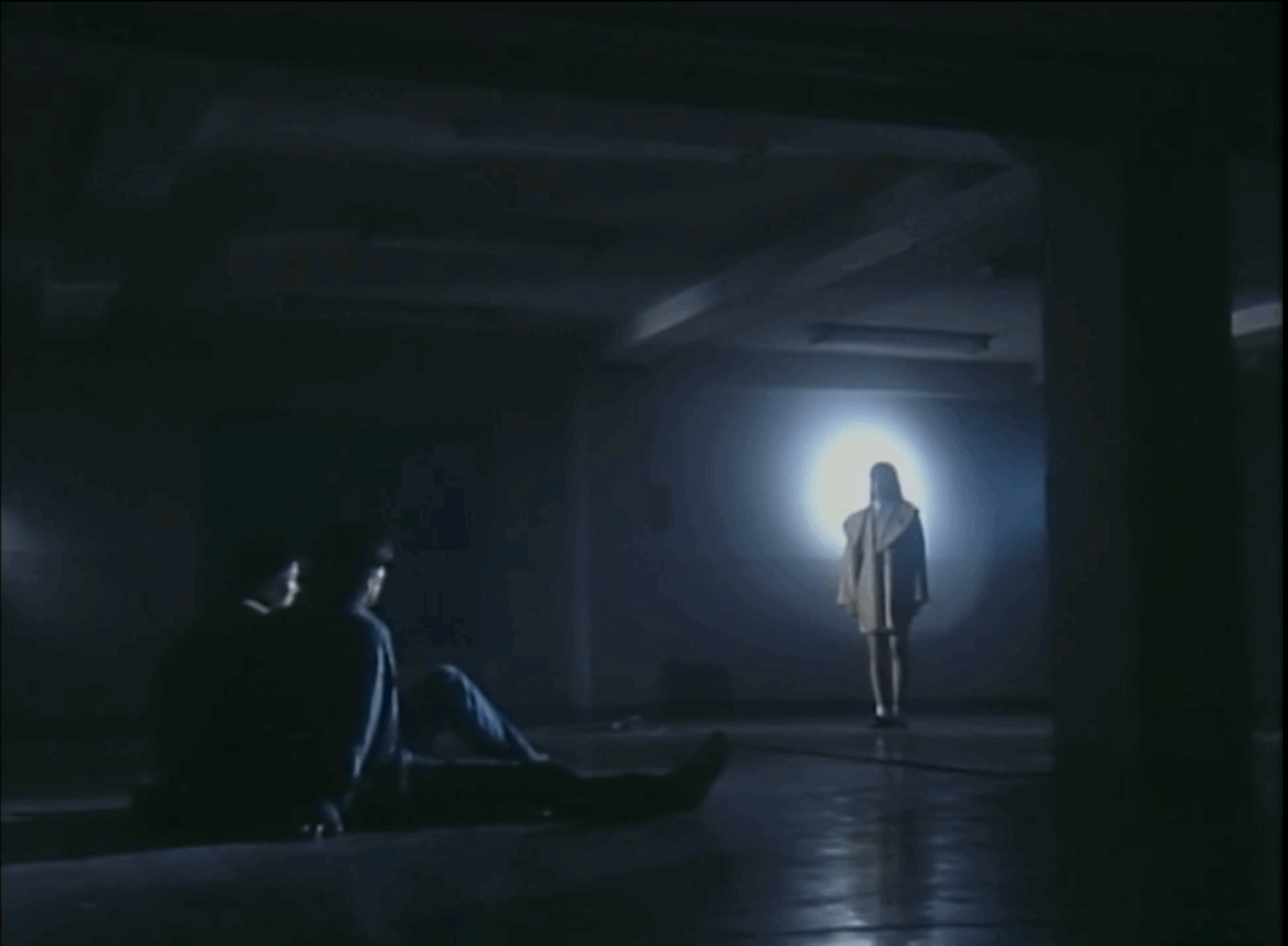
Just then, Shoko appears. She bluntly tells them that they shouldn’t try to give up their powers, because a time will surely come when they can make those powers their own. Haggard, sat on the floor in a puddle of ectoplasm, Naoto asks her when that might be. Soon, she says, but she doesn’t really answer. Instead, she says that possession of psychic power isn’t something special – everyone has power within them. This shocks them, particularly Naoto.
Shoko continues, saying that most are unwilling to believe in this inherent power – yet only “those people who do not possess a material civilization understand this best”. Soon, however, humanity will begin to gradually realize their own abilities. They ask if this is what she meant by a ‘transformation’, but she avoids the question, only saying that there are those who do not wish for the world to change, and reiterating that they shouldn’t try to give up their powers… before she disappears, yet again.
In the silence that follows, Naoya takes out the necklace he bought earlier that afternoon. No longer a memento from ‘the best day ever’, he grimaces, throwing it across the room – the glass shattering.
———————————————
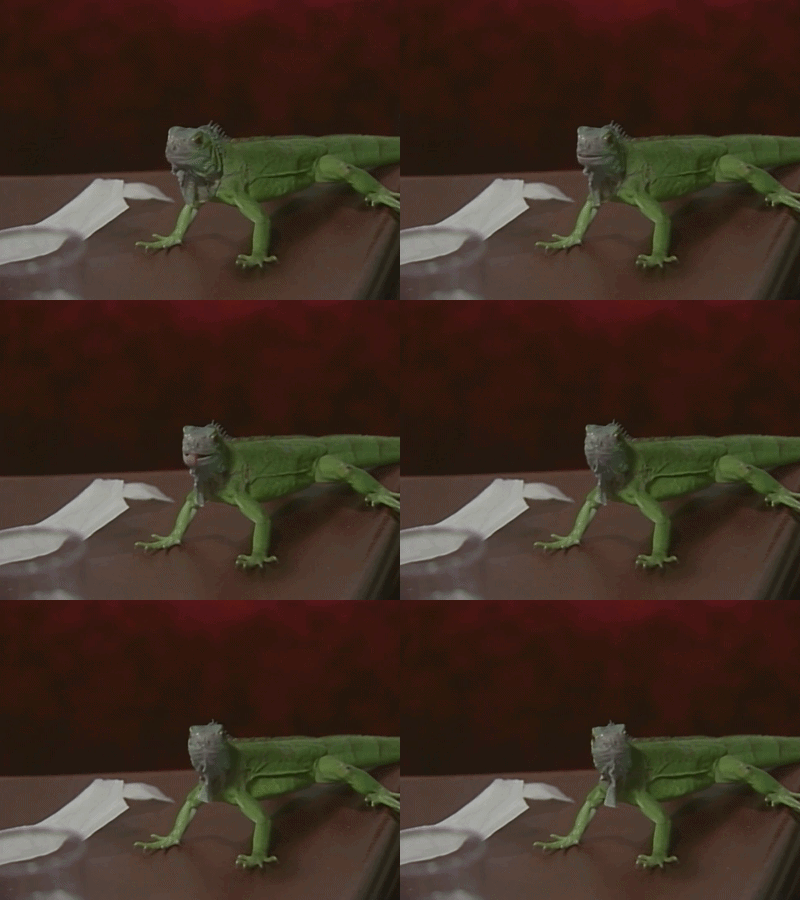
This episode was both a fun and difficult watch for me. It was hard seeing Naoya so profoundly sad, for one, but I did think their initial drug trip in the beginning was one of my favorite moments in the series so far – especially the lizard. Did I mention how much I love that lizard?
It’s interesting that the suppressants were derived from hallucinogens – I assume this is because of real-world situations such as MKUltra, which have since become part of the fictional trappings of the ‘psychic’ genre7, but it is strange here to see it in a reverse position of stopping the powers rather than heightening them. Given the direction the work is going with New Age mysticism, I wonder if George is aware of the broad variety of ancient, contemporary and indigenous examples where hallucinogens have a spiritual and religious significance.
This episode just about sidesteps a potentially interesting conversation around medication and agency. Naoya’s reaction at the end felt very genuine and raw – I have experienced firsthand (and secondhand) the devastating impact of a new prescription failing to miraculously fix what you pinned all your hopes on it fixing, so I can definitely relate. But I think it is worth noting here that the meds did work – the only clue we had that there were side effects beyond the initial bad trip were from Y’s psychic fakeout. So, if Naoya felt that was a direction he wanted or needed to go, it would be nice if he at least had options. Which makes it all the more galling that Shoko tells them to knock it off! In her speech, she also tells them that “everyone has the power to create the reality they desire”8, which makes it all feel somewhat impotent (fatalistic, even?) to have a christ-like teen telling you that you can do anything, while also telling you a bunch of other shit you shouldn’t do. They disliked Kamiya and his prophecies, but is Shoko really all that different in terms of how she directs them and their actions?
One interesting moment for me was at the cafe, when Naoto makes a distinction that differs from earlier in the episode. Before taking the medication for the first time, he insisted that they both need to learn how to control their powers – later, he says that he himself needs to learn how to control them better, rather than both of them. He may well be making this distinction because of having seen Naoya be so happy on their day out, or from being able to think about what some of the root causes are for his own power surges – I think the difference here is less about controlling the ‘powers’, so much as controlling his emotional outbursts (which, in his case, are necessarily connected.) His core problem appears to be some amount of emotional dysregulation, and if he feels that a baseline level of self control would help him the most, I’m all for it.9
One thing that really irked me though is the continued slant about ‘material civilization’ vs the spiritual – while I understand that this has a somewhat different connotation in Japanese, the way that it is combined with New Age mysticism and Naoya’s powers here is particularly bothersome to me. Setting aside foreshadowing to stuff we’ll talk about later,10 here ‘material culture’ is also in reference to materialism – ie, capitalism and the consumption of material goods. This has particular implications in this episode for some elements that were left out from the script.11 You’ll remember that when his powers abated, Naoya specifically says they should go shopping – when the lads were at the cafe, the script describes “Several shopping bags containing clothes and other items placed on the seat next to Naoya.” Later, the climactic scene is described like this:
Naoya suddenly takes the crystal necklace out of his pocket.
Naoya: “I left behind the things I bought. Except for this.”
Naoto: “I see. (Looking at Naoya) What are you going to do with that? Keep it?”
Naoya: (Shaking his head) “It’s a fake.”
Naoya hurls the accessory against the wall.
The glass shatters.
Here, Naoya is seemingly being chided not just for trying to get rid of his powers, but also for using that downtime to go shopping – or, to participate in material civilization. This is underlined, here, by the fact of the necklace’s falsity as glass, where previously we’ve noted that Naoya can ‘feel’ crystal energy with his powers. And this is what bothers me – what makes crystal so special, compared to glass? I feel weird that certain items have more “energy” or whatever by dint of their materials, especially when (most) glass is plenty natural in its mineral composition – and the ways it’s made are also fascinating! Is this because it’s “manufactured”? What about crystals that are manufactured? The first place my mind goes to is what he’d think of synthetic diamonds, but then almost immediately I wonder if he would be obliterated by conflict diamonds instead. But again, what makes one material more special than another? Can he feel the human rights abuses of the Xinjiang cotton industry when he puts on a pair of jeans? In a lot of ways, how fast fashion and the vicissitudes of its environmental impact would affect Naoya is more interesting to me than what I feel we’re being given.
- As I’ve mentioned before, y’all really need to learn to take shifts ↩︎
- I was going to recommend that they not do this, for obvious reasons, and then I realized that those reasons may not actually be obvious to them. They were taken away from society as children – Naoya only 6, at most – so they may still think of playgrounds with a childlike mentality. Bummer! ↩︎
- ok but he should know better than to do this ↩︎
- From George Iida talks about NIGHT HEAD chapter 18:
“Among the women I met at the auditions was Ryoko Shinohara, who had only recently made her debut. She may well have forgotten it by now, but I remember the conversation we had back then quite clearly:
“You know, I met someone the other day who said they could see the future.”
“Oh, really?”
“And they told me I was going to become a huge star.”
“Is that so?”
“…You don’t actually believe me, do you?”
“Why?”
“Well, most people don’t believe in that sort of thing.”
“No, I do believe it. If I didn’t, I wouldn’t be writing this story, would I?” ↩︎ - damn dude, do you lift? ↩︎
- why did they do this? this is one of the greatest mysteries of NIGHT HEAD, to me. ↩︎
- Firestarter, for one, but even in things like AKIRA ↩︎
- this leans more Darryl Anka than cosmic ordering – I say this because the latter didn’t exist yet as afaik, but also because George mentions how impactful the former’s ‘Bashar channelings’ were on him at the time, in chapter 20 of George Iida talks about NIGHT HEAD. This isn’t an area I’m super familiar with, but it is foreshadowing for some of the New Age areas within the work that make me uncomfortable in their implications. ↩︎
- Again, while this is something that CBT or otherwise could have helped the brothers with, I respect anyone’s choices around psychiatric medication, so long as it’s what they feel works for them – but especially if they’re psychic ;^) ↩︎
- bad news, baby: I’m an anthropologist and this is all foreshadowing some shit I do. not. like. ↩︎
- for the better, really – the ending is more impactful as-is ↩︎


Recent Comments