

Posted on August 10, 2026
NIGHT HEAD synopsis – episode 9

Episode 9 – Trigger
broadcast date: december 3rd 1992
Director: Katsuyuki Motohiro (本広克行) Screenplay: George Iida (飯田讓治)
Naoto Kirihara – Etsushi Toyokawa (豊川悦司)
Naoya Kirihara – Shinji Takeda (武田真治)
additional cast can be viewed here
trigger warnings: sexual assault, childhood sexual abuse
I really mean it about the trigger warnings on this one: it is gratuitous, so if you have any sense that the content or themes of this episode might upset you, just skip it! I’ll be brief in my summary, since these portions weren’t directly impactful to the plot.
Episode 9 begins on a contemplative early morning, where we get this narration from Naoto:
“Sometimes, we would walk through the city streets in the morning, before the crowds arrived. The faint consciousness of the people flowed through the morning air. For the most part, that atmosphere felt comfortable to us. Even if Naoya’s mind became unguarded, he would come to no harm. That’s why this time of day was ideally suited for training to control Naoya’s reading ability.”
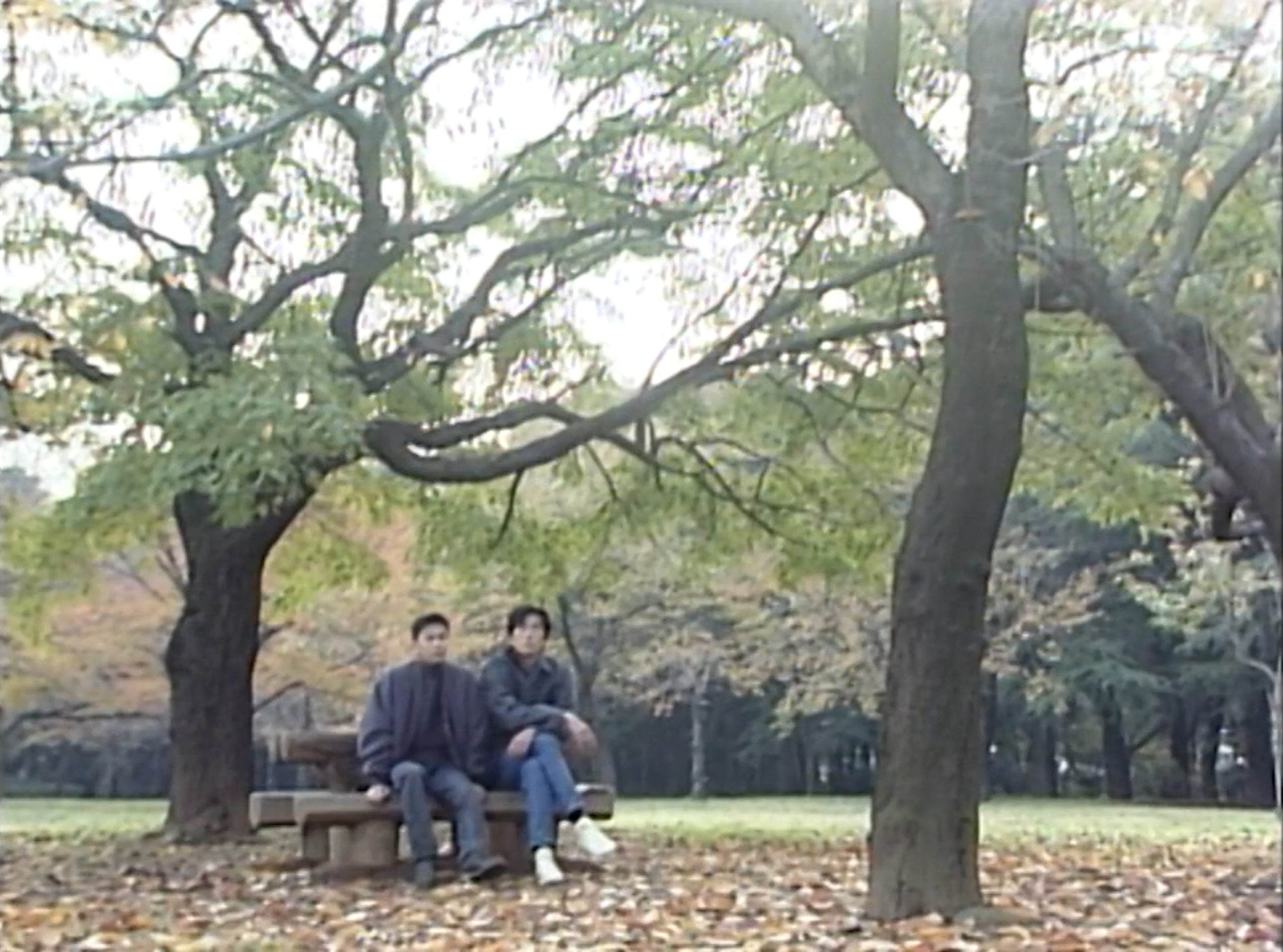
These walks seem to be helping, as the script describes Naoya having “an expression that has relaxed just a little,” which is similarly reflected in Shinji Takeda’s performance. As they sit amongst the fallen leaves of an autumnal park, Naoto remarks that that there’s not much they can do but trust the process – “We have no choice but to believe.”
He thinks aloud that this can’t all be pointless – “There’s bound to be a reason why we have powers like this.” Tepidly, Naoya agrees.
Then, Naoya senses something – someone they’ve met before, calling out for help. They glance around to find Yui – the psychic girl from episode 3 – who staggers upon seeing them, falling over in exhaustion. The lads rush forward to help her. Having taken her back to their hotel room, Yui explains that of late, her powers have become stronger, making life increasingly impossible for her:
“I thought I’d be okay. I thought if I just held it in, I could get by like a normal person. I used to think you guys were just… being weak. But I was completely wrong. Once my powers got this strong, there was no way I could cope. I can hear everyone’s thoughts and secrets. When it’s like this, you can’t trust anyone.”
The trigger1 for the sudden increase in the strength of her powers was the arrival of a new employee at her workplace – as she spent time around him, she found herself overwhelmed by visions of his past actions as a serial rapist. He sees that she is afraid of him and begins to be interested in her, making things that much worse. Her powers are now impacted by touch – both from people, and objects – and she doesn’t feel like she can cope anymore.
She finds that even spending time with her boyfriend is impossible, discovering that he cheated on her with a mutual friend.2 “After ending up like this, I can’t date anyone. Forget about a boyfriend—I can’t even make friends.” Yui is completely overwhelmed at the situation, huddled on the hotel bed in desperation.
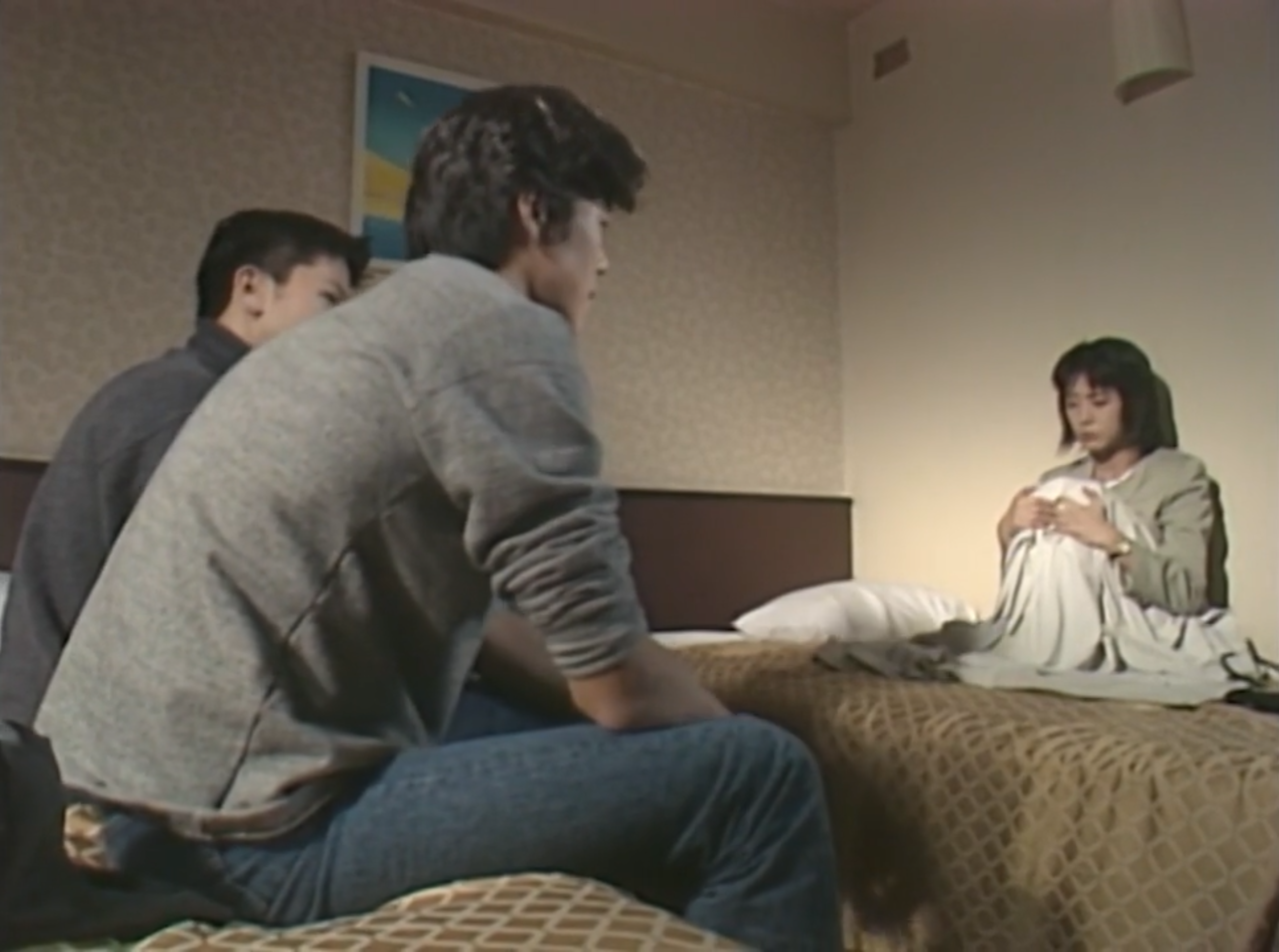
“If I didn’t have this power, I wouldn’t have had to go through all that. Why do I have this ability—something I never even wanted?” she sobs, to which Naoto replies – “We’ve wondered the exact same thing countless times.”
The brothers explain how the severity of their own powers is what led to their isolation for 15 years, and Yui seems aghast. “I don’t think I could ever endure that” she says, shocked – Naoto replies, “No one could.” She suddenly grows frightened that if her powers remain like this, or get any stronger, she will also be taken away, but the lads try and comfort her. They all take a look at a drawing Yui did of Shoko, who is to her a mysterious presence who appears occasionally – they explain to Yui that they’ve also met her. Prompted by this, Naoto repeats his notion from earlier, that he believes “there must be a reason” for their powers – “I don’t know what it is, but I’m starting to believe there is one”, all because Shoko told them it was so.
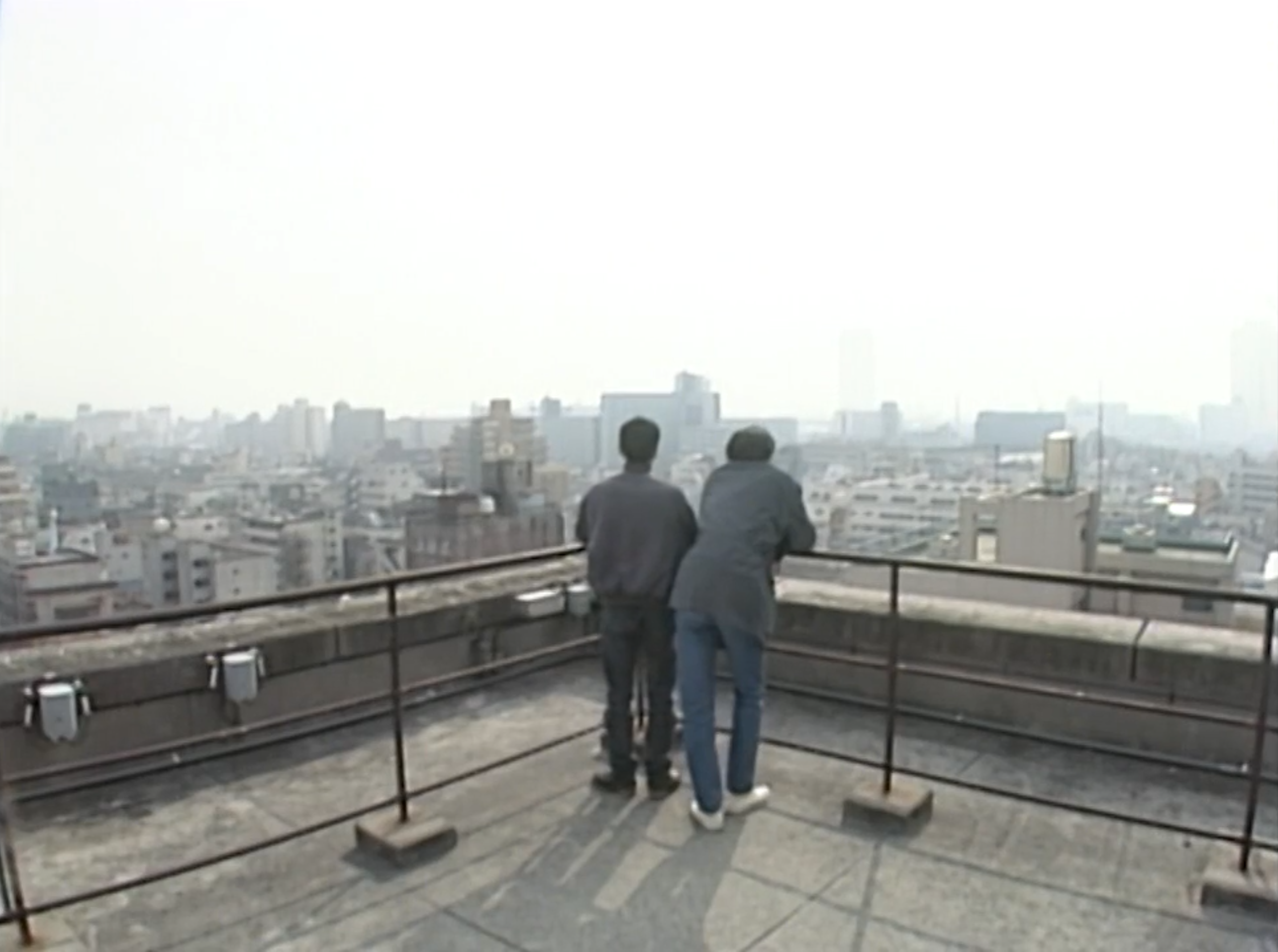
They encourage Yui to rest, and go to the roof of the hotel to discuss the situation. Naoya is saddened that Yui’s worst fear appears to be the very fate they escaped from – isolation. Naoto responds that he’s not going to contact Mikuriya, as he believes there’s still a good chance they can manage on their own.
When they return downstairs, they find that Yui has decided to confront the problem herself – both of her powers more generally, but more particularly of the pernicious colleague. She returns to her own apartment to decompress, only to find that the colleague has turned up as well, with plans to attack her. For some foolhardy reason, she lets him in – deciding to tackle the issue by using her powers against him.
Unfortunately, this backfires horribly. Moving past generic mind-reading, Yui reads into her attacker’s own core trauma – having been sexually abused as a child – and uses this to break him down psychologically. The lads rush to the scene to find Yui’s attacker on the floor, mind broken through infantile age regression. Yui, also sat on the floor, is gone – her consciousness destroyed, having pushed her reading ability too far.
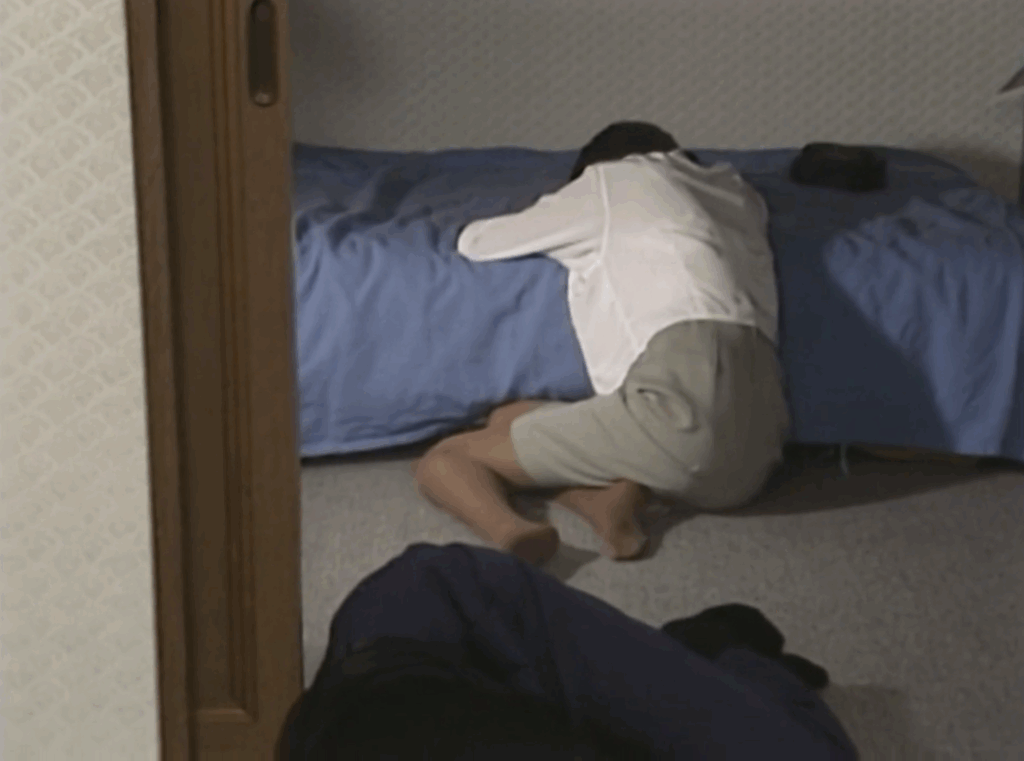
Naoto is unable to rouse her, and Naoya confirms through touch that she is unreachable. He sobs, begging his brother for an explanation – “What’s the ‘reason’ for this? Can there really a reason for such powers?”
The screenplay closes with this: “Naoto is helpless. Naoya is weeping.”
———————————————
A disheartening episode, and pretty disappointing after the previous two which dealt with similar themes. I think it’s a perfectly interesting angle to examine, but I am unimpressed with the ways they go about it. How they chose to film the scenes of sexual assault is, I feel, particularly egregious – they veer into an aestheticized territory that demeans the stories that they’re attempting to convey. It’s also sad that so much of the fear and pain evoked by the powers within this series center around sexual trauma. While this may be a consequence of the limits of George’s imagination at this point in time, it may well also be because of the show’s Late Night TV slot genre specifications – which would also explain the hyped up titillation in the way that the assaults were framed.
This episode also raises some questions I’ve had previously – does Naoya only ever take in bad memories? Does the logic here mean that all people have permanently latent trauma to the psyche, with no hope of recovery or progress? Trauma, to me, can be like the rings of a tree – it’s there, certainly, but you will inevitably continue to grow so long as you hang in there. Does he never see the growth, the healing? The constant traumatic twang of every vision he receives is so perpetually set in the peak worst moments that it doesn’t even really feel reflective of reality. Maybe I’m wrong, and George wrote it this way on purpose – maybe Naoya’s powers are just nihilistically fucked and that’s the point, or maybe the training he requires will involve learning how to see the good as well. Who knows! Guess we will have to wait and see.
Naoto’s choice to not involve Mikuriya interests me, as sad as its outcome is. Did this stem from a feeling they could protect her from isolation, specifically – which is the primary help that Mikuriya provides, and the thing that was scaring Yui the most? Or was it pure anti-Mikuriya bravado, perhaps a fear that they’re relying on him too much?
The opening intro with Naoto’s narration explaining how their morning walks help Naoya to gain control over his powers was nice, and helps with their gradual integration into society after so much isolation. One thing that occurred to me while watching, however, was why it is that Mikuriya only provides isolation for psychics – couldn’t he create some kind of temporary retreat where he helps people to build up their internal psychic barriers? To learn how to maintain calm and not be overwhelmed by the world? But, quite quickly, I realized that I was just reinventing cognitive behavioral therapy. While I’m not sure exactly how these things proliferated in Japan, it’s interesting to note that the way this approach had developed by the 1990s started to incorporate Buddhist principles of mindfulness and acceptance – something that may have some plot relevance (consider this foreshadowing) – and therefore feels like it ought to have been at the cutting edge of what Mikuriya’s parapsychology lab offers.




Recent Comments