

Posted on August 5, 2026
NIGHT HEAD synopsis – episodes 7 & 8


trigger warnings: gaslighting, sexual assault, suicide
Episode 7 – Nightmare
broadcast date: november 19th 1992
Director: Masayuki Ochiai (落合正幸)
Screenplay: George Iida (飯田讓治)
Naoto Kirihara – Etsushi Toyokawa (豊川悦司)
Naoya Kirihara – Shinji Takeda (武田真治)
additional cast can be viewed here
We open on a rising dawn, the sun peeking through skyscrapers – the morning is good, Naoya says, because he isn’t overwhelmed by the emotions of other people. As they walk the empty, early-morning streets, Naoto notes that his younger brother’s powers have been getting stronger. No longer limited to ‘reading’ emotions or memories, he appears to be developing powers of precognition (as in episode 2). But Naoya demurs – it’s not really a reliable power, and often appears to him in incomprehensible ways. Naoto wonders if he ever sees visions of themselves, to which Naoya says no. They discuss the continuing mystery of their past, and Naoto remains convinced that their parents are out there somewhere.
Naoya seems worn out as he wonders aloud, “It’s strange, isn’t it? Even though we have these extraordinary abilities, we can’t solve a single thing about our own situation.” But Naoto tries to reassure him – “It doesn’t matter if it takes a little time. We’ll find a way to control our powers. I’m sure you’ll be able to do it.” Standing in front of a display window on a deserted street, Naoya grimaces at his brother’s gesture. He tries to voice his lack of confidence, but Naoto cuts him off immediately, almost shouting him down. “You can do it.”
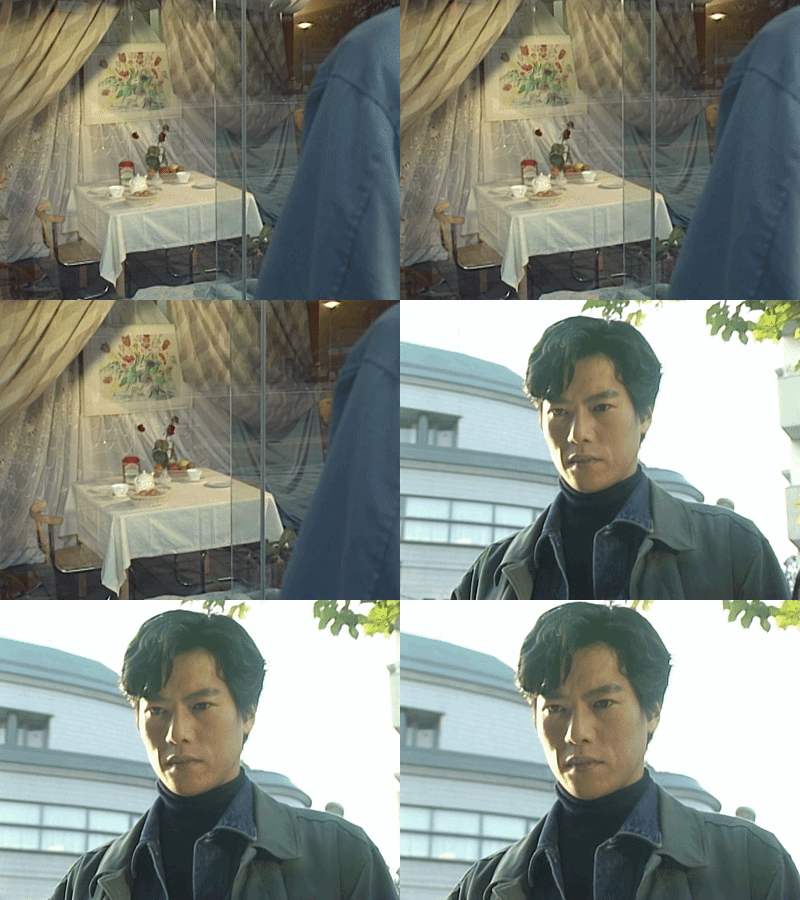
Irritated at this, Naoya turns away. “That’s easy for you to say. If you just hold back your temper, you’d be able to get along with ordinary people, wouldn’t you? But me…” At this, Naoto cuts him off again, actually shouting this time: “Don’t say stupid things.” Ironically, Naoya has managed to hit him where it hurts most – his sensitivity over his quick temper. Stinging and upset, Naoto turns to stare intently at the shop window which displays a kitchenette – table, chairs, and breakfast for two. Behind them, someone walking by stops abruptly, startled – though we only see their back, they turn to stare at the brothers. The stark silence between the two continues as they contemplate their grievances.
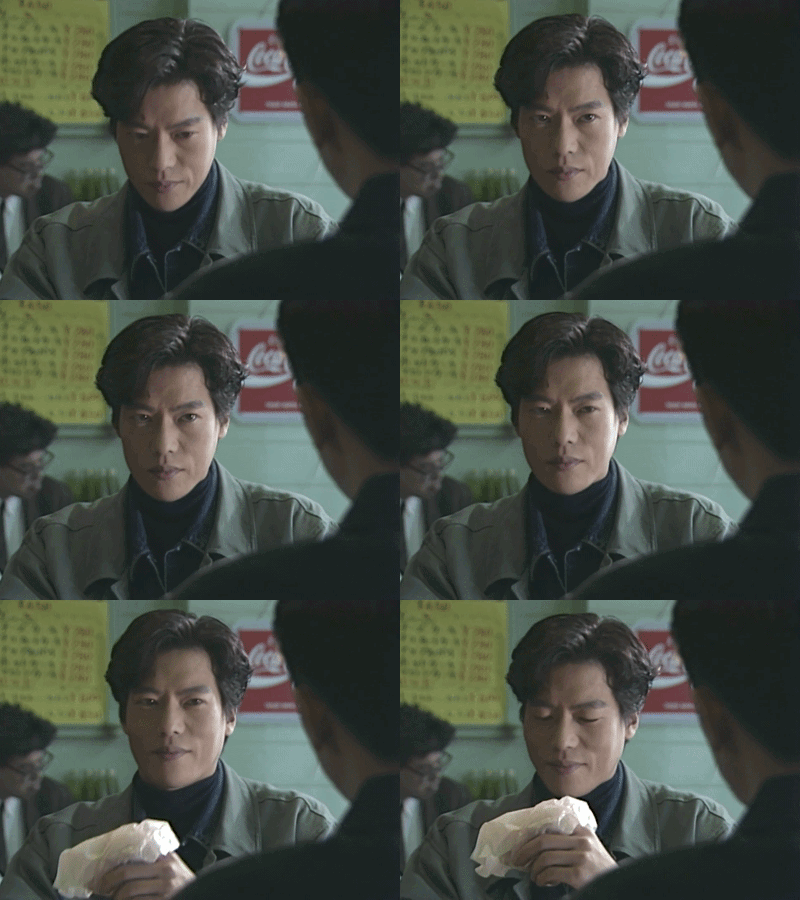
We change locations to a restaurant where the brothers gloomily eat their lunch. Naoto is the first to break the silence, again reassuring his younger brother that he believes he can learn to control his power. Not just precognition, however – with training, he should be able to work on his ability to not be overwhelmed by the thoughts and emotions of others. At this Naoya relents too, apologizing for what he said earlier. Naoto smirks at him – all is forgiven. They continue to eat their burgers in peace.
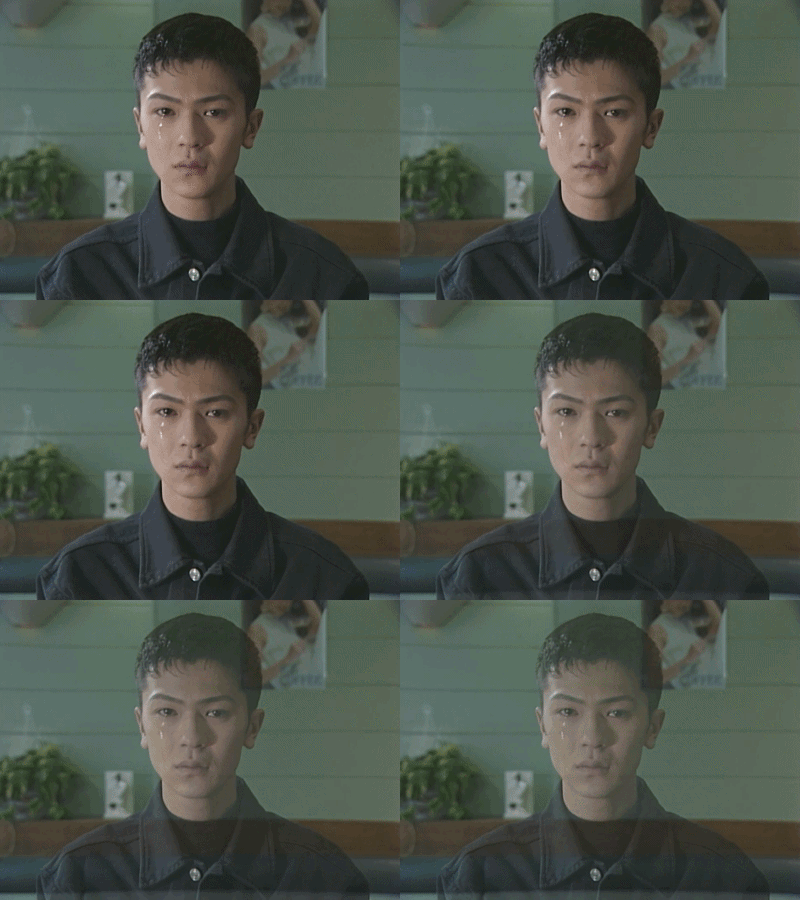
But outside, the mysterious figure now stares longingly at the window display from before. At the same time, Naoto glances up from his mug of coffee, only to see Naoya across from him – crying. Stunned, Naoto doesn’t know what to do, shouting his name as Naoya begins to disappear. Naoto’s coffee cup smashes to the ground with a resounding clatter, and we zoom out to find…
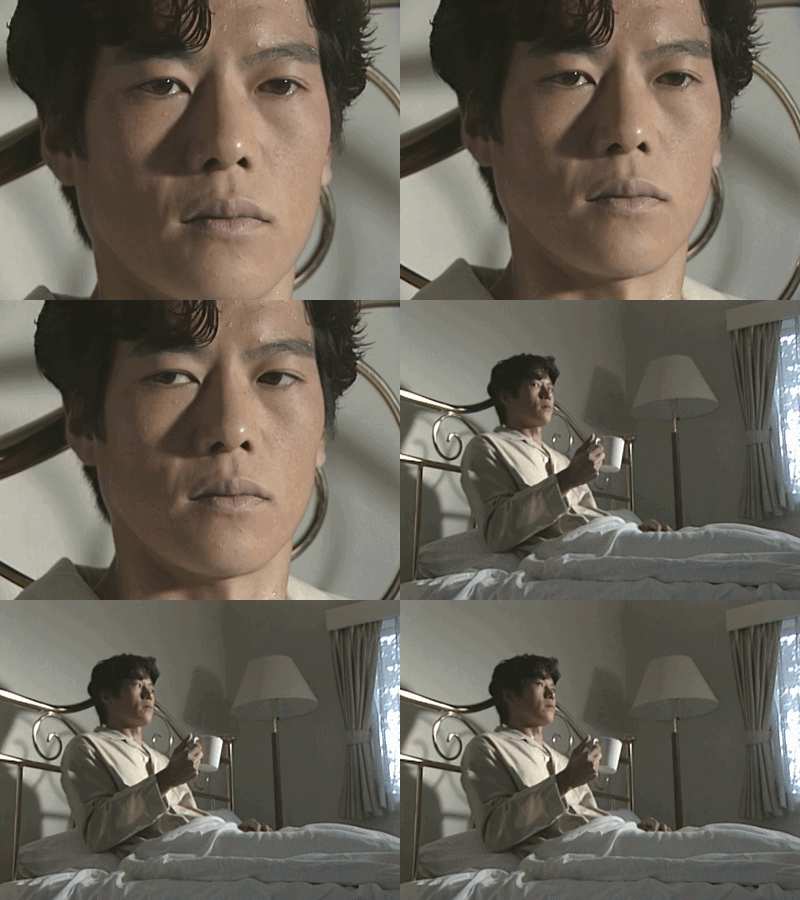
…a pajama clad Naoto, sat in bed, shaking uncontrollably. He looks slowly left and right in terror, when a serene woman’s voice calls out – “are you awake?” He turns to see a woman in a silk bathrobe, brushing her hair. Slowly she approaches, kissing a nearly frozen Naoto on the cheek – “It’s time to get up.” Sweat beads his forehead as Naoto responds – “Who are you?” But she only smirks, asking what he could possibly mean.
Quaking, Naoto raises his hand to see a wedding ring on his finger. Filled with dread, he scans the rest of the room, and sees a normal apartment – with an awfully familiar kitchenette. Stare as he might, though, he can’t remember – and he looks ill with the effort. The woman, now dressed, lays out a breakfast spread on the table with a bright smile, calling out to Naoto – “hurry up and get ready – Darling.” At this, Naoto looks like he might throw up.
After dressing, Naoto sits down to breakfast with this woman – still mystified. After he manages to puzzle out that he has a job as an average salaryman, he cautiously asks the woman across from him when they got married. When she seems confused, he goes too far – “Is this reality? Something feels off. Something’s wrong.” The woman bursts into tears. “How cruel… we’ve only been married for two months…” Naoto, flustered, apologizes – at this, the woman walks over to his side, crouching down to grasp his shoulder. “I fell for you the moment I saw you,” she says, a coy grin on her face. Naoto looks around the room uncomfortably, eyes wide. He still has no idea who she is or what is going on.
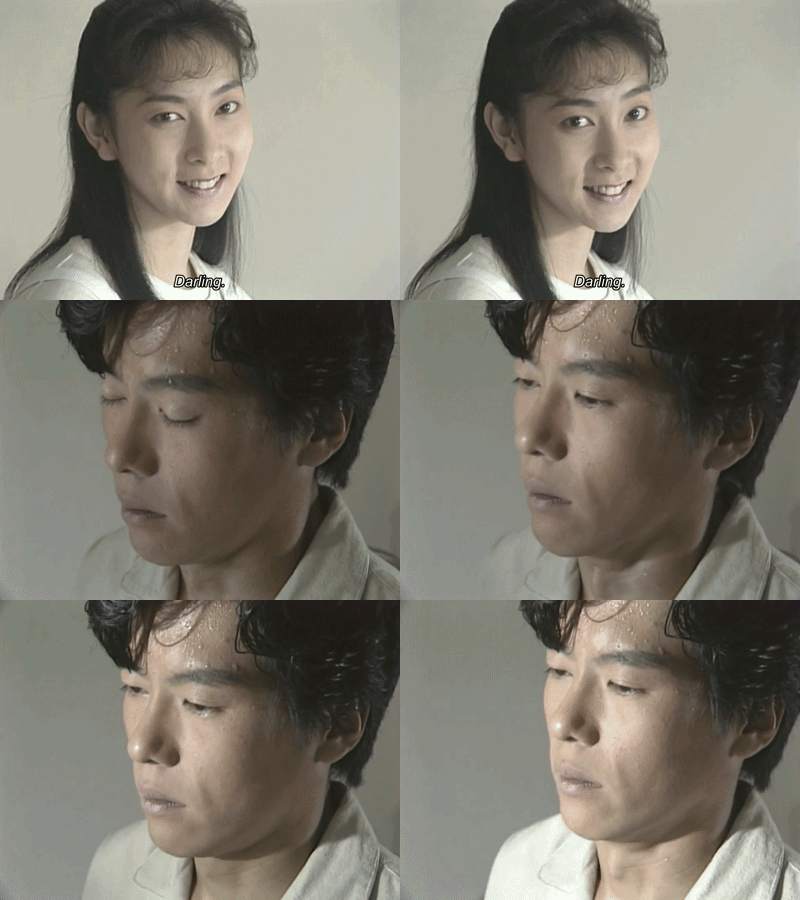
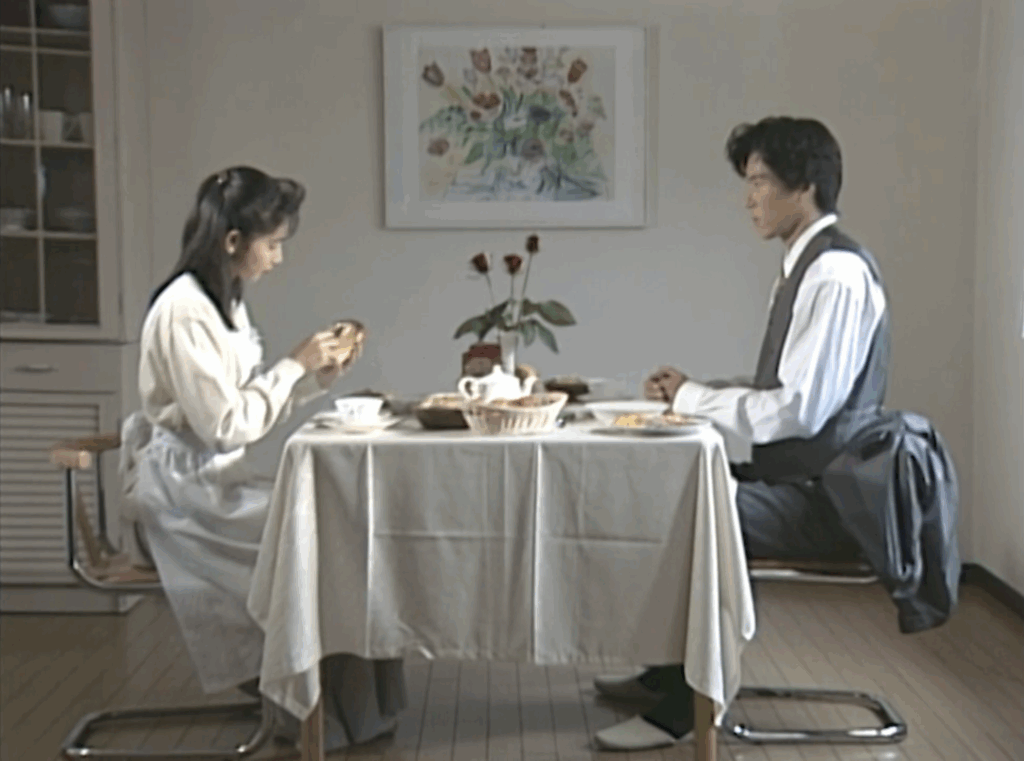
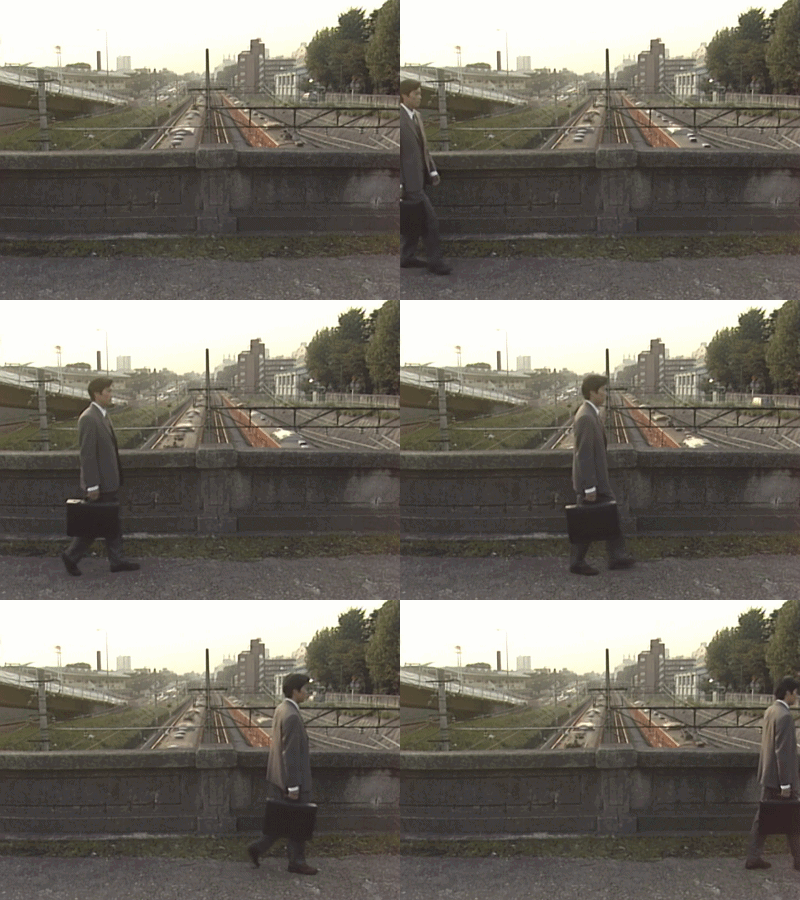
He staggers off to ‘work’ through a silent landscape drained of diegetic noise – he can’t comprehend how everything that day goes smoothly with work, despite never having been there or done the job before. Later that night, he sleeps fitfully, tossing and turning through dreams of someone he can’t quite reach. Waking in a panic, the woman in bed beside him asks what’s wrong. “I saw a person … Someone being held captive in some awful place…” Gently, she reassures him that it was just a nightmare, but he shouts at her that it wasn’t. She rises, a strange grin on her face, towering over him to whisper “Please… Forget about all that” before leaning in to kiss him.
Following this, Naoto continues to lead this unfamiliar life, staggering to work day after day while looking nauseated – he ponders to himself, “As time goes by, will I forget this strange sense of unease and simply blend into this world?”
Later, the two sit down for a picture perfect dinner, and the woman – Yuka, we learn – mentions how much she likes the flowers chosen for their table’s vase. “I’ve always dreamed of a life like this” she sighs, to which Naoto does not respond. He does ask her, though, if she knows anything about his parents. She balks at this, refusing to answer, but he presses her. She wavers, saying that she doesn’t want to talk about it because he “hates them”. Utterly confused, Naoto repeats this – and at every answer, with increasing confusion, repeats it again. “Hate them? I hate my parents?” Snootily, she replies in frustration – “You said you were better off without them.”
At this, Naoto loses it. Hands shaking, filled with rage, he attempts to hold back his anger but cannot. As he shouts that what she says isn’t true, his powers also burst forth, smashing the vase between them – but this time, he has no idea how this occurred. He immediately asks what just happened, but Yuka shuts him down – this topic is off-limits. Naoto stares at the dripping shards of the vase with an increasing sense of doom.
As he troops home from work on yet another day, he grasps his pounding head as he’s racked with visions of the person from his dreams, just out of reach. A rose overwhelms his view as he tries to reach them, quickly turning to the rose-red lips of Yuka. She walks towards him, negligee askew, bedroom eyes at the ready, but he only grasps his head in agony.
Later, sitting up at night, he tries to sort through what all this could mean – who is he? Where is he? Why can’t he remember? He turns to look at the kitchenette – only to spot the very vase he had smashed before. Appalled, he stares at it, and for a moment he recalls the window display from before. Shocked, and thinking hard, he’s able to bring back some sense of himself from that moment in time. He grimaces, trying harder – his whole body straining at the effort to reach the edges of memory. When was this? And just who was he with…? Then, a monumental crash – the vase has exploded yet again.
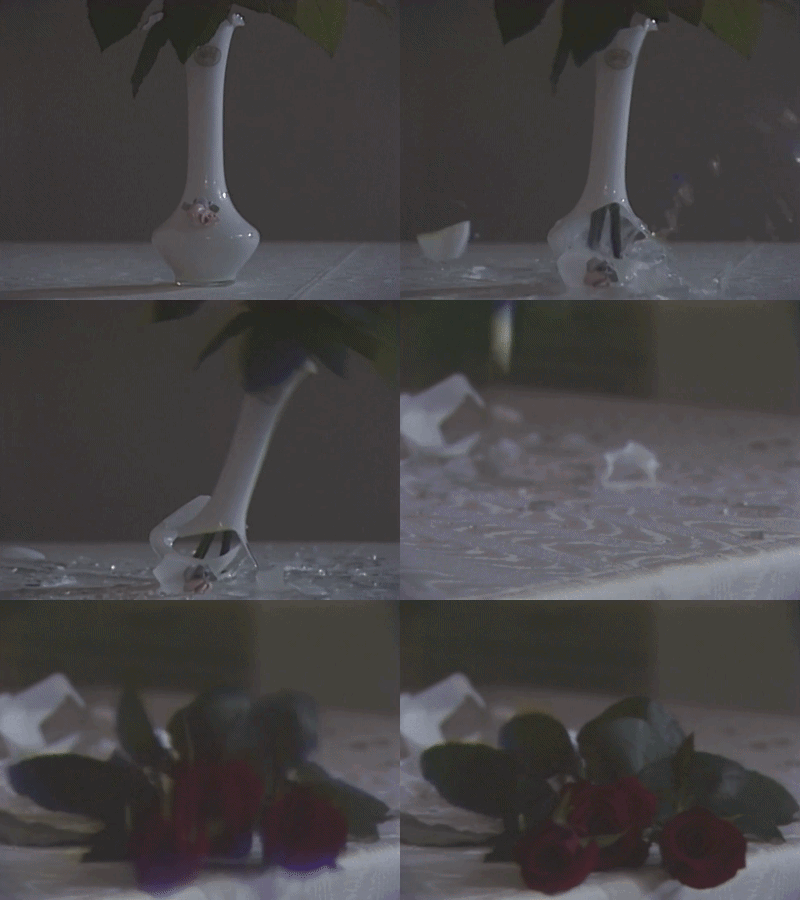
Yuka bolts out of bed with a sultry harumph, saying how rude it was of him to do that. And when she went out of her way to find the same vase he liked! Tense, fists clenched, Naoto asks her – “What are you hiding? What are you doing?”– he begins to shout, repeating himself to her unresponsive back. Still facing away, she finally responds, her tone now deep and resonant: “Do you really want me to tell you? Even though you hated that old life so much … I simply created the world you wanted.”
Taken aback, Naoto repeats her – the world he wanted? She slowly turns to him, assuring him that it is: “I actually saw it, back then. While gazing at that shop window. You thought, ‘this is the kind of life I want,’ didn’t you? That’s why I made it for you.” He stares at her aghast as she slowly approaches, revealing her scheme – “All because of this power, you’ve just been holding in your anger all this time. On top of that you were abandoned by your parents. You were forced into isolation, weren’t you?” At the mention of isolation, Naoto closes his eyes – the person from his dream filling his mind. The stranger raises his tear-stained face, and Naoto remembers – Naoya.
He leaps up, shouting – where is his brother? But Yuka only grins at him mockingly. “You remembered? The younger brother you wished would just disappear?” Naoto recoils, denying this, but Yuka laughs at him – “It’s no use trying to hide it. After all, this is the world you wanted. Back then, you thought to yourself, ‘If I didn’t have a brother, everything would be so much easier’, didn’t you?” Naoto thinks back, wondering at the possibility, but says she’s wrong – that she’s lying. Overwhelmed, he begins to shout at her – “This is just the world you created!” But she smirks and shakes her head.
“This is the world created by your wish to lead an ordinary life … The world I wanted and the world you desired have synchronized. That’s why you’re here.” Naoto begins to shake, still denying her, begging her to tell him where Naoya is – he staggers, needing to sit down.
Yuka slinks over to his side, continuing to rationalize her actions. “The ‘you’ of this world has lived a normal life without being burdened with psychic powers. As for that pathetic little brother? Thanks to those wretched powers, he’s still catatonic. That’s why he’s been kept in isolation all this time.” She grasps Naoto’s shoulder, grinning – “There’s no hope of recovery.”
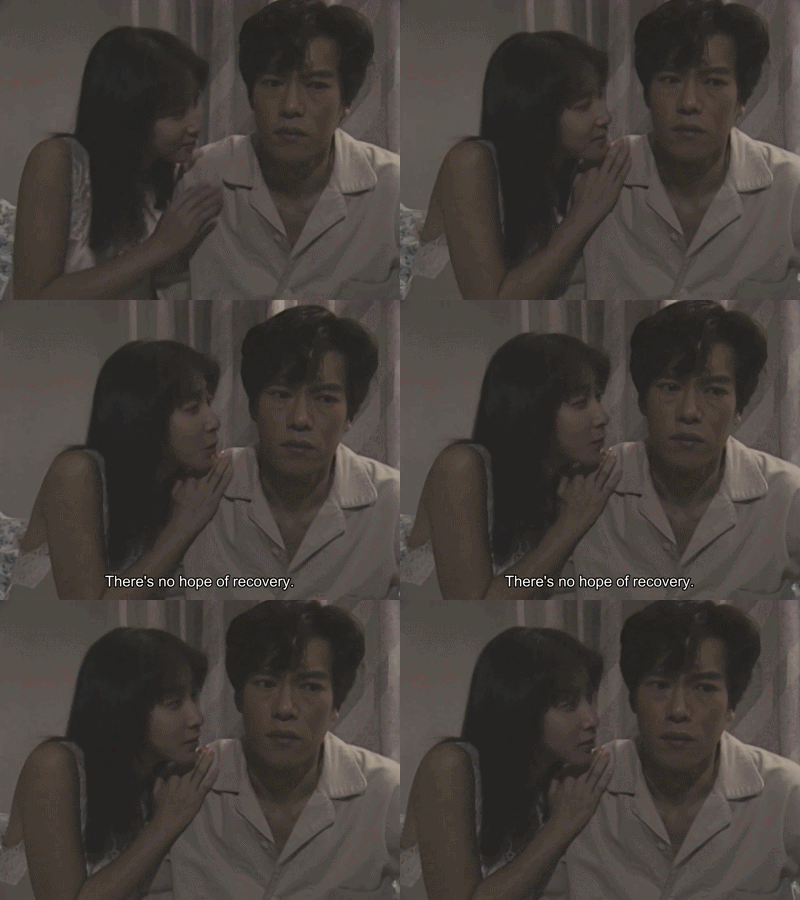
Naoto pushes her away, and again demands to know where his brother is. Affronted, her tone lowers again – “Do you really want to see him?” Naoto gives an emphatic yes, but she replies – “I have him locked away, just as you wished.” Yuka gestures to a door just across from them, and Naoto approaches. The door opens on a blinding white light, then what appears to be a room in a mental institution. Naoya sits quietly on the floor, unresponsive. His brother rushes to his side, trying to rouse him, but to no avail. Yuka places a hand on Naoto’s shoulder, and asks him if he understands now. “Living with me in this world is the best thing for you.”
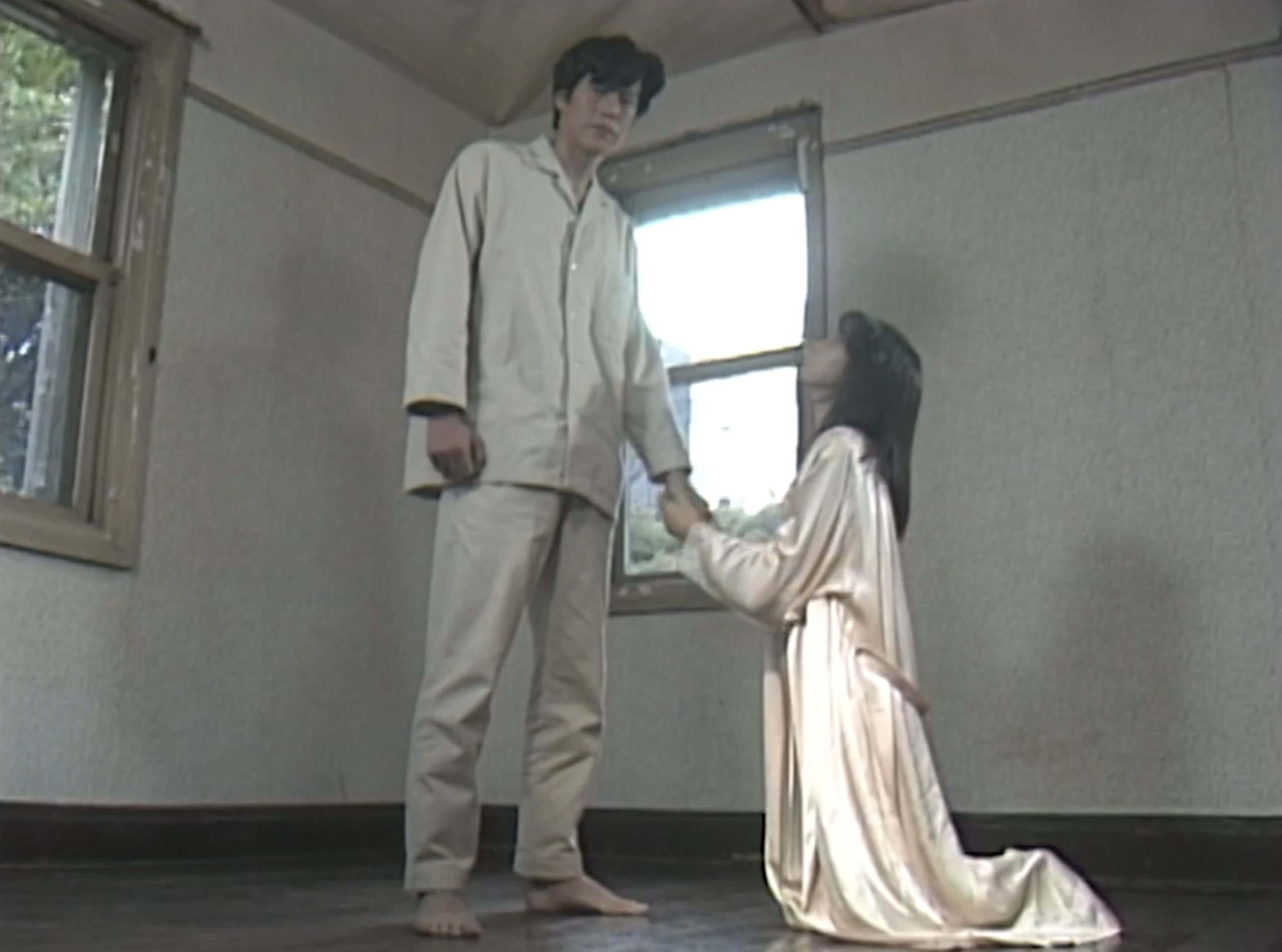
Naoto pushes her away, telling her not to touch him, and she shouts back – isn’t this the world he wished for? But his hold on his rage begins to deteriorate, bellowing at her that she’s lying, it’s all lies. Yuka slowly walks towards a cornered Naoto, who backs away. Quietly, she begs him – “Please. Choose this world. Choose me.” She grasps his hand, saying that with her powers, she could never share love with an ordinary person. “Let’s live together in this world”, she pleads. But Naoto doesn’t relent. “Take me back to the real world.”
She grabs at his arm, sobbing no – but his grasp on his anger fully slips, shouting at her to take him back, that he never wanted this world. Her nails dig into his hand, drawing blood as she cries out – “but why?” Wincing in pain, he tries to hold back – “Because I don’t love you. And there isn’t a world where I ever will.” Yuka’s eyes search his face in agony before letting his hand drop – then he watches in shock as she begins to fade away.
Naoto finds himself suddenly back in his own world, Naoya across from him quietly eating his lunch. Covered in sweat, Naoto stares at his younger brother meaningfully before looking around the restaurant in fear. Naoya looks at him in surprise, asking him what’s wrong. Suddenly, Naoto speaks up, a torrent of desperation – “I need you. Please believe me – it’s the truth. Stay by my side forever. No matter what happens, the two of us are brothers.” In response, Naoya seems taken aback – he apologizes, assuming his older brother is still upset from their earlier tiff.
Naoto realizes he’s said too much, and panics, looking away. But, a quick glance at his hand reveals huge gashes from Yuka scrambling to hold on. He looks around, only to see Yuka staring at them both through the window – crying. At Naoto’s command, they run for it, Naoya chirping along questions as they go. But his older brother only replies, “Be careful. We don’t know who might be watching us,” before breaking into a sprint, Naoya at his heel.
———————————————
What an interesting look into Naoto’s psyche! For him to be coerced yet again into a sexual relationship he cannot consent to, by a woman acting out an otherwise ‘normal’ life to cover up her deceit, is horrific – especially in the context of episode 4. Yuka’s claim that it all started when she fell for him at first sight only makes it worse. Her continual assertion that ‘it’s what [he] wanted’, despite his refusals, is an uncomfortably accurate depiction of one of the ways that consent is forcibly manufactured and extracted – by convincing the other party that they were literally asking for it.
One of the biggest triggers for Naoto’s emotional upsets is what he sees as deceit – falsity, outright lies, or attempts at telling him what he wants or how he feels. This tracks with the general mysteries of the show – a sense of perpetual unease at not knowing one’s own past, or the veracity of their memory – but it could well be rooted in his trauma at not being believed by his parents, back when he tried to explain that his own relative was hurting him.
It’s unclear to me whether Yuka’s power is a new one for the show, or if it’s something similar to Masayuki’s from episode 5. As for whether she can actually sense the true desires of those she manipulates…? If she can, she certainly didn’t do a very good job of providing a world that Naoto enjoyed. At no point in this episode did it feel like Naoto was even comfortable, let alone happy – leaving him dry-heaving and white-knuckling his way through almost every scene. We might speculate that Yuka gave him the world she herself wished for, attempting to gaslight him into believing it was his own desire. Or, another perspective may be that she made the world he thought he wanted, but he was naive – this interpretation is bolstered by an unused part of the script:
“For fifteen years you kept saying you wanted to get out, but the moment you finally did, you were completely bewildered. I suppose that’s only natural. After all, you knew nothing about the outside world—nothing beyond what you’d seen on TV or in magazines.”
This angle interests me, especially given the context of the show’s female audience. Naoto’s rejection of Yuka and her ostensibly picket fence creation is that it is also a rejection of a domestic normativity crafted by the media as peak achievement – the exact life that viewers are expected to desire themselves. But to see a male character – a salaryman, the epitome of 1990s masculinity – reject the very life where he is king? That must surely have been thrilling, in a way – especially if you were a woman who also didn’t want that kind of status quo domesticity.
My interpretation is that what Yuka sensed was something along those lines, but not from Naoto. Instead, perhaps, she sensed Naoya’s desires – of a life for his older brother. His comment that “If you just hold back your temper, you’d be able to get along with ordinary people. But me…” may well reveal his anxiety that his brother can – or should – live out a ‘normal life’, as depicted ‘on TV’. In a moment of extreme self doubt, perhaps he felt that it would be better off if Naoto lived a life without him, and that he ought to return to Mikuriya (or even be institutionalized) because he would never be able to control his own powers. This is probably not what the authors intended, but Yuka’s world felt so fully formed – yet Naoto looked so perpetually nauseated – that it feels like she couldn’t have picked it up from him, at the very least.
As for Naoto’s desperate outburst at the end of the episode, it’s interesting to ponder. The lines in the show differ from that of the script:
Naoto snaps back to reality. He is sitting in his original seat.
Naoya is beside him.
Naoto looks at Naoya’s face.
Naoya is lifting a hamburger to his mouth with a gloomy expression.
Naoto looks around, startled.
Then, his expression shifts to one of relief. He watches Naoya’s movements with a gentle look.
Naoya is surprised and bewildered by Naoto’s strange expression.
Naoya: “What’s wrong?”
Naoto: “I need you. There’s no telling what I might do when I lose my temper. When push comes to shove, you’re the one who stays calm.”
In this version, by saying he ‘needs’ Naoya, he means it literally – as a surge protector for his own rage. But the line, as delivered by Etsushi Toyokawa, leans more romantic, in a way – while he assures viewers that no matter what happens the two of them are brothers, you don’t normally beg your bro to ‘always stay by your side’. There is emotional resonance in this scene to me, in spite of its mandated hetero slant at the end – because ultimately, in many respects, the strange appeal of this show comes through this exact negotiation of their tragic codependence, romantic or otherwise. And interestingly, this is further explored in the very next episode…!
Episode 8 – Coma
broadcast date: november 26th 1992
Director: Masayuki Ochiai (落合正幸)
Screenplay: Takeo Kasai (笠井健夫)
Naoto Kirihara – Etsushi Toyokawa (豊川悦司)
Naoya Kirihara – Shinji Takeda (武田真治)
additional cast can be viewed here
The Kirihara brothers sit at the edge of a park, leisurely taking in the surrounding hustle and bustle of happy groups of people playing and chatting. For once, Naoya seems calm – blissful, even – but Naoto says they should leave. “We don’t belong here.” Naoya pushes back, saying he wants to stay a while longer – he’s come to enjoy the scenery here. As he soaks in the ambiance a little more, he suddenly feels a hand over his own – he glances down in surprise, only to see nothing at all. He scans the surroundings in consternation, and Naoto, noticing his distress, asks if he’s alright. When Naoya responds that someone held his hand, Naoto looks immediately concerned. His younger brother hardly notices this as he remarks, “it’s the first time I’ve felt that.”
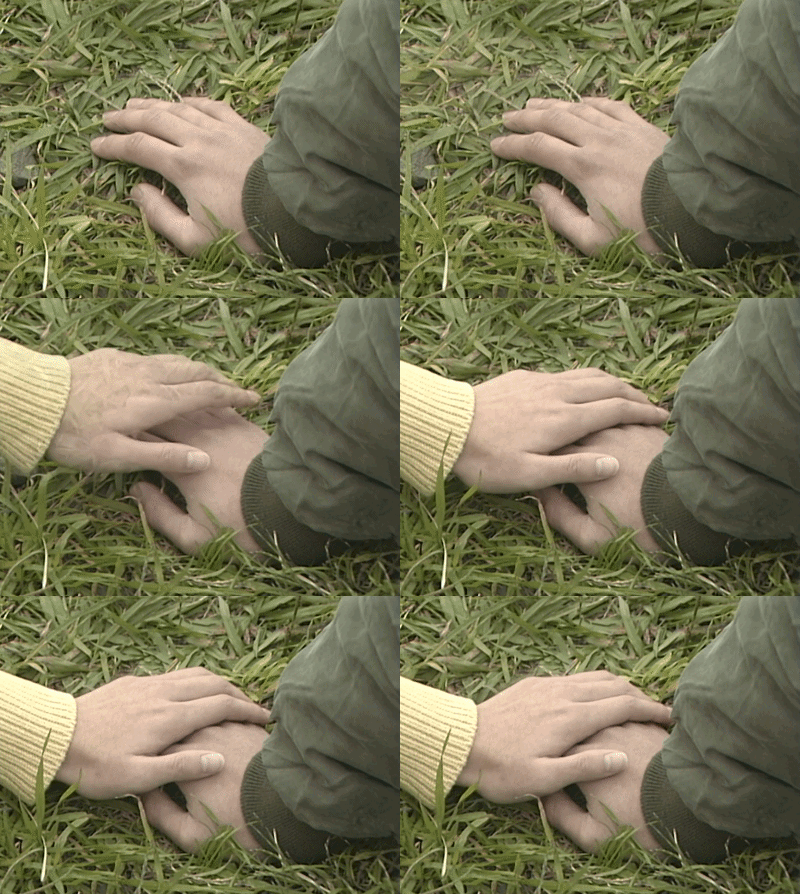
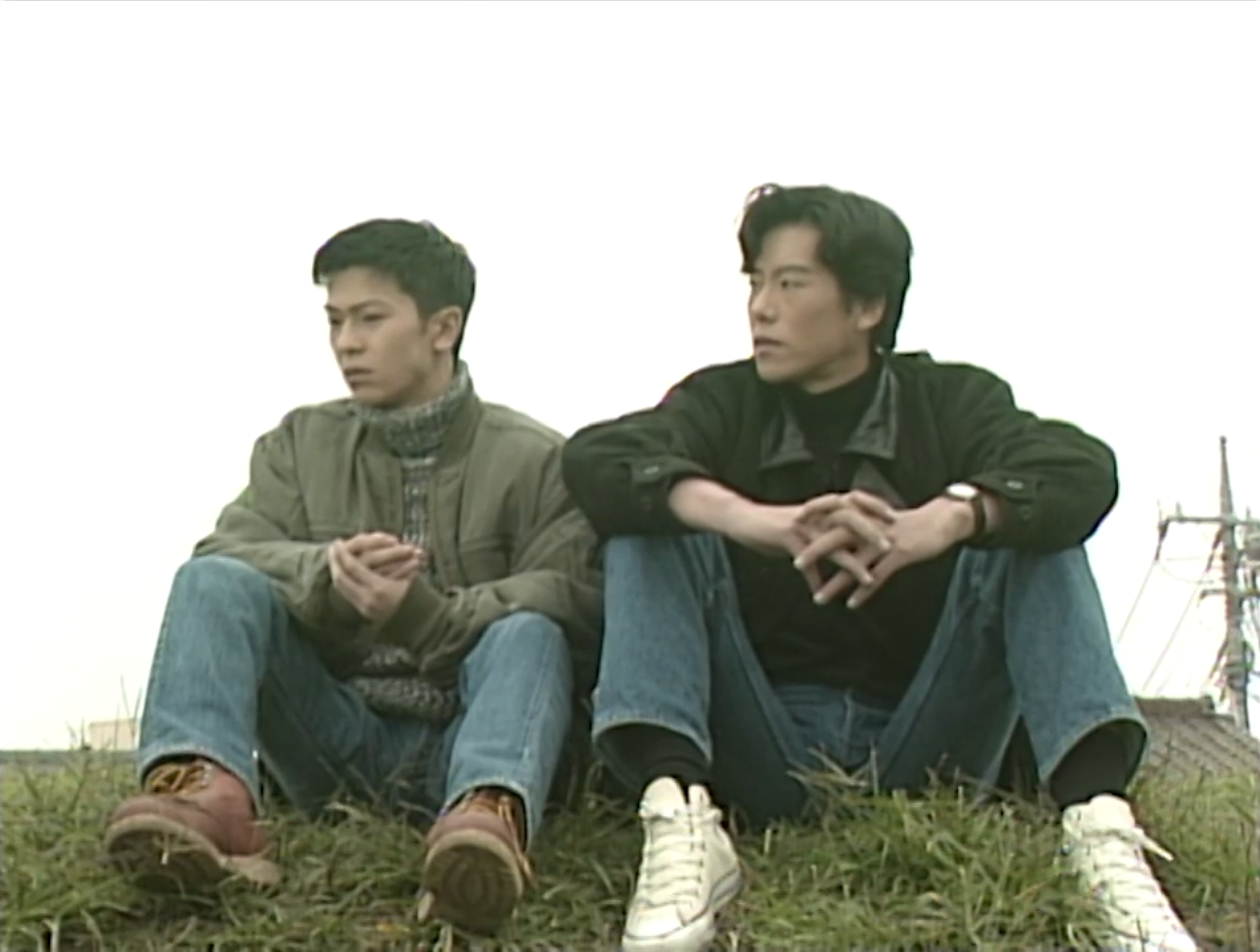
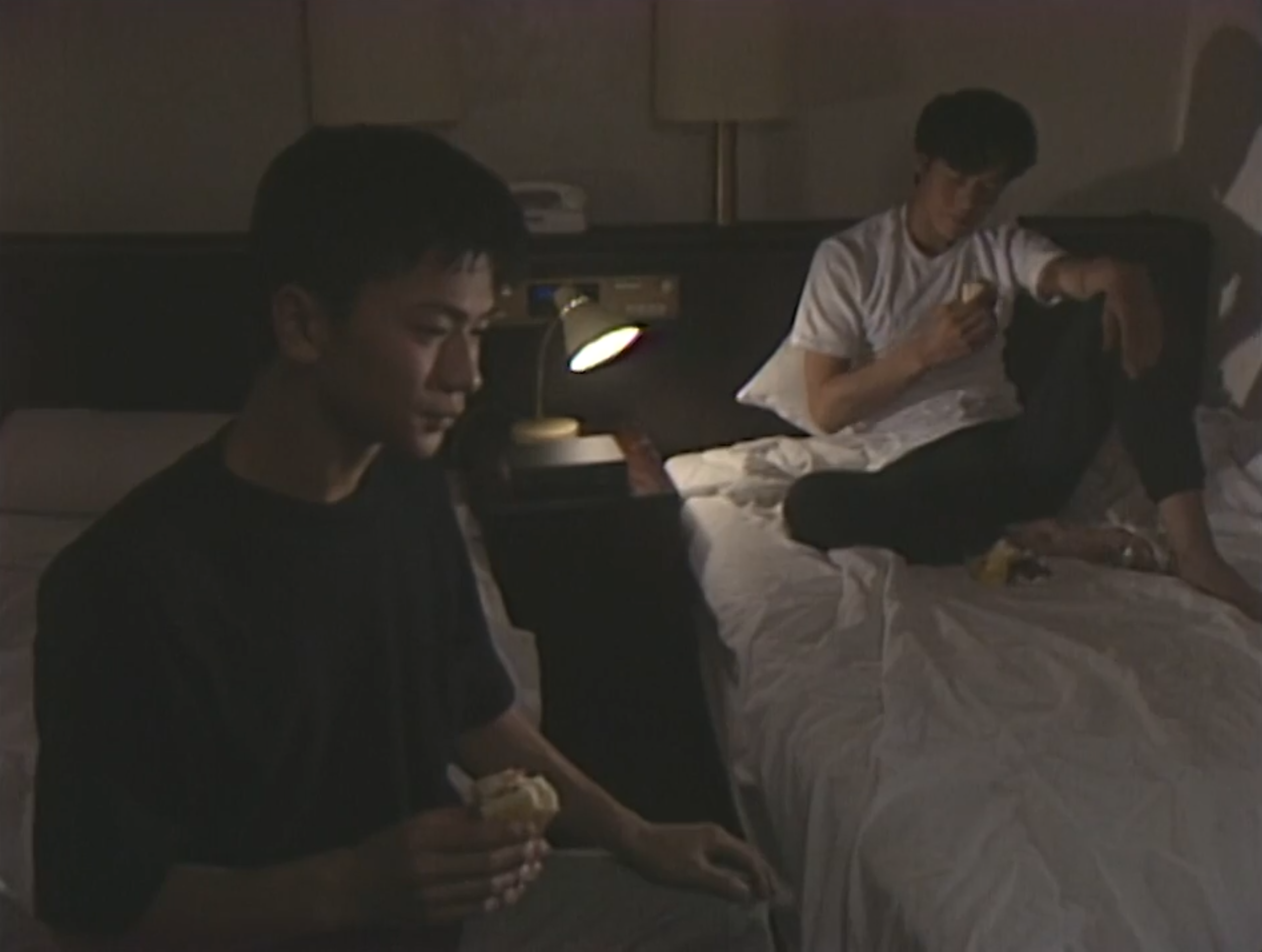
Back at their hotel later that night, sitting around eating sandwiches1, Naoya remains contemplative – his older brother breaks the silence to ask if he’s still thinking about earlier in the park. A shy smile crosses Naoya’s face as he assures Naoto that he really felt it – that girl is out there, somewhere. Sternly, Naoto cuts him off, telling him to stop – “Even if that girl really exists, you’ll only end up getting hurt.” Naoya, saddened, looks away. That night, his dreams are filled with that park, and the girl he believes is there waiting for him.
The next day, Naoya heads out alone to the park – sure he’ll meet that girl again. He sits on a bench, closing his eyes to calm himself. And sure enough, a hand reaches out to him. A spectral voice calls out, saying that she knew he would come here – that she’d been waiting for someone who loved this place as much as she did. When he asks who she is, she only replies how much she loves it there, that she wanted to share that feeling of beauty with someone. Slowly, he turns, opening his eyes to see a calmly cheerful teen girl – Mizuki – seated beside him, smiling gently. But just as quickly, she disappears again. He sees her off in the distance, smiling at him – but then, turning to walk away. Naoya chases after her, but to no avail. He’ll have to use his powers to find her.
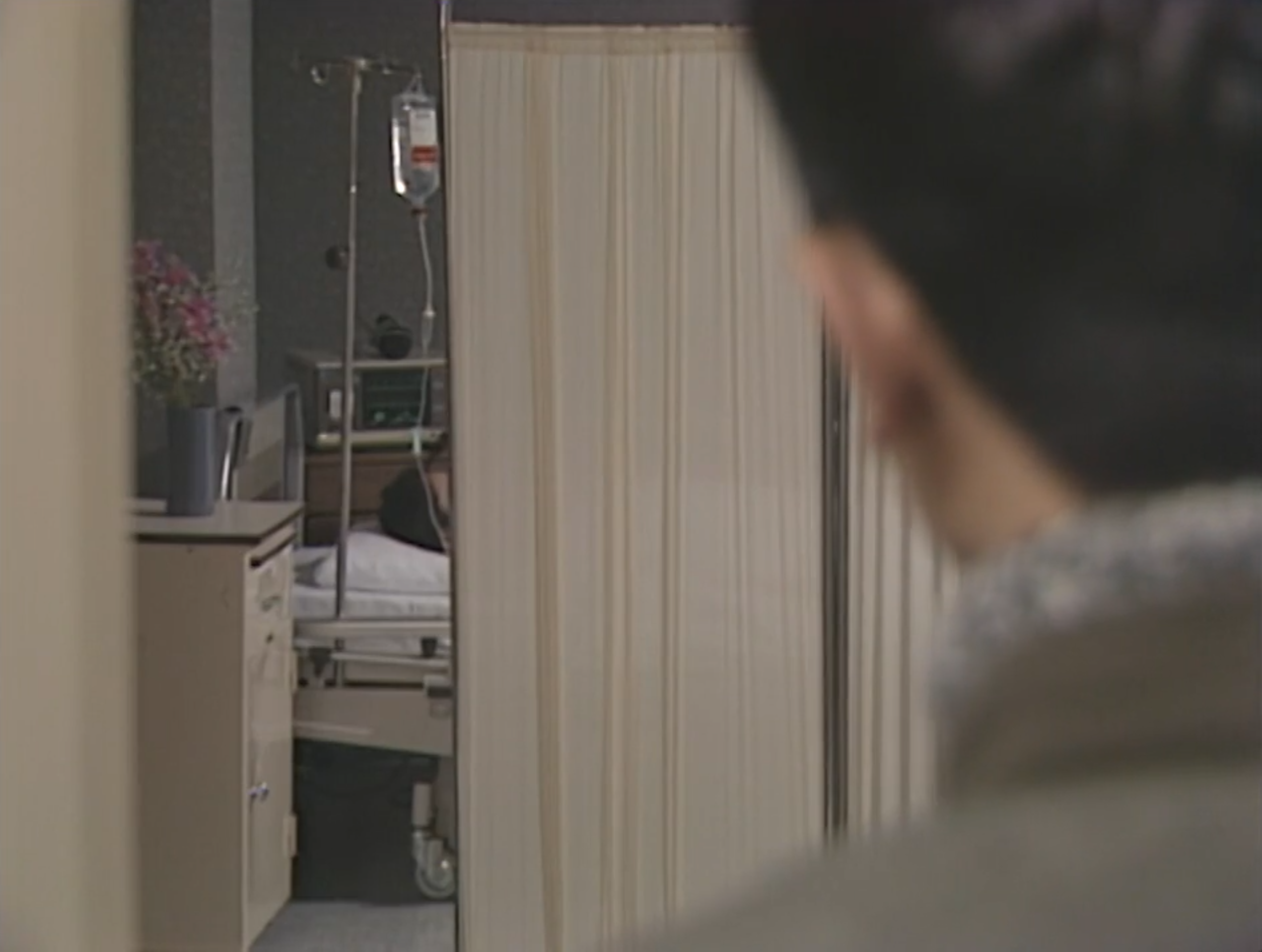
Where this leads him is a hospital, surrounded by gloom. Cautiously he enters, grimacing with the strain, peering along corridors until he feels he’s close. He overhears a woman speaking with a doctor: she’s concerned that her daughter remains in a coma, despite all tests showing normal brain functions. The doctor says they’ll just have to wait and see, but that it may well be a psychological factor preventing her from waking. Naoya is sure this is the right room, and as the two walk away, he slinks inside to find the very girl he’s looking for.
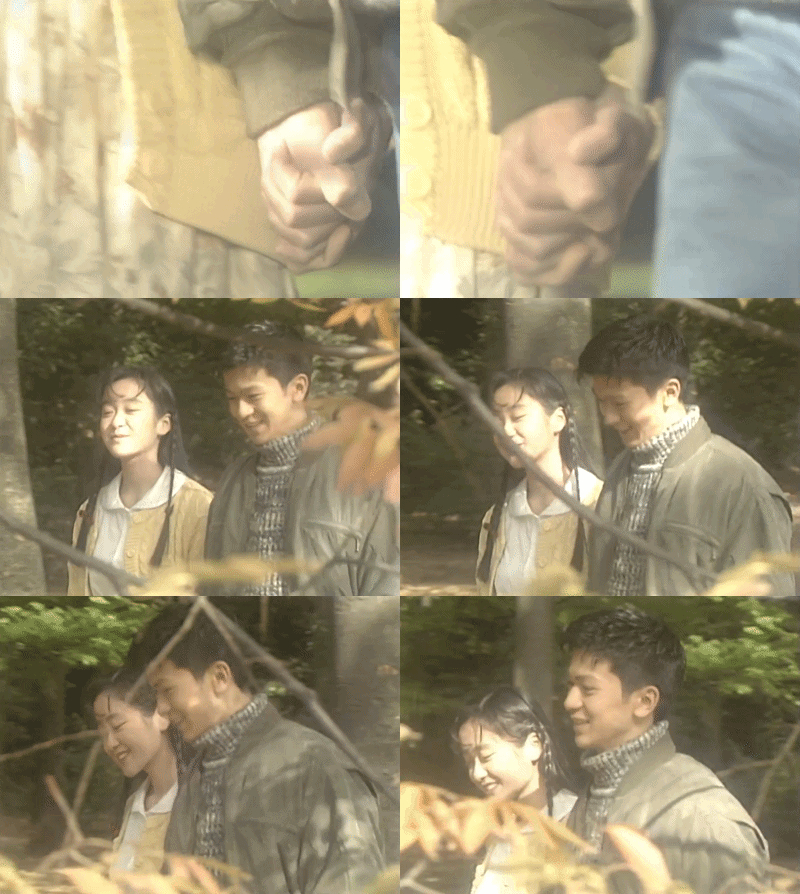
Naoya sits down at her bedside and quietly, slowly, grasps her hand – only to find himself transported back to the park with Mizuki, delighted, grasping his hands in return. She thanks him for coming, and says she’s been waiting for him all this time. The scene is absent of any diegetic sound, and their voices come through as gentle murmurs dubbed in with surreal, pristine clarity – twinkling music in accompaniment.
Mizuki says that here, even without saying a word, she can sense Naoya’s emotions. As they begin to stroll through the park, she says she’s always imagined how wonderful it would be – “To breathe the same air, see the same things, and be moved by the same moments as someone who truly understands [her] heart”. Naoya agrees, haltingly, saying he’s always wanted to talk to someone like this. He reaches out his hand for hers, and is finally able to share that touch with someone without fear. Mizuki giggles, turning around – “You should stay here with me forever” she says, before running away into the dappled light of the forest. Naoya returns to himself, in the real world – Mizuki’s comatose body lying before him in her hospital bed.
Back at their hotel room, Naoya sits grasping the hand that held Mizuki’s, lost in thought. His older brother returns from the convenience store and asks him if something happened, that he seems strange. Naoya says it’s nothing, but can’t help smiling to himself. He finally spills the beans – he really did meet her. Naoto, shocked, doesn’t know what to think.
Naoya begins visiting Mizuki at the hospital often, holding her hand and entering the warm, mellow world of her dreams. There, they stroll hand-in-hand, quietly enjoying the park and their time together, and share a chaste kiss under the trees. But Naoya begins to wonder. One day, he asks Mizuki why she remains asleep like this. She seems confused – she’s not asleep! She’s right here, isn’t she? Yet, he still tries to make her understand. Forcefully, he says he wants to understand her better, and asks what happened-
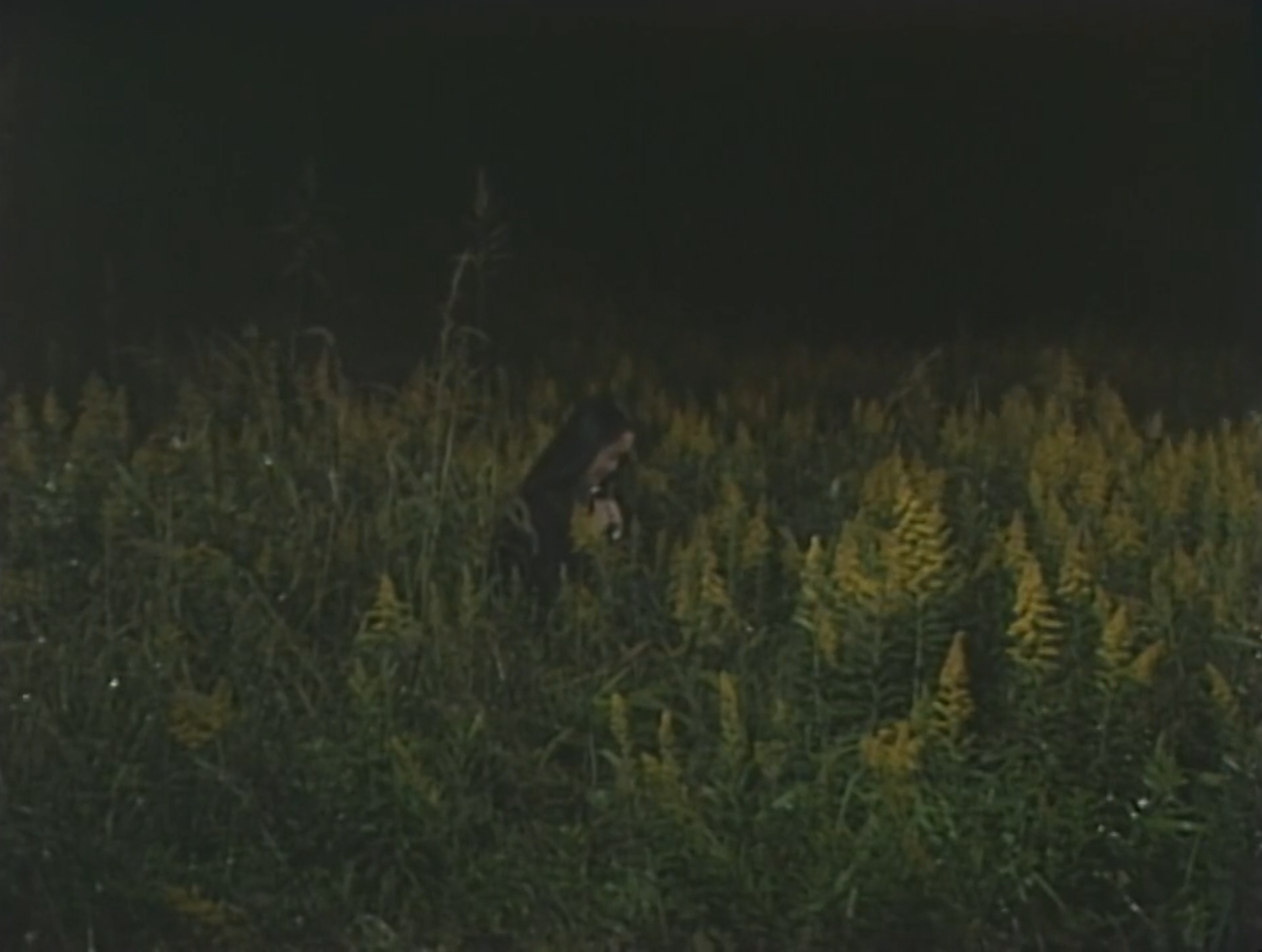
A flash. The music pulses, and fragments of Mizuki’s past invade the once-tranquil space. We see her in a field at night, shocked at the forceful embrace of an older man; the aftermath as he climbs off her, buckling his pants. We see her sobbing, lying on the ground in shock, school uniform askew – then, later, attempting suicide by overdose. As these images flood Naoya’s consciousness, he begins to shake, overwhelmed. Just then, Naoto, who has followed him to the hospital, glances in through the door. He sees his younger brother writhing and rushes in, pulling apart their hands to sever the connection.
As they speed away into the night in their car, Naoya sobs, relaying back to his older brother that Mizuki was sexually assaulted by an older man that she admired. Her emotional reaction is beyond that of mere heartbreak, and his own body feels “ugly and tainted” from reliving her experiences. But he just can’t understand – up until then, her heart had been filled with nothing but the beauty and light of that scenery they would stroll through. “She’s shutting off her conscious mind to erase the emotional scars,” Naoto posits. As Mikuriya once explained to him, “When people experience unbearable suffering or painful memories, they unconsciously try to erase them. In her case, to deal with the emotional scars, she put a powerful shield around her heart – to the point where she couldn’t even see it herself.”
As Naoya winces his way through the explanation, his older brother insists – “You’d be better off not getting any closer. You’re likely the only one who can reach her and help her wake up. But once she wakes up, she’ll be an ordinary girl – one with an inner darkness deep enough to drive her to suicide.” Naoya turns to him in shock before erupting in tears. Naoto continues – “You won’t be able to touch her anymore. Most likely, once her waking consciousness returns, she’ll forget about the ‘you’ she met through that other side of her mind.”
At this, Naoya is aghast – that can’t be! In that case, “wouldn’t it be better for her to just keep sleeping? Is that so wrong? Is it really necessary to return to reality if it means enduring such pain?” But Naoto can’t answer, saying he just doesn’t know. Naoya, frantic, undoes his seatbelt, grabbing for the car door – “As long as she keeps sleeping, she can stay happy.” The car slams to a halt and Naoya jumps out. “You just don’t understand – how important she is to me.” Naoya shuts the car door and runs off, leaving his older brother to sit in silence alone.
Naoya spends a moment remembering the time he’s spent with Mizuki up to now. He seems to come to a decision, and heads back to the hospital to sit with her yet again. He grasps her hand, and there it is: the golden, sunlit park – and Mizuki’s happy face. She asks him what’s wrong, and he apologizes for what happened earlier – for making her remember such awful things. But she smiles again, saying she has no idea what he’s talking about.
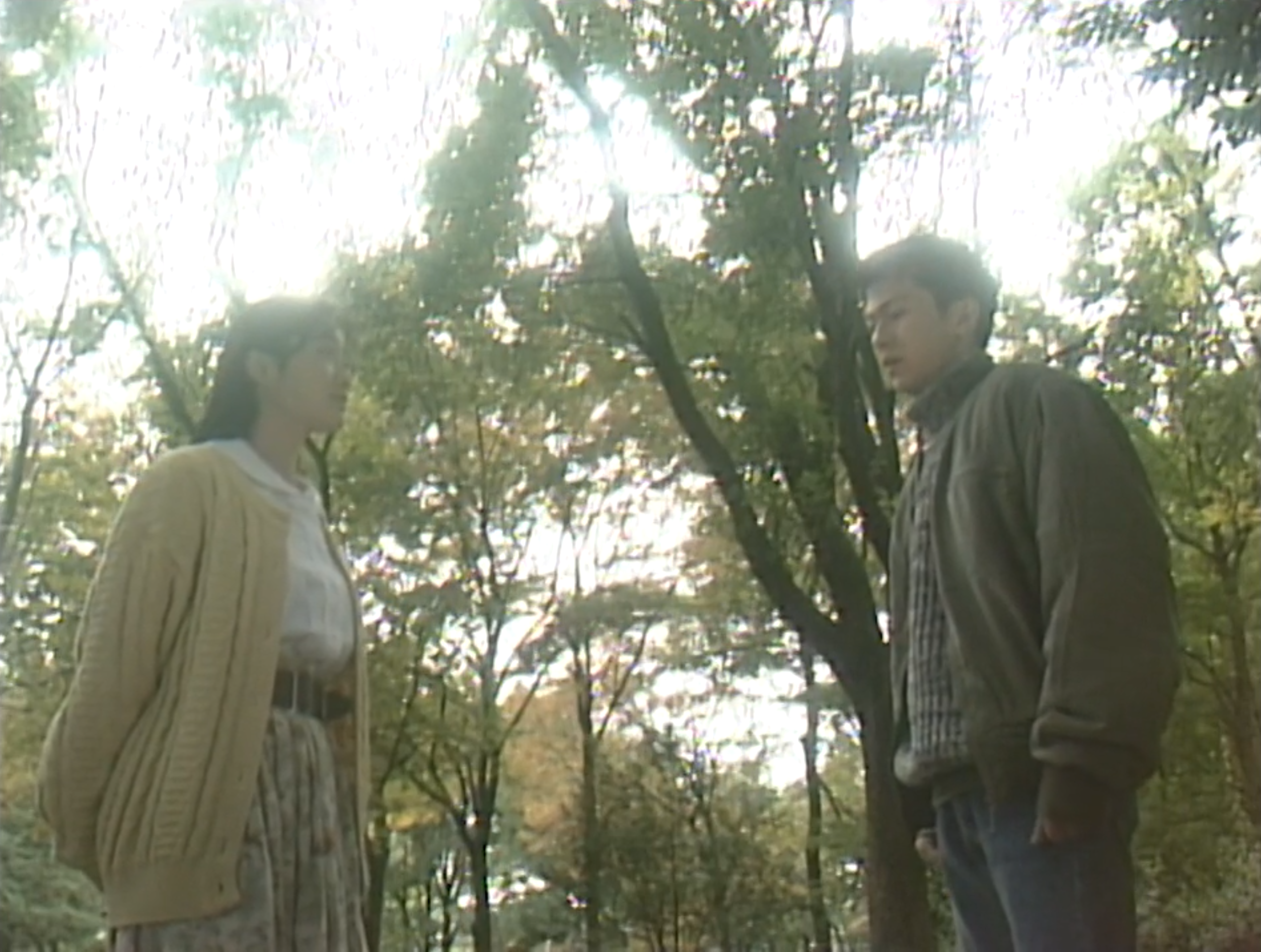
Grimly determined, he tells her he came here to see her because he wanted to be by her side, but he wonders if that’s something he shouldn’t do. “I wonder if this is okay. To stay here forever – if that’s what you need.” Dreamily she responds, “But it’s beautiful here – it feels so good, doesn’t it?” But Naoya cuts off her reverie – “When I’m not around, you’re all alone.” Unfazed, Mizuki blithely replies: “But you’re right here.” Naoya counters, what if he were to leave? Yet, Mizuki just can’t fathom this – “Why would you ever leave?” Naoya, increasingly frustrated, begins to shout – he wants to stay forever! But- Mizuki cuts him off, grinning. “Then it’s fine, isn’t it? Just the way things are.” She turns, walking away from him with a wide smile. “None of that really matters, does it?”
But Naoya can’t let it stay this way. That would just be running away, he tells her. “There’s a world of yours over there, too.” But Mizuki goes cold – “There’s nothing over there.” Naoya continues to beg that she turn back, return to herself, to wake up, but Mizuki becomes increasingly distressed – she wants to stay right where she is. Grasping her arm, Naoya insists – “I don’t fully understand it myself, but I’m sure there are things we have to face, even if it’s painful.” She recoils, pulling away, yelling at him to let go – that if he wants to go, he can go alone. We see Naoya in the hospital room, her hand cupped in his, wavering as he pleads – “I’ll be there with you.” Mizuki screams no as she returns to her memory of the night of her assault, memories of pain washing over both of them.
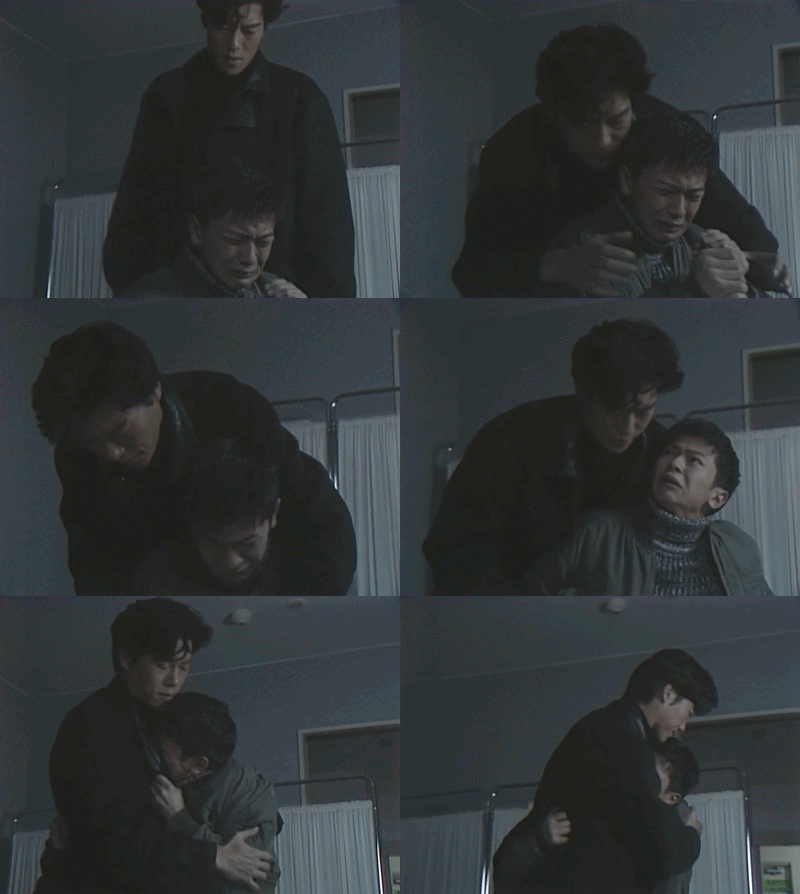
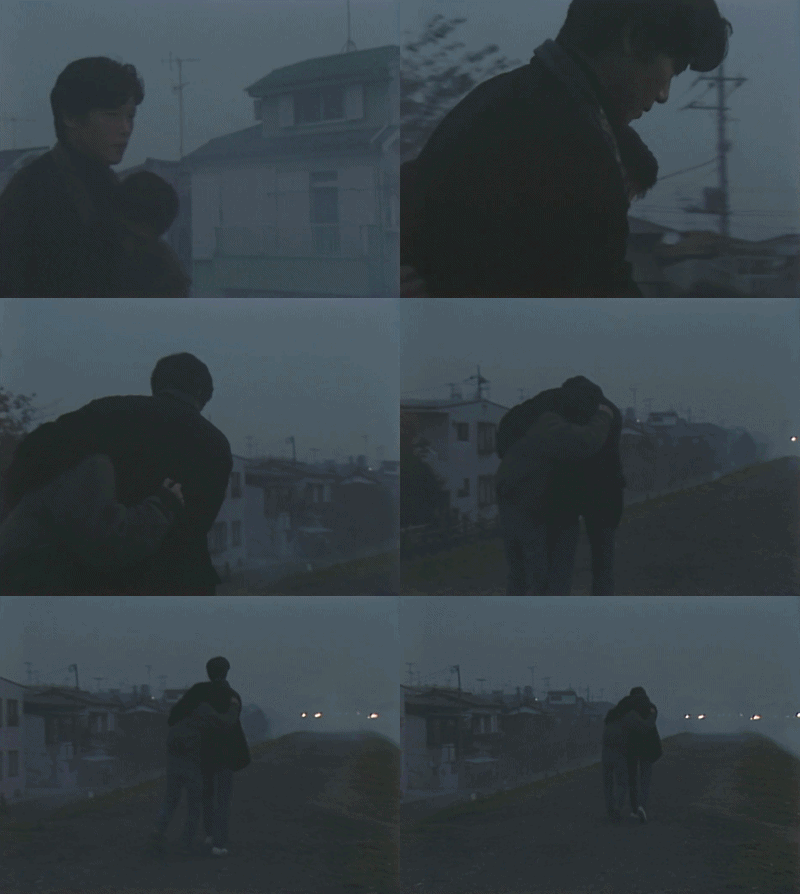
In the hospital, Mizuki shifts in her bed – her heart rate and breathing increasing. Naoya still holds her hand, his face contorted with sorrow as he seems to guide her through the waves of memories, back towards reality. But just then, Naoto approaches him from behind. He gently places his hands on his brother’s shoulders before suddenly wrenching their hands apart. Naoya returns to consciousness, appalled, then sees his brother – he grabs him, sobbing, and Naoto returns the embrace.
They walk away from the hospital, leaving Mizuki still asleep – except, just after they leave, she wakes with a start. Lying in her hospital bed, alone, she begins to sob. Outside, Naoto supports the inconsolable figure of Naoya – the two brothers stumble off into the distance, swallowed up by the fog.
———————————————
These are two absolutely fascinating episodes to hold up against each other for comparison. While I mentioned before that Naoto’s ‘fantasy world’ of episode 7 appeared hollow, like a simulacrum of what TV shows present as an ideal life, the fantasy that Naoya enters feels equally shallow, but in a saccharine, TV commercial way. In this case, that’s because it’s the escapism of a 16-year-old (as stated in the script). Also, while the script describes the man who assaults her as being the same age, the show subtly indicates that he’s an adult – his “college boy” over-the-shoulder sweater contrasting with her school uniform. To be betrayed by someone that you admire – and one that’s an adult – would be particularly galling.
At the end of episode 7, Naoto begs his brother to always stay by his side – but almost immediately, Naoya does just the opposite by going out into the world on his own to build an intimate relationship with someone else. It’s not out of character for Naoya, either: he is consistently the one who wants to meet people and make friends. In most instances, this new relationship would actually be healthy – if perhaps painful – for them both. But here, Naoya’s fascination with Mizuki’s world feels no better than Naoto’s version of codependence. She wants to think and see and feel the same as the person she is with – naively, selfishly, to be “understood” is to be one and the same. Mizuki’s world reads as the immature perspective of a 16-year-old, one that is begging for someone to understand HER rather than be mutually understood.
Here, Naoya is blissed out because what Mizuki experiences is only good stuff, by sheer force of will. Because of his powers, he is often the conduit for others’ emotions and experiences against his will. However, he’s never received the same level of intuitive ‘understanding’ in return – apart from within the confines of his relationship with his brother. His relationship with Mizuki may be attractive to him because it feels mutually fulfilling, despite only being a feedback loop – he wants to experience what it is to be ‘known’ and understood by someone else, but is too scared or inexperienced to understand that that isn’t what’s being shared, here. That’s the terrifying element of all relationships – that others may not understand you, may not feel the same things, and may not understand how you feel, either. And yet, you must try to connect anyways. His statement “I don’t fully understand it myself, but I’m sure there are things we have to face, even if it’s painful” feels like real growth on his part. His choice to help Mizuki wake up – to try and connect with her in the ‘real world’ – feels like a step in the right direction… All of which makes Naoto’s intervention all the more of a betrayal.
As Naoto mentions, once Mizuki returns to reality, she will again be burdened by her own trauma – but his insistence on this point feels somewhat defeatist. Will his brother really never be able to touch her (or, implicitly, anyone else)? Do we really all suffer from the latent memories of our worst encounters, never to fade? Is there no hope for recovery, to eventually forget – or to learn to live with that pain? And in any case, selfishly, Naoya and Naoto share physical contact all the time. With this ‘brotherly bond’, George accidentally managed to make a space for a kind of male/male physical intimacy and vulnerability that usually isn’t seen in quite the same way on TV – something that appealed to many viewers at the time. Does this physical connection self-perpetuate the cycle of pain for Naoya, repeatedly experiencing his own trauma again through his older brother’s touch? Or is it like an inverse of Mizuki’s longed for ideal – seeing, experiencing and feeling the same thing, except it’s all the things you don’t wish to remember?
I can’t help but think of Naoto’s choice to separate the two of them as an act of cruelty – he’s terrified at Naoya moving on, begging him to stay by his side forever, but won’t let him be there for anyone else. To me, that’s what defines this as toxic codependence – supporting each other is good and healthy in any relationship (friendship, family, lovers), but the point at which you are hurt by – or prevent – the other person having connections with others, there’s a problem. He’s his brother’s ‘protector’, but at what cost? And is that really true, or is he actually protecting himself – wallowing in his own trauma by never allowing his brother to move on?
We don’t know if Mizuki would have forgotten Naoya on waking, and this assertion may well have been selfish speculation on Naoto’s part. I still vividly remember a time as a child that I went under general anesthesia – coming back to consciousness, I found my mother had made sure to be there for the exact moment I woke up, bringing me instantly to tears with relief. Whether Mizuki would have remembered him or not, at the very least, to wake up alone is awful – all the more so if she can remember even an echo of that kind voice telling her “I’ll be there with you”… perhaps even while holding her hand.
All this to say, THESE episodes are where it feels like night head shines – where psychic powers are used as a narrative tool to interrogate desire, human connection, and the toxicity and complicity of connections forged and maintained through trauma. The tenuous combination of concept, script and performance leaves just enough left unsaid, just enough questions unanswered, that it makes it almost impossible to stop trying to answer them yourself – a situation so ripe for fan engagement that you might almost think I’m foreshadowing a future post…
- I worry about the diet of these lads tbh – the idea of living out of hotels and only eating pre-made food makes me feel exhausted ↩︎




Recent Comments