

Posted on August 21, 2026
NIGHT HEAD synopsis
– THE OTHER SIDE
broadcast date:
december 24th 1992
Director / Screenplay:
George Iida (飯田譲治)
Koichi Kennoki –
Masayuki Imai (今井雅之)
Naoto Kirihara – Etsushi Toyokawa (豊川悦司)
Naoya Kirihara – Shinji Takeda (武田真治)
additional cast can be viewed here

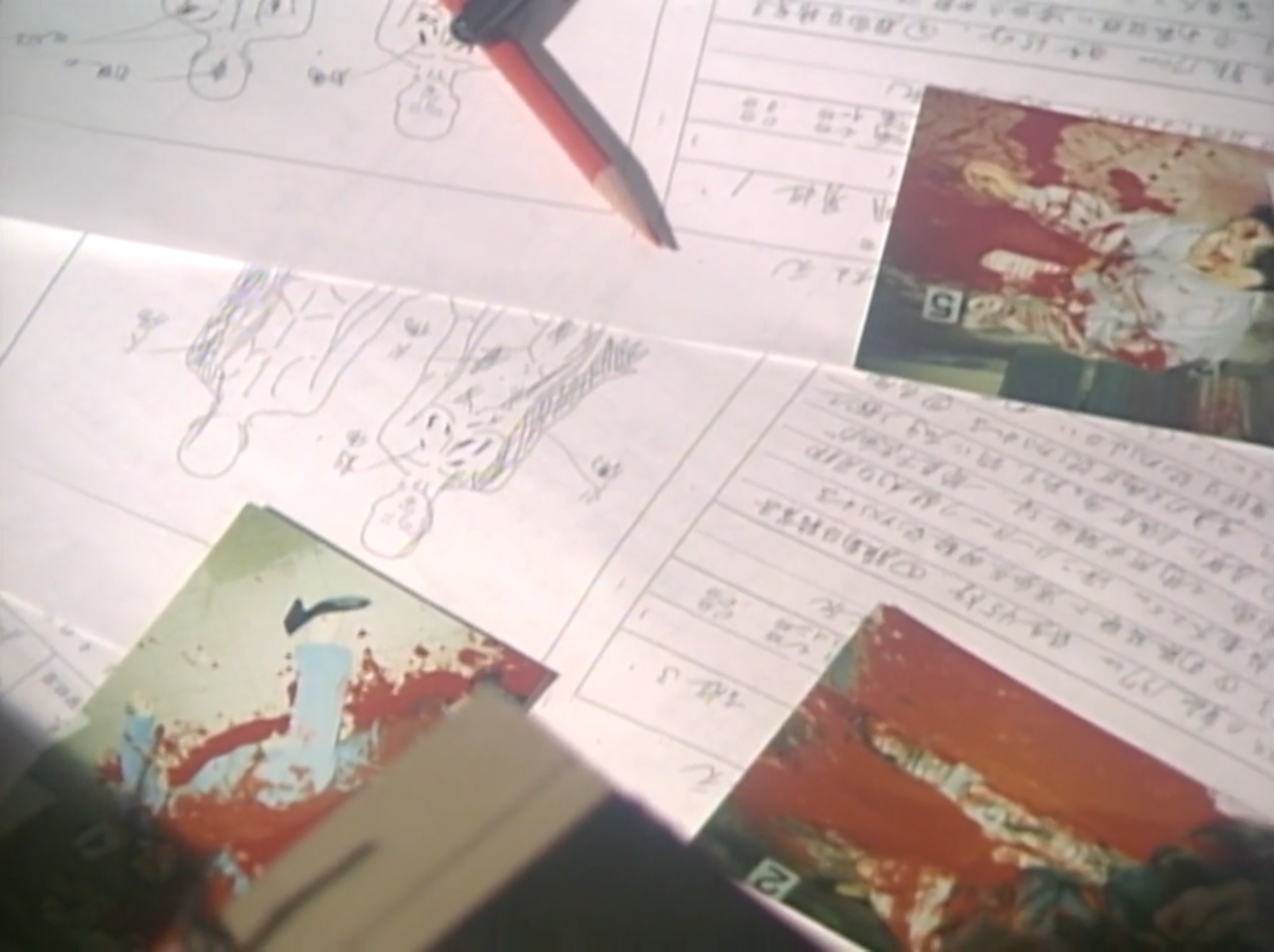
Police detective Kennoki1 reminisces about an encounter he once had with the Kirihara brothers, whom he met during an investigation into a triple homicide. The case involves the deaths of 3 average people with seemingly no connection. Among the wounds sustained are localized burns from inexplicably high temperatures – enough to turn their flesh to charcoal – with no known source.
Back at home, Kennoki argues with his wife over his continued time on the force – she blames his job for the death of their young son, but Kennoki claims she’s mindlessly following advice from a religious group she’s started attending. They argue about the importance of religion vs having your weaknesses preyed on, but his wife grows increasingly hysterical, warning him that she will falsely accuse him of sexual assault if he tries to follow her into their bedroom.2
As the case reaches a dead end, Kennoki’s partner Matsui brings in a young woman, Eri, who claims to be a psychic3 – Kennoki is unimpressed. She reveals information about the case, but Kennoki remains skeptical, as it could all have been gleaned from the case file and photographs. He remains unswayed while she tells him information about his strained relationship with his wife, but the reveal of his wife’s earlier threat gives him pause.
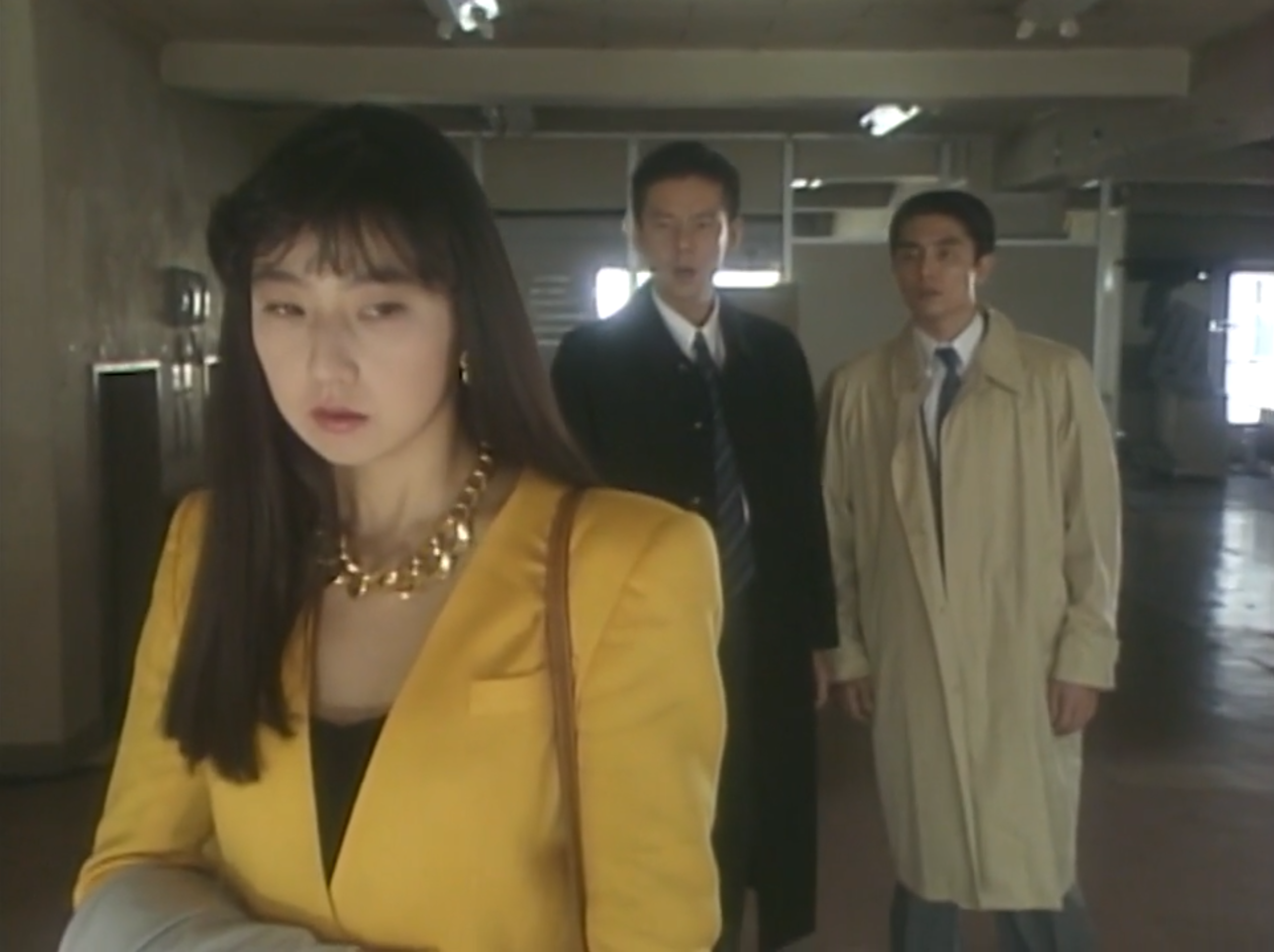
Eri says that she has seen the killer’s face, and would like to try doing some ‘thoughtography’ – imprinting the psychic vision into photographic form. She gives them the photo and a name – Sadao Kozu – but Kennoki wants to continue tracking down info the old fashioned way, finding it all too convenient.
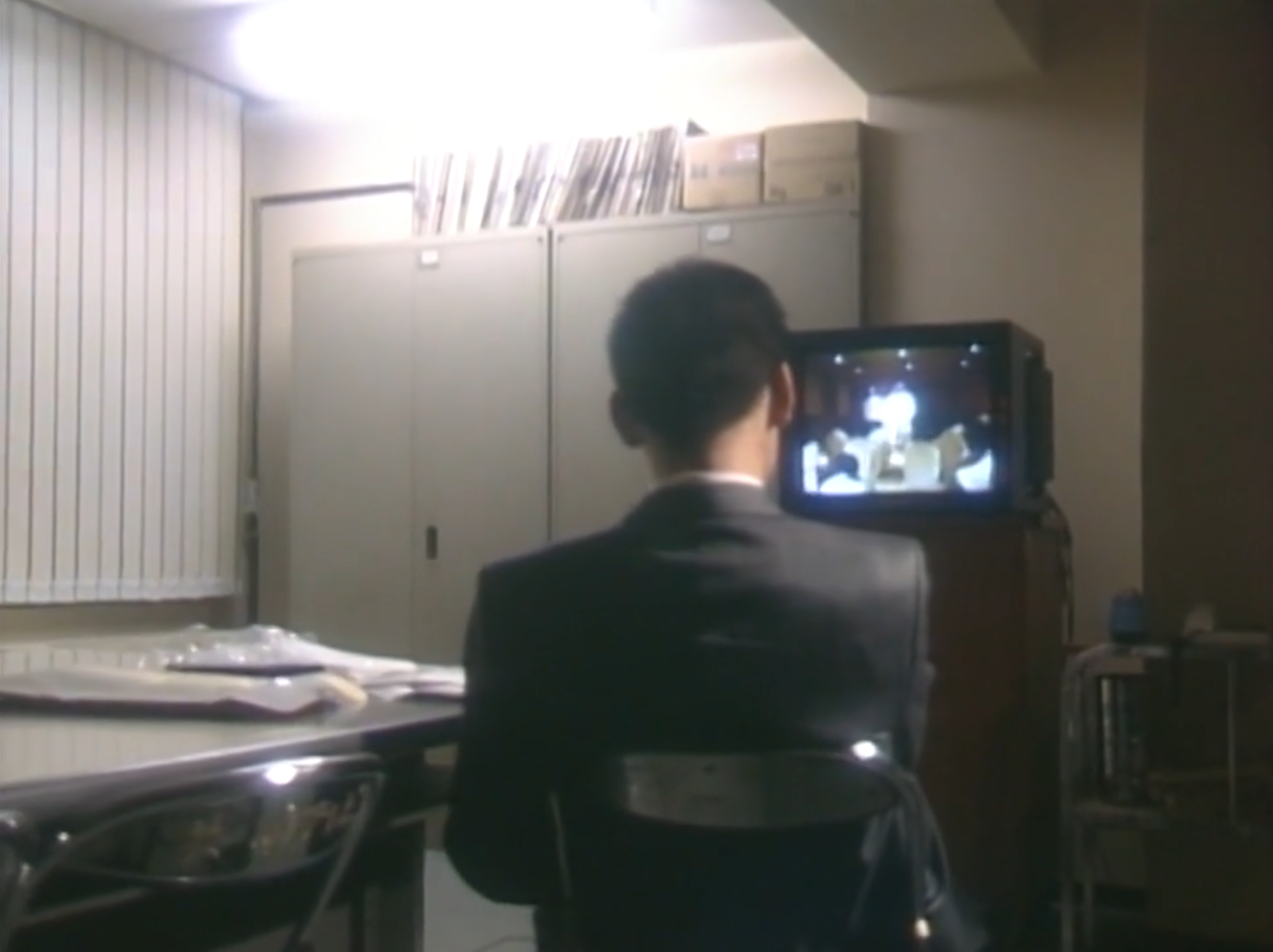
Kennoki investigates the university where one of the victims – Isamu – was a grad student, and manages to turn up a key to a hidden stash of research materials on pyrokinesis, as well as a group known as the Doumeki Seminar, following a charismatic leader who claims to have such powers. Kennoki watches a video of a group meeting – seeing the members prostrating themselves before the leader, Doumeki, Kennoki believes it’s a cult. Separately, his partner Matsui is convinced that psychic powers are real.4
Kennoki proceeds to investigate Doumeki, the leader of the group. Speaking to a former colleague, he is told that Doumeki was a well-respected neuroscientist who spent some time conducting research at the former Soviet Academy of Sciences. When pressed on what sort of work he did, the colleague falters, finally admitting that it was research into psychic powers. Given that there wasn’t an academic environment which would allow for such work at the time, Doumeki and one other scientist collaborated on Soviet ESP research between 1965 and 1970.
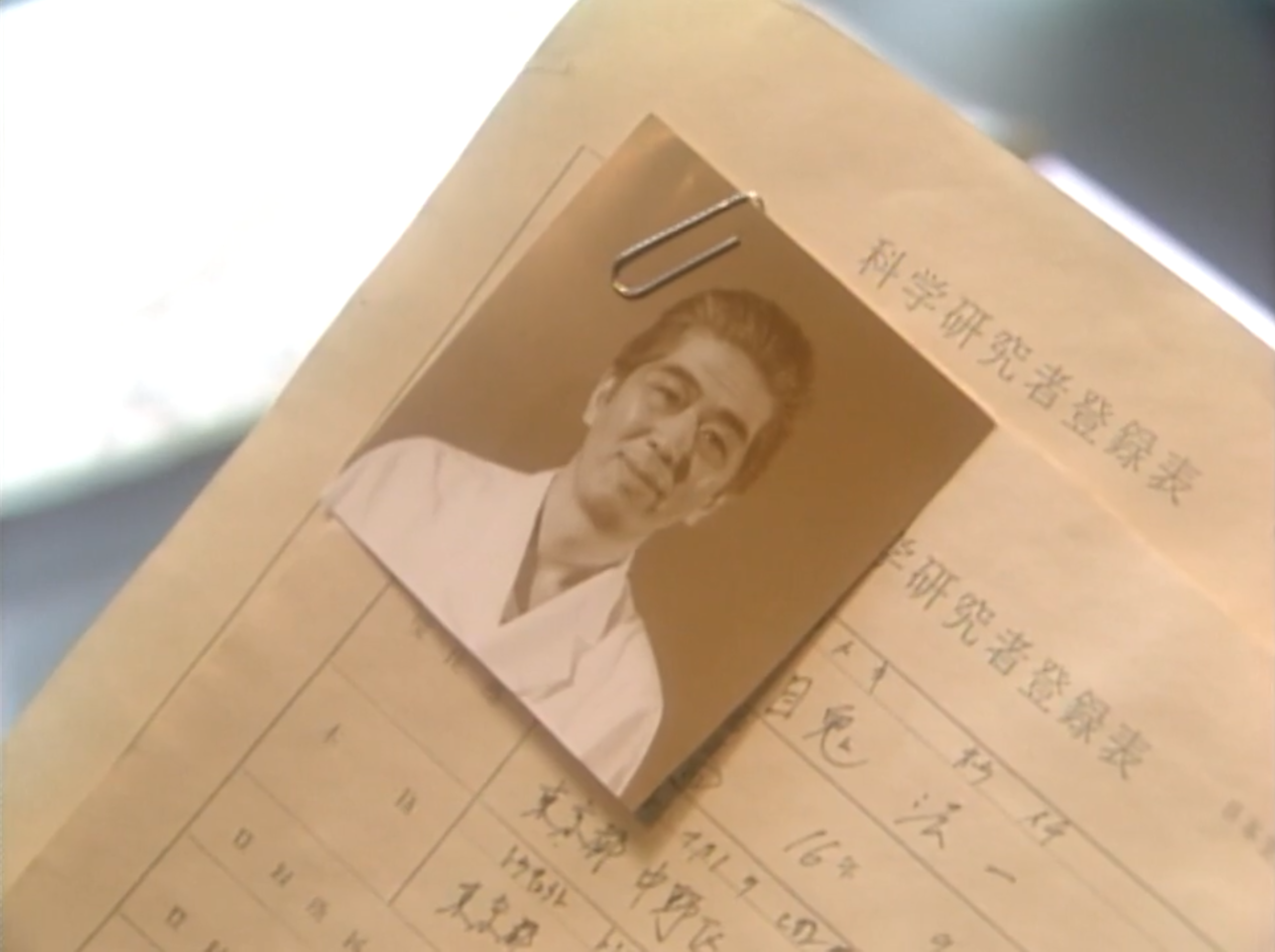
Kennoki finds himself appalled that a distinguished scientist such as Doumeki would go on to create a pseudo-religious group, and wonders after the other scientist he collaborated with. The former colleague says they’re not affiliated with the Doumeki Seminar, and she’s unaware of what the other scientist – One Kyojiro Mikuriya – is up to these days…
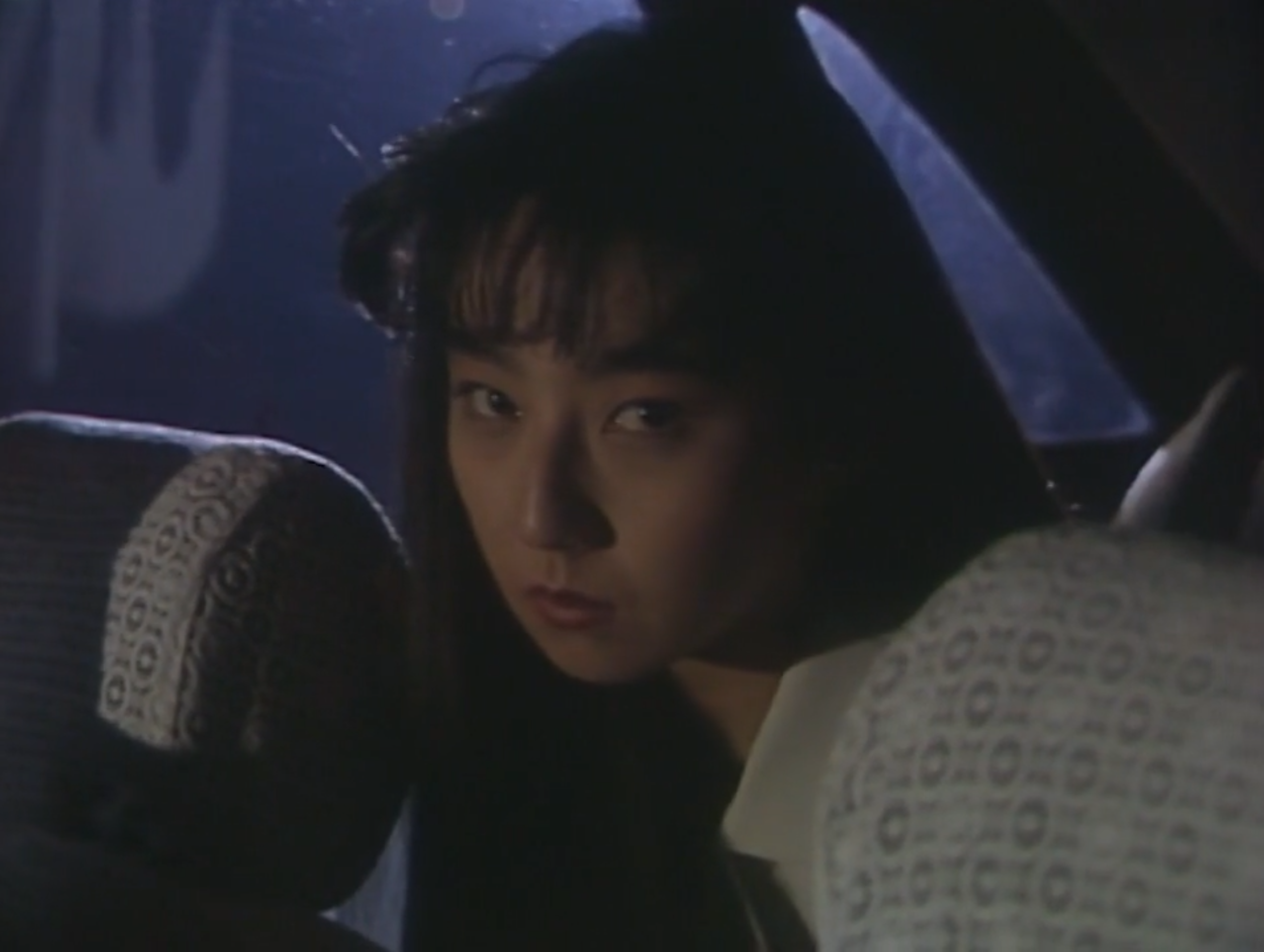
Later that night, Kennoki is woken up by a call alerting him that they’ve found the man from Eri’s psychic reading. He rushes to his partner’s stakeout, only to find Eri also in attendance. She insists on meeting the suspect, Sadao, but Kennoki tells her to stay put.
On the suspect’s return home, Kennoki and his partner head over to his apartment to question him. They find him disturbingly compliant, openly admitting to being the culprit. Perturbed, they begin to make their way to the station for questioning, but are stopped at the door by Eri, who whispers something in Sadao’s ear. At this, he turns around, returning to his apartment where he immediately slits his own throat, much to the shock of all present – barring Eri.
Kennoki has a confrontation with Eri outside, but she refuses to reveal what she said to Sadao, and insisting that this ought to prove her abilities to Kennoki. She asks him why he holds hostility towards her, and he says that she would already know if her powers were real. Spitefully, she tells him that he and his wife will never reconcile.
Time passes, and we learn that through circumstantial evidence, they have decided that Sadao was indeed the culprit, though they are still unaware of his motive. As such, the case is closed despite the full truth of the incident remaining unresolved.
A few days later, Kennoki returns to his apartment to find his wife hurriedly re-dressing. He realizes that she is having an affair, and searches the room for the other party. Huddled in the wardrobe, he discovers Matsui – his partner. Enraged, he pulls him out, and begins to realize the implications this has for the case they just closed – if Matsui had merely been feeding Eri information about the case, that would be one thing, but he must have been telling her intimate details about the instability of his relationship with his wife as well.
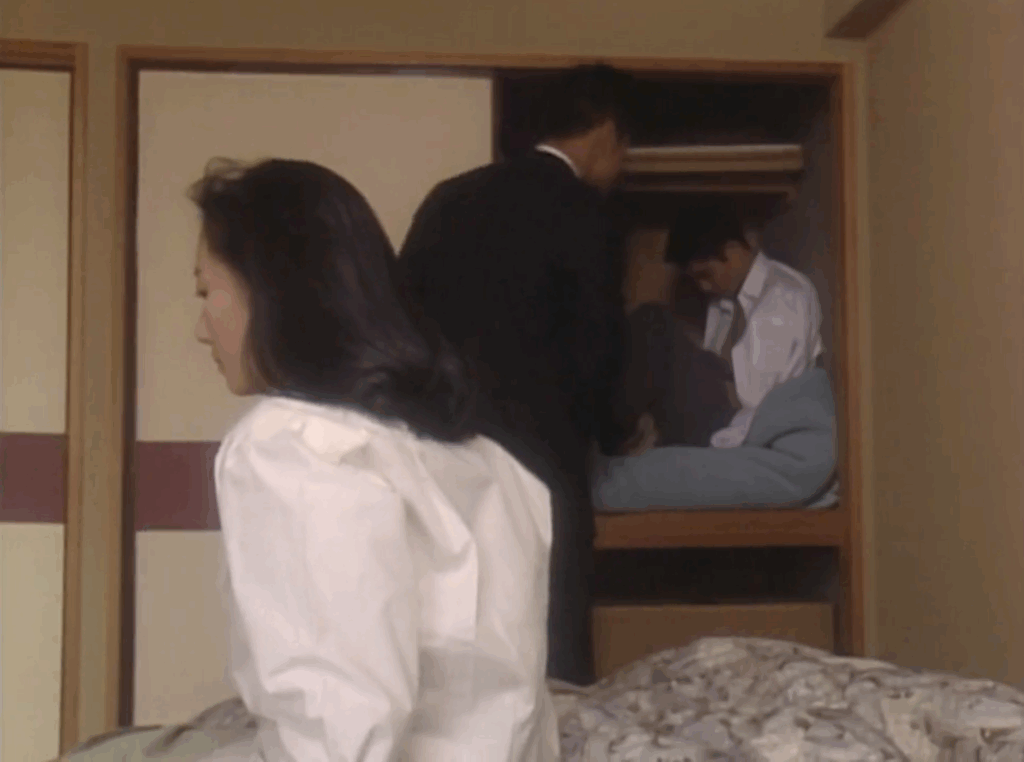
With that level of collusion, he begins to realize that Matsui is likely involved with the Doumeki Seminar, and had been helping to steer the direction of the case. With everything clicking into place, he asks Matsui if he’s a member of the group, to which he replies that’s a matter of personal choice, ostensibly confirming. But then, he realizes, the new religious group that his wife has been so influenced by recently and the Doumeki Seminar are likely one and the same. As Kennoki tries to question the two of them in a rage, things become heated, but Matsui repeatedly tells him that it doesn’t matter now – the case is closed, and he couldn’t prove anything anyways.
Kennoki takes matters into his own hands, and heads over to the Doumeki Seminar HQ. As he is about to enter, a voice calls out his name. He turns to see two unfamiliar men – or unfamiliar to him, at least. It’s our old friends, the Kirihara brothers!5 Naoto warns Kennoki that with religion, it is non-believers who are the most at risk of being deceived because of overconfidence – “The people least grounded in their own religious views are the most vulnerable to having their weaknesses exploited. And those who don’t believe in miracles or psychic powers are the most likely to get sucked into a religion when they’re shown such things—even if it’s all a sham.”
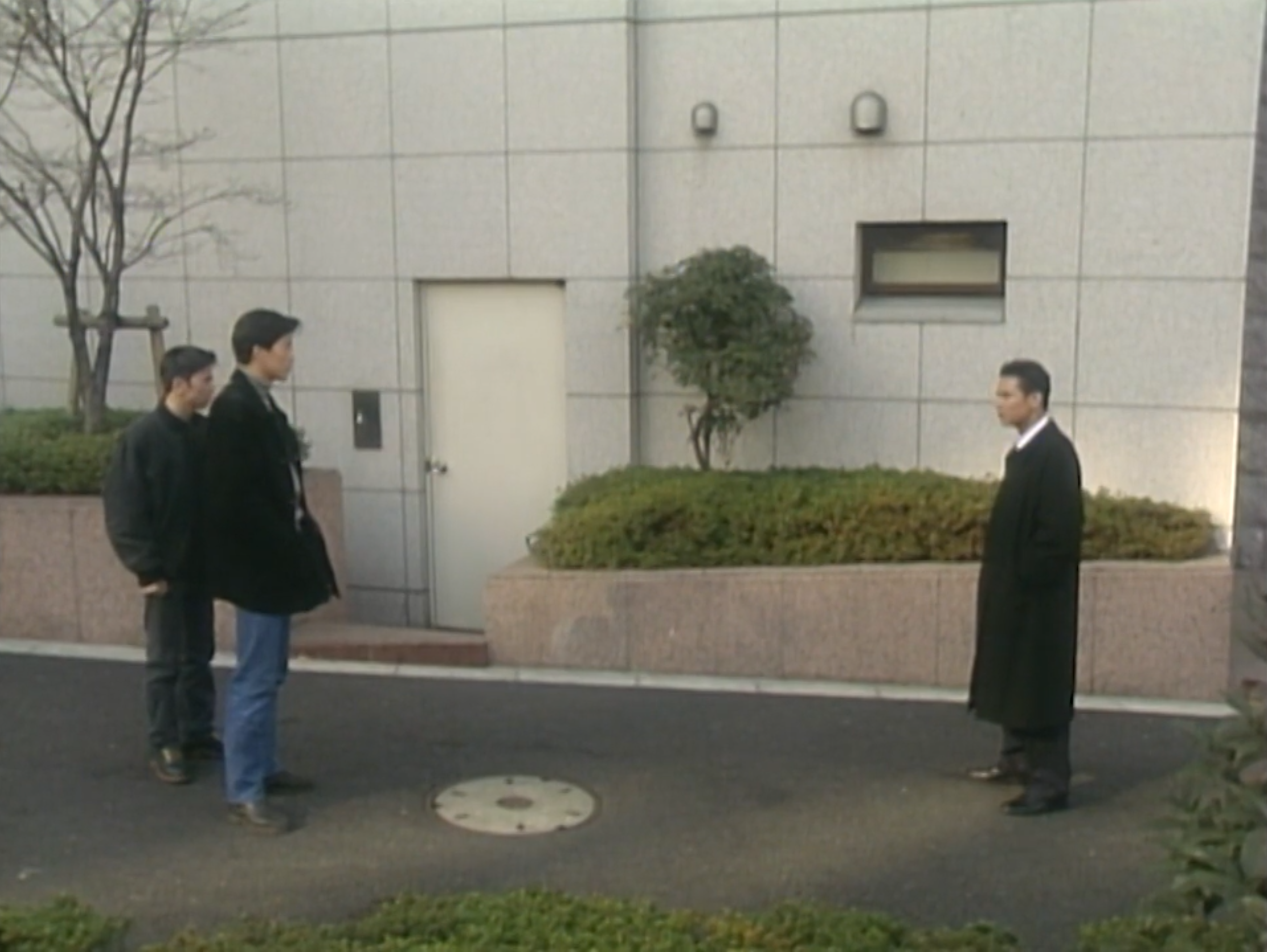
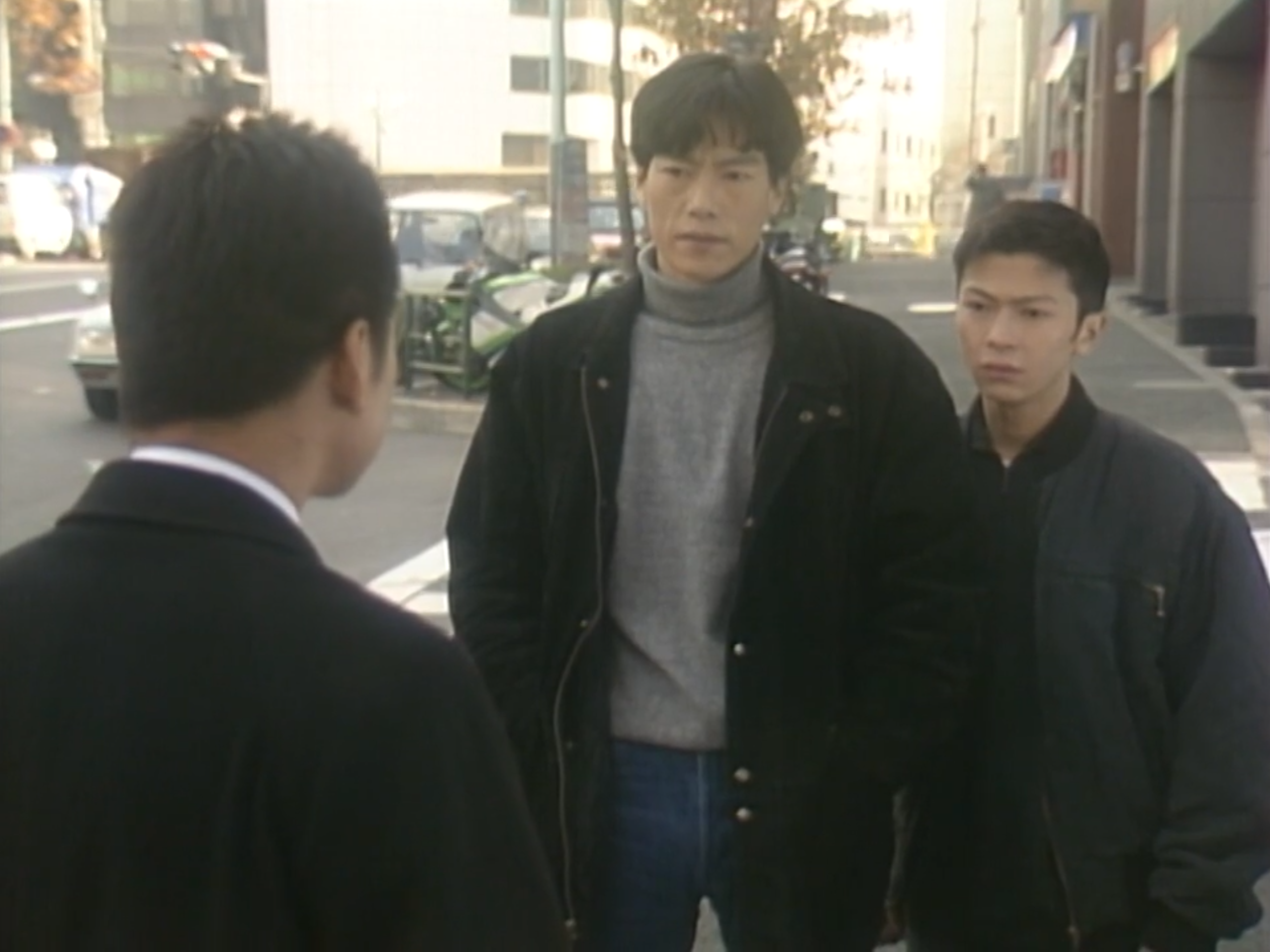
Despite this strangely prescient piece of advice, Kennoki merely replies that it’ll be okay. Naoto again cautions him to be careful, and he and Naoya turn to leave. Naoya says glumly “It’s not okay. Not at all.”
Inside the reception area for the seminar, Kennoki rings the bell for attention and is surprised to find Eri come out to help. She seems aloof and nonplussed by his reaction, and merely inquires if he’s there to join the group, grabbing some paperwork for him. Kennoki says that he’s here to see the leader, Doumeki, and after a brief catty exchange, she takes him through towards his goal. Passing through the hallway, Kennoki sees a group of members in matching white tracksuits prostrating themselves and finds himself shocked.
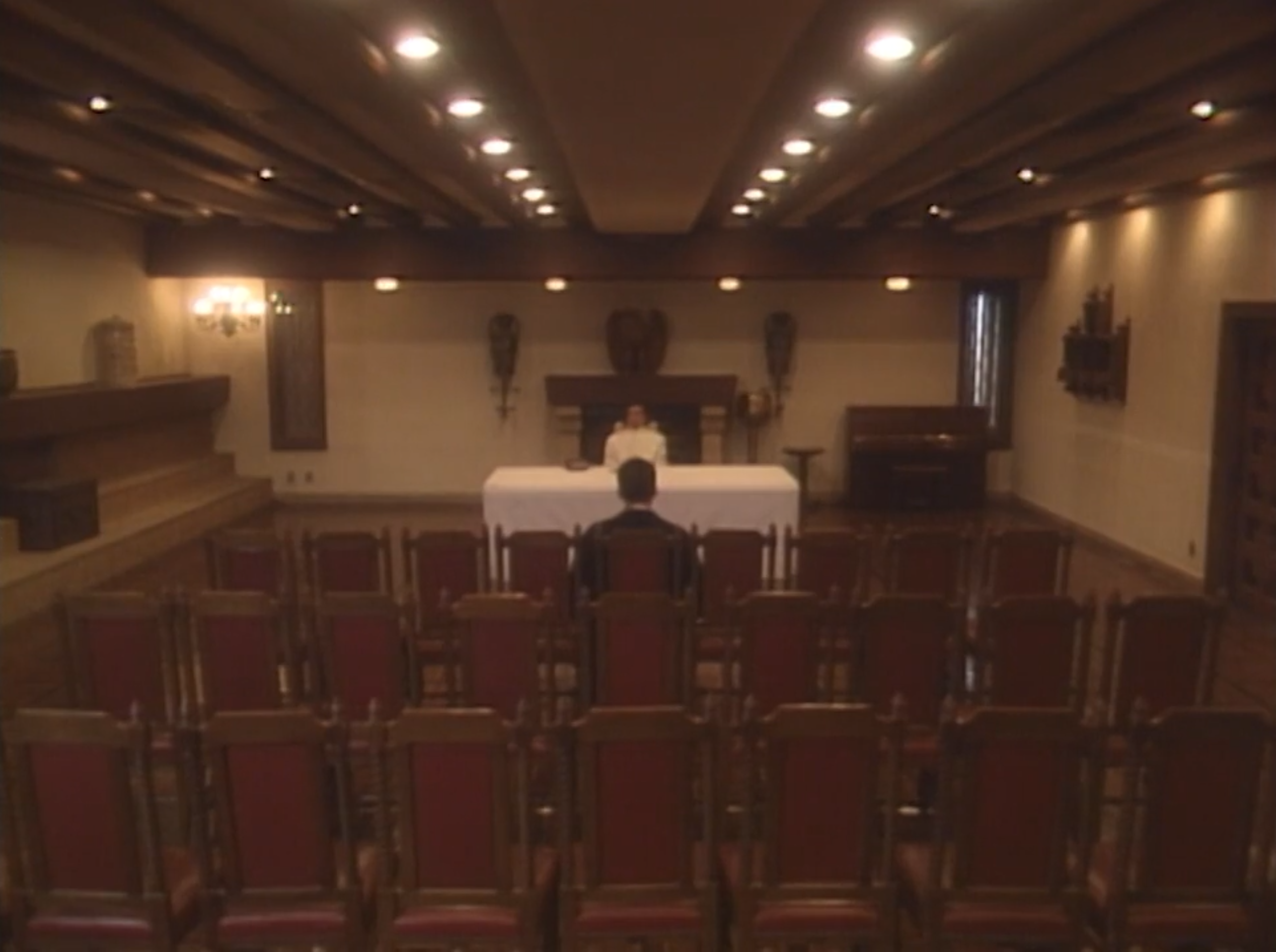
They proceed to the inner sanctum where he finds Doumeki seated as if waiting for him. Kennoki accuses him of running a bogus cult, and says he knows they were behind the suicide of their suspect, Sadao. Doumeki explains that they’re a real research group, but acknowledges that they used hypnosis to make Sadao take his own life. Further, he tells Kennoki that this group is an extension of his neuroscience research, and the four who died were obstacles to the group’s expansion.
“I originally started this seminar to develop psychic abilities. When you clearly direct the collective willpower of a group in one direction, humans can exhibit astonishing abilities. Humans possess that power. That power is most fully unleashed when everyone shares the same belief … Psychic powers aren’t limited to clairvoyance or telekinesis. The power to believe is the greatest psychic power of all. Through belief, reality itself undergoes constant transformation. That is an undeniable fact. It’s something you wouldn’t be able to grasp right now.”
Kennoki gleans that the inciting incident for this case – the triple homicide – occurred because the grad student, Isamu, had genuinely developed pyrokinesis during his time in the group. As such, he began to question the authority of their leader and tried to undermine his authority. Doumeki counteracted this by tasking three of his followers with pretending to sympathize with Isamu, brainwashing them into killing him. Sadao, who was part of this trio, had followed the plan only to suffer a psychotic break before finishing things by killing himself – Eri’s hypnotic trigger was merely the last step in the plan. Kennoki is incensed, but Doumeki tells him he’ll be joining the group too – at which point Kennoki collapses.6
Kennoki awakes to find himself clad in the same white tracksuit, fastrack brainwashed by some instructors, and then dropped into the group of frenzied followers. When Doumeki enters, they swarm him, crawling on their hands and knees, clinging and weeping. He approaches Kennoki and strokes his head, at which Kennoki breaks down, sobbing uncontrollably. The group all begin to embrace each other, and Doumeki stands watching with a contended look on his face.
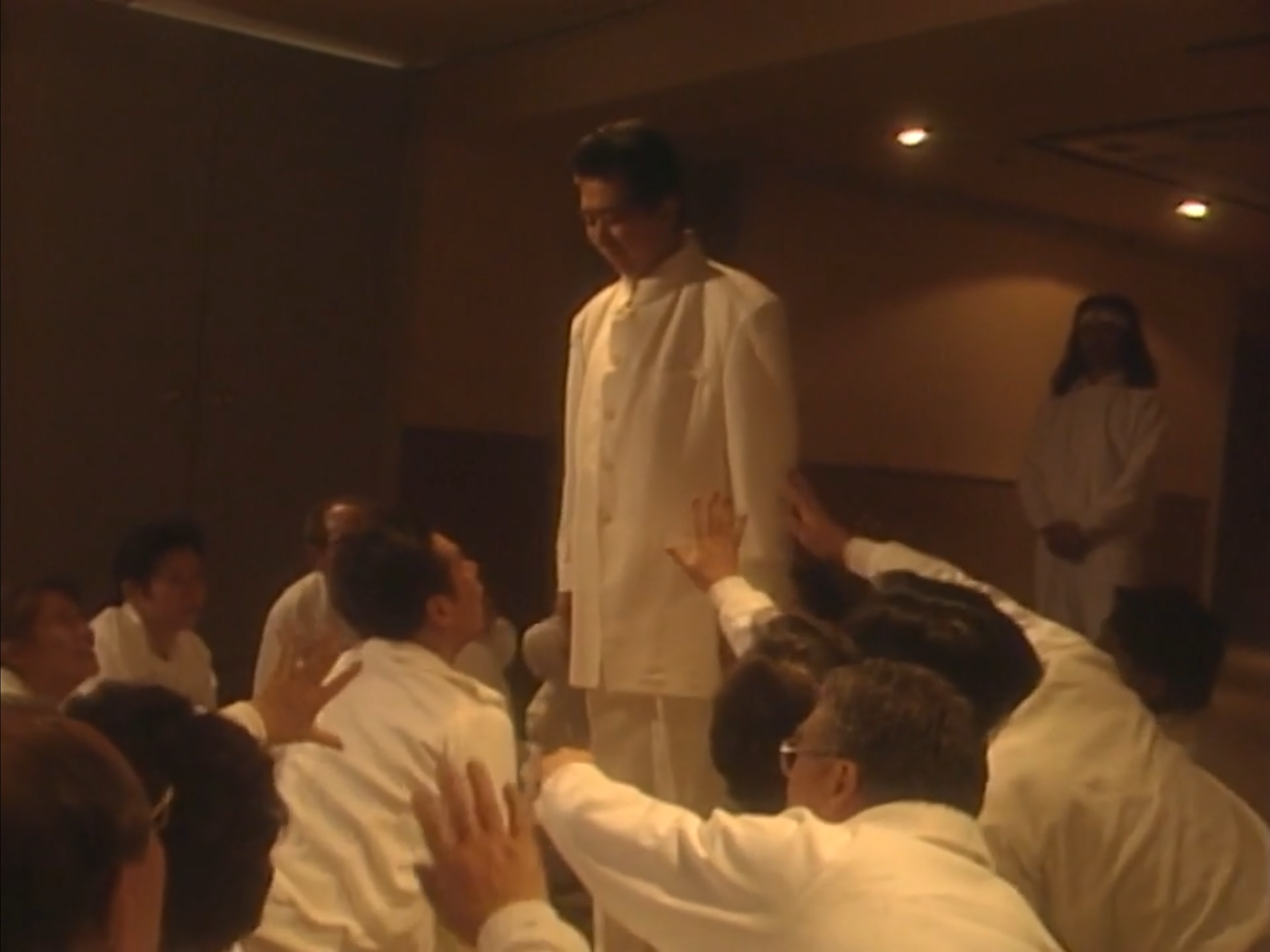
We cut to an unconscious Kennoki, being roused by the Kirihara brothers. Kennoki hears the sounds of screaming and crying from outside, and his consciousness drifts away as he hears the brothers wondering if he’s the only one they can save. Waking again later, the brothers gone, Kennoki wanders the empty halls of the group to find that Naoto and Naoya destroyed the mechanism that Doumeki used to fake his own pyrokinetic abilities, and that everything else devolved from there. Doumeki lies dead on the floor, and Eri lies nearby, injured. When questioned, she says that when the trick mechanism was exposed during a ritual, a sympathizer of Isamu’s took that as their opportunity to fatally attack him.
Stumbling out into the mid-morning hustle and bustle of the city, Kennoki’s narration tells us that after this, all the members of the group disappeared – including Matsui and his wife. Having learned their names through further research into Mikuriya, he still doesn’t know why Naoto and Naoya tried to dismantle the group, and wonders if it’s because another psychic was involved. While he can admit that they saved him, he still doesn’t know if he can believe they were psychics.7
———————————————
This middling procedural aired as a christmas/new year’s special, and features the lads for almost exactly two minutes and twenty seconds. I wouldn’t be cross if it had contributed to the story more as a whole, or even if it were fun – but for a double length episode, it really did not impress me. The cult itself was half-baked, and it felt clear to me that the team didn’t understand the fundamental principles of this type of exploitation, or even groupthink brainwashing. Naoto’s warning hardly seems helpful for the position that Kennoki is in, and read more like a generic PSA for viewers. Given the rise of Aum Shinrikyo around this time, it’s disappointing to see such a toothless take on the whole business, especially one that’s meant to contribute to the core worldbuilding of the show.
Doumeki states that “Psychic powers aren’t limited to clairvoyance or telekinesis. The power to believe is the greatest psychic power of all. Through belief, reality itself undergoes constant transformation”, which tracks with notions presented by Shoko. Are we meant to understand that greed undermines legitimate faith, or did the fraudulence still produce a psychic in Isamu? Did the group accidentally produce psychic powers in Isamu through draining him of his money – ie, his ‘worldly possessions’ – and therefore part of his ‘material existence’? In that case… is it really fraud? Do the ends justify the means, or is this shallow moral conundrum a consequence of minimal research and poor planning?8
I say this because it’s exquisitely annoying to have them state that all the members of the group – including Matsui and his wife – just disappeared. Wouldn’t it be more interesting to see what it’s like to have the members try and reintegrate into society? How would Kennoki deal with his partner still being on the force, unable to prove his involvement? And with the lack of Kirihara bros on the scene, I feel like I can barely even ask if Naoya could use his powers to help deprogram people, which is an otherwise very interesting proposition.
I’ve talked before about Naoya’s capacity for taking in the pain of others and working towards being able to productively empathize, rather than just be completely absorbed in the reenactment of the memory within himself. I wonder if it would be possible for him to use this effectively in any psychotherapy capacity, or if that would be a terrible idea. Because at the core of it, while it might seem useful to have someone fully ‘understand’ what you’ve gone through, the healing process probably comes from the empowerment of figuring out how to describe it to someone else who can’t “fully” get it. Even being guided through that process by someone who can read you is such a potentially volatile notion – how can they know what’s information you want to reveal, or necessarily need to hold back? Why is the closest we’ve had to any Hannibal-esque manipulators psychically hot reading people Yui, back in episode 9? Surely there are psychopaths who won’t short circuit from seeing their targets’ pasts – that feels like a far better skill for a cult leader than pyrokinesis.
All we really learn from this episode is that hypnosis is real, Mikuriya’s research started in the 1960s in Soviet Russia, and it’s unclear how involved he still was with Doumeki9 – if at all. Barring the almost complete absence of the lads, one of the most frustrating things is that the one “iconic” shot that they used for all their merch, including the cover of the screenplay, comes from this episode.
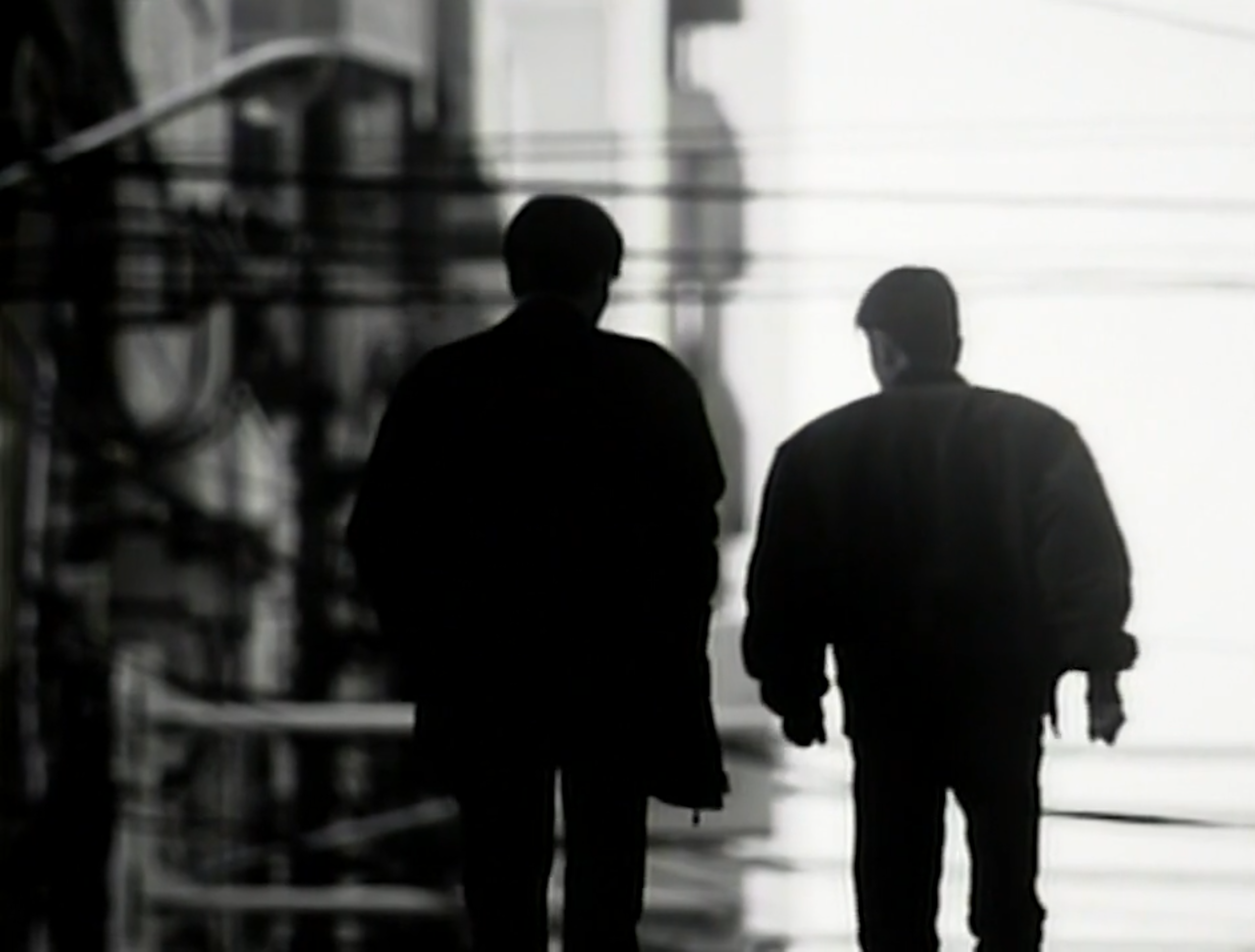
- Hey! I remember that guy! ↩︎
- Yikes, George… ↩︎
- she genuinely walks in like “the killer did this…on purpose” ↩︎
- Matsui namedrops Firestarter here, which was fun, but I don’t really see why this would convince him ↩︎
- This is 33 minutes into a 50 minute episode. ↩︎
- Why did this work? Why bother establishing hypnotism as being a thing if there’s no rhyme or reason to it?? ↩︎
- Like honestly why would he, he didn’t see them do anything ↩︎
- I didn’t mention it up top because it’s honestly too frustrating to fathom in more detail, but there’s a “clue” where one of the murdered cult members had become an AV actress to make money for the group, and there was a protracted comparison between the BDSM content of her videos and the subservience of the followers to their leader, Doumeki. If she just wanted to make money, why would she necessarily go out for porn roles with the same power dynamic as the religion she’s devoted to? What kind of clue is that, George?? It certainly felt prurient and judgmental – at best, ill conceived. ↩︎
- This is a silly one, but I was delighted when Doumeki’s actor (Toshifumi Muramatsu) turned up, because I saw him just the other day in Hey Detetective, Your Backpack is Open ↩︎




Recent Comments