

Posted on August 20, 2026
NIGHT HEAD synopsis
– Common Sense Bar
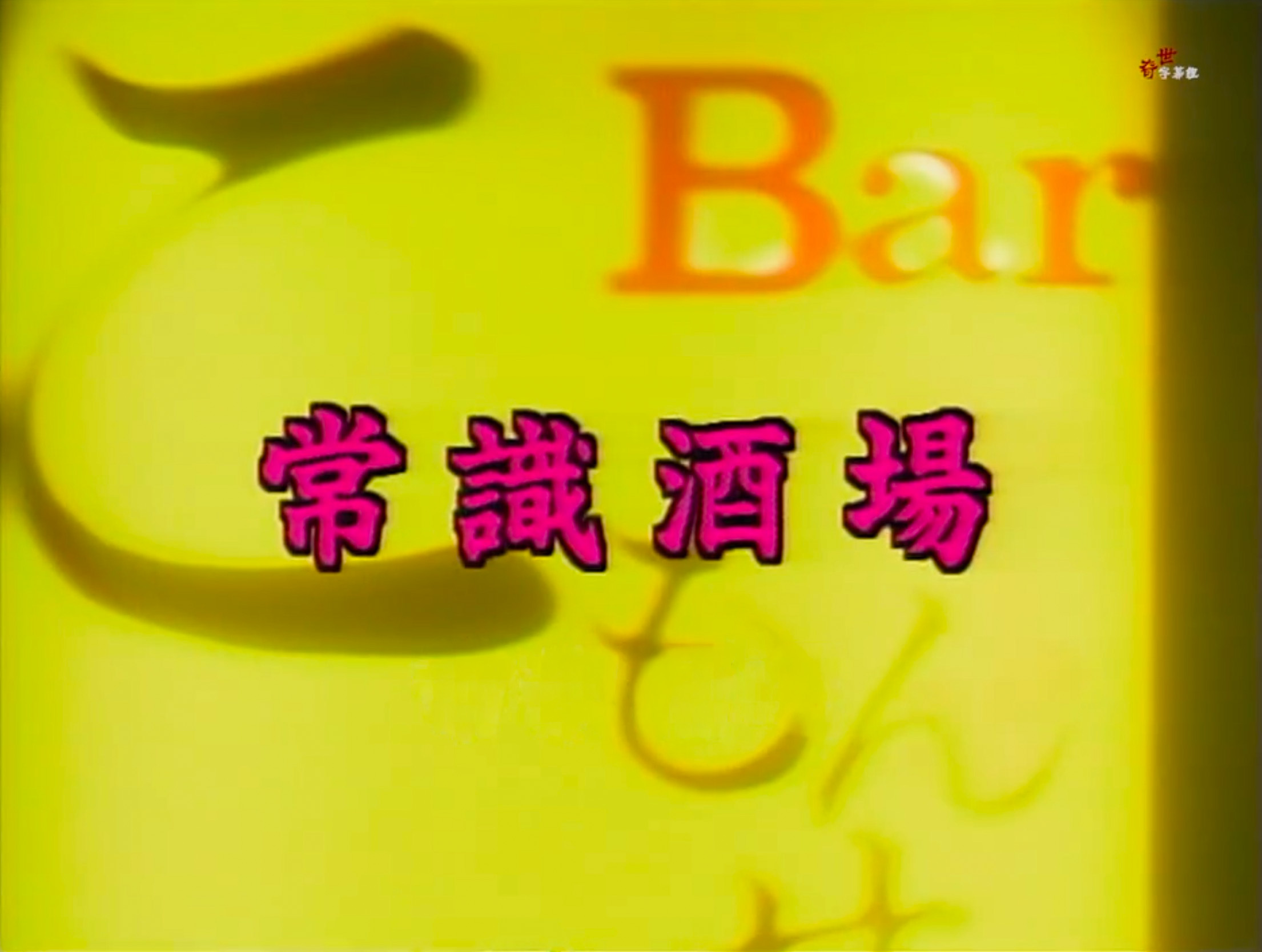
In 1992, Tales of The Bizarre aired several specials written and directed by George Iida. Interestingly, two of these featured psychic brothers recently escaped from a research facility… brothers by the names of Naoto and Naoya. With the second of these specials airing a mere month before the premiere of NIGHT HEAD, this unusual precursor to the show provides us with an interesting perspective on what we’ve seen so far.
“Possessing abilities that surpass those of others is a wonderful thing. However, that is not the case when those abilities defy all imagination.
For instance, if a human being were capable of flight, world records in the long jump or high jump would instantly lose their value, and we would be robbed of the thrill of the competition. That is hardly an enjoyable prospect.
To begin today, I would like to share the story of two brothers who met with great misfortune precisely because they possessed an ability that far exceeded that of ordinary people.“
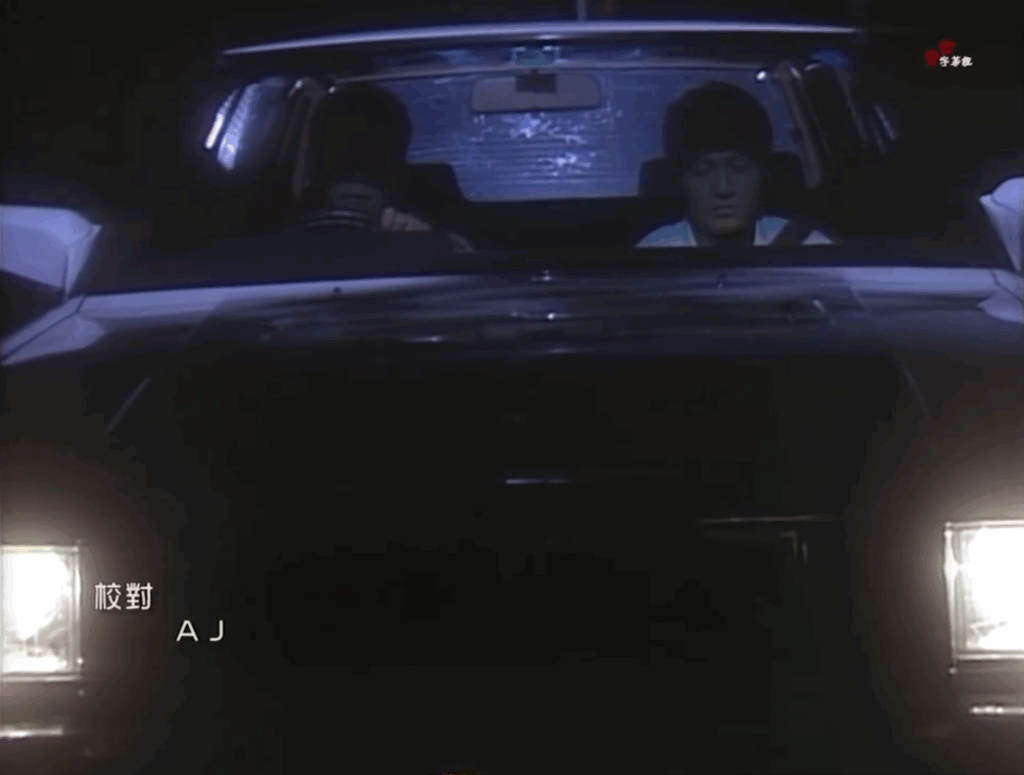
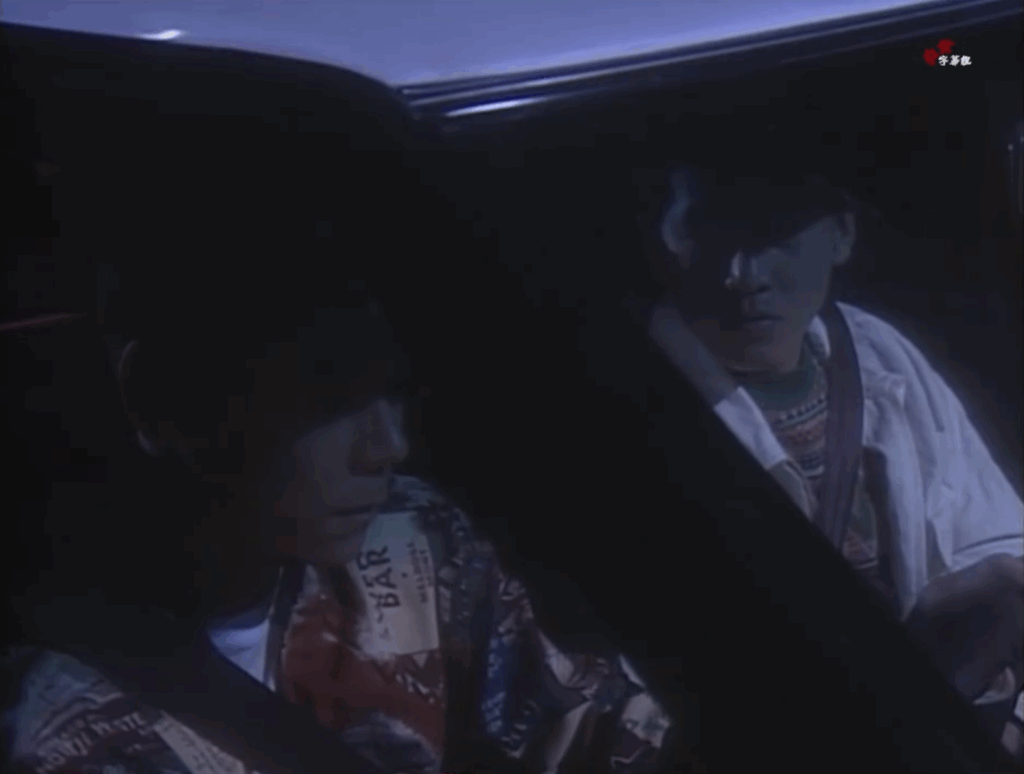
This special opens nearly identically to episode one,2 with the brothers driving down a dark, winding road. As before, Naoya asks his brother to stop – in this version, as portrayed by Toshihide Higashine, he is much calmer and self-possessed rather than cowering in fear. Naoya’s request to stop at the bar is for the most part the same, except that here, he also says he’d like to try drinking alcohol. Given that his character is meant to be 20 on the dot – the legal drinking age in Japan – this makes sense to me. Moreover, he also prompts Naoto by saying he probably wants to do the same.
Their dynamic is much more tense, with Masayuki Imai’s Naoto seemingly brimming with rage already – his younger brother repeatedly asking him not to get mad. Here, Naoto relents in an unusual way – he seems shy and uncomfortable as he remarks “You really do love people, huh – unlike me.” With that, he turns the engine off and they head in.
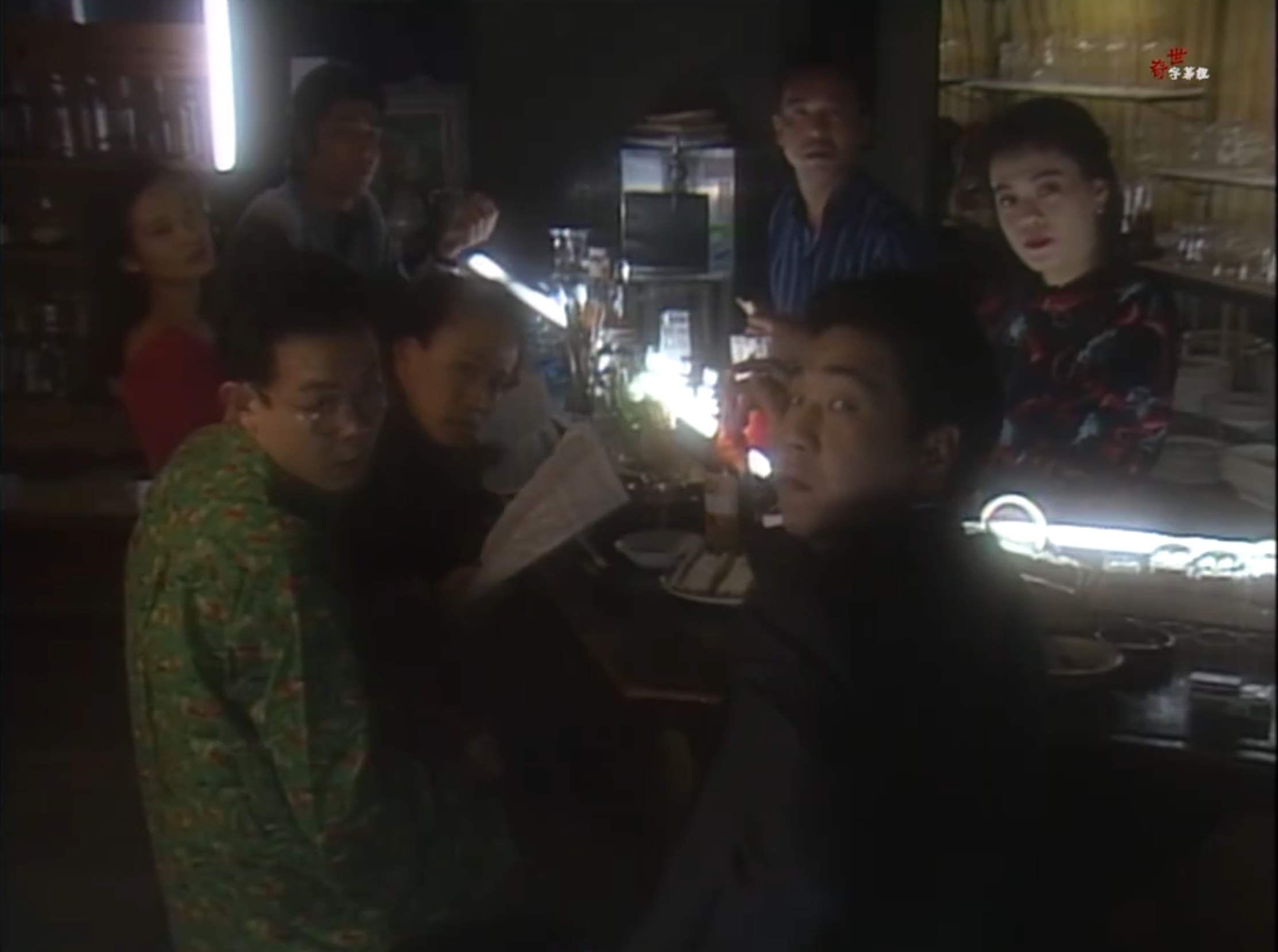
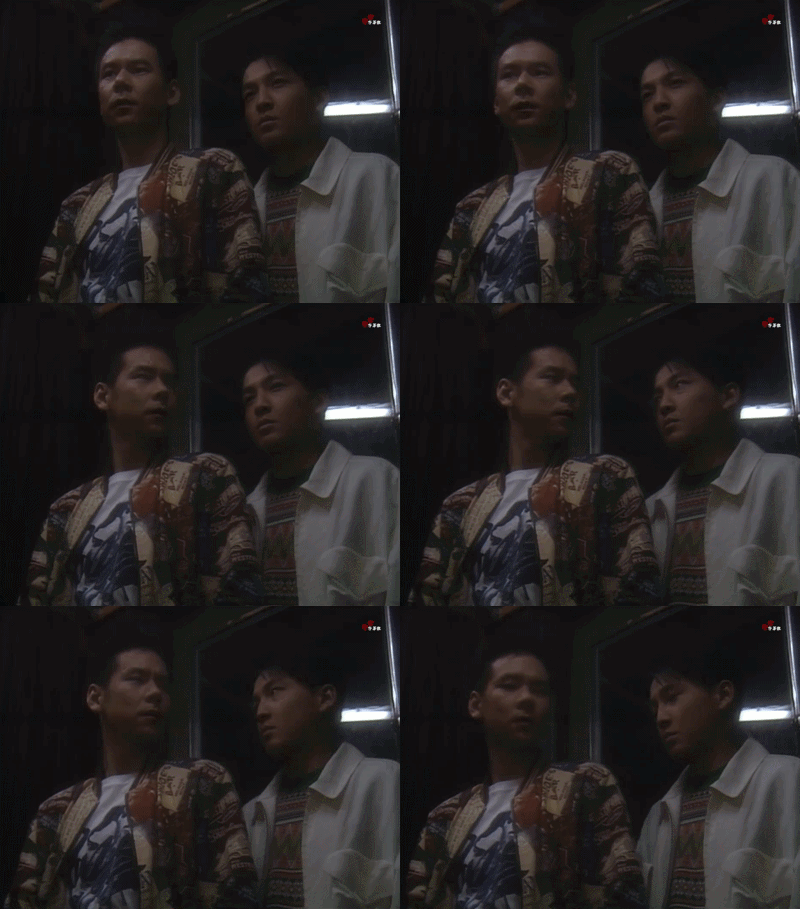
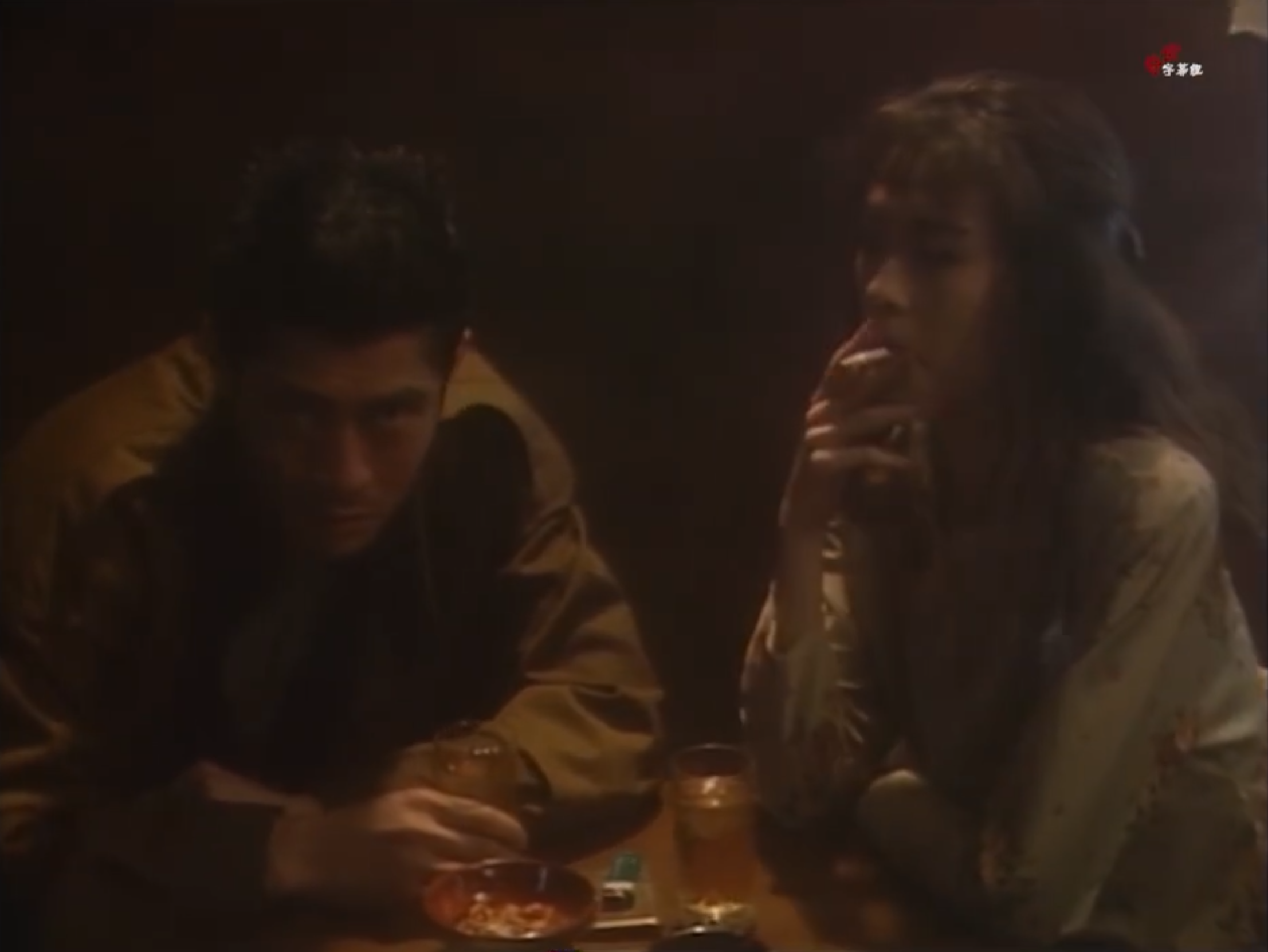
Inside, they’re confronted by the judgmental gaze of the patrons at the bar, as well as the barkeep3 and his wife. I am delighted to note that the brothers are wearing some weird outfits: Naoya in a bold white overshirt with a jaunty aztec-style tee, while Naoto has gone for a loud americana clipart print jacket over a t-shirt with a clashing print. As the brothers make their way to a table, they pass by Reiko and Jiro4 from episodes one and two, who are already seated and glowering.
Their waitress attempts to take their order in the same manner, but Naoya’s choice differs from before. Rather than his iconic request for omurice, here he opts for wine – “a rosé would be good.” This elicits the same burst of laughter from the patrons as in episode 1, though less explosive – the waitress responds that they don’t have any. Here, Naoya tries again: he’d like to try a gin fizz. The other patrons at the bar are in hysterics as the waitress has to explain yet again that they don’t serve those.
This difference in order choice is fascinating to me for pondering through some of the oddities of episode one. Previously, I had wondered if his omurice order was all that worthy of contempt (if not latent homophobia). Was the order ‘childish’? Was it just that intangible ‘wrong’ that bullies zero in on when they smell weakness? Here, I can kind of understand the first part of his order being strange, at least – rosé seems like an odd wine to choose at a place like this. I wonder if there is some cultural overlap that it would be considered a somewhat ‘feminine’ wine – I’m not a drinker myself, so I can’t really speak to the underlying reasoning other than perhaps its cachet or branding.
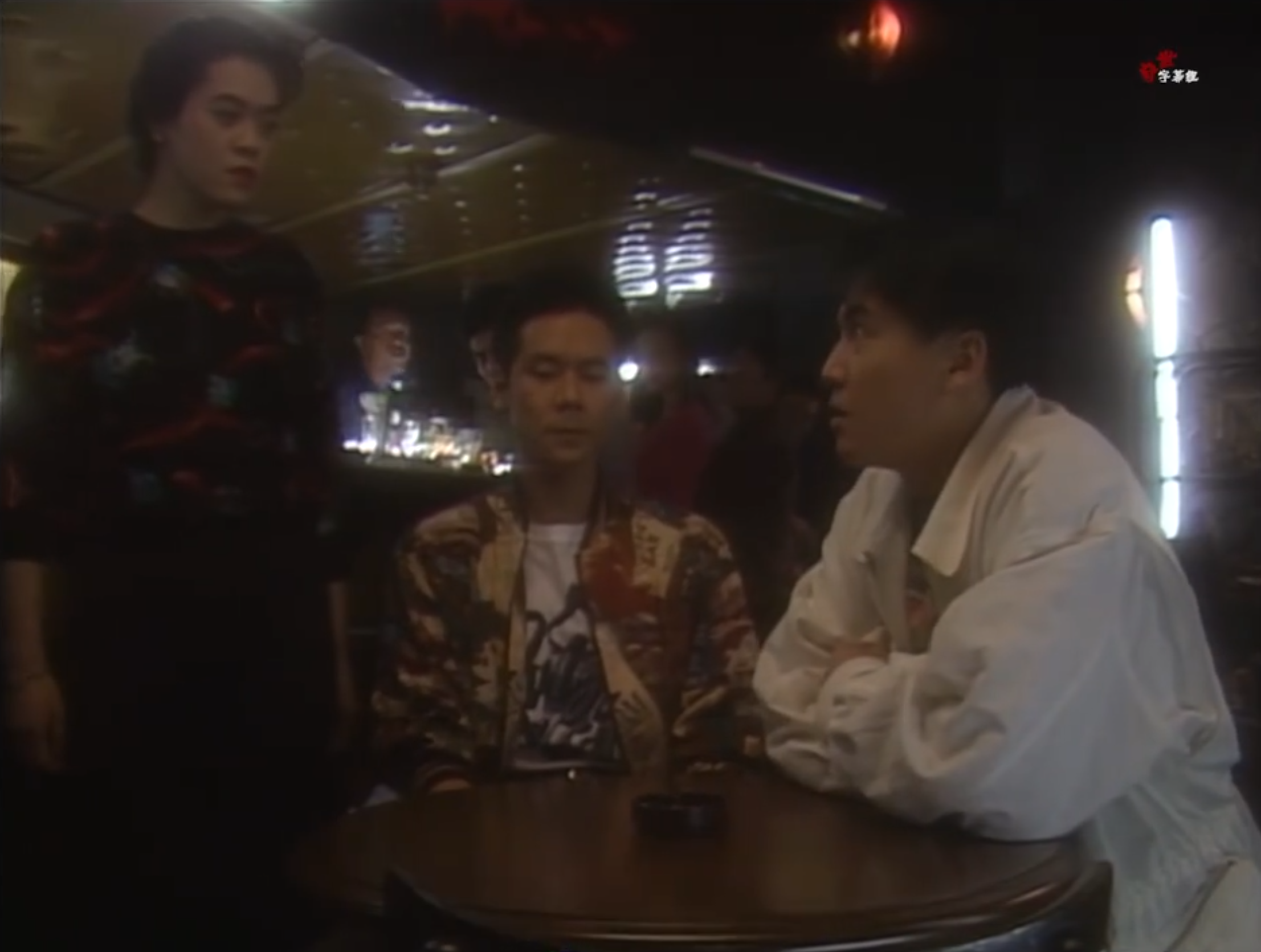
As to the second part of Naoya’s order, is a gin fizz a bad or unusual cocktail to order? Complicated, perhaps – as far as I could see from my research, it involves lemon juice (not so bad), simple sugar syrup (possibly a specialist ingredient), as well as – what may be the kicker – an egg white. If cocktails aren’t the norm, here, it would definitely be a big ask for them to (literally) whip up something with ingredients no one else asks for – particularly eggs. But as far as I can tell, the bar is littered with cocktail-making tools, so who knows!
Interestingly, the barkeep5 scoffs at the gin fizz in particular – “this ain’t some kinda fancy roppongi bar, y’know”, indicating perhaps that there’s some class animosity going on, too. And where did Naoya even hear about that cocktail in the first place – magazines? In any case, both of Naoya’s orders track with his earlier request – guy wants to get a drink! Naoto barks out an order for two beers and a snack this time, rather than mix pizza, though this also garners some mockery from the patrons (more likely because of his tone rather than the content of the order). Naoto tells his younger brother off for ordering a gin fizz, even calling him an idiot, then the two brothers share the same exchange regarding Naoto watching his tone. Here, he seems embarrassed rather than incredulous, shifting uncomfortably in his seat.
The bartender changes the TV channel to the panel discussion on psychics – what is said changes throughout every iteration of this scene. Here, it goes like so:
“We still do not fully understand things like the workings of the human brain or the phenomenon of superconductivity. Therefore, it is actually unscientific to assume that anything science cannot currently prove is impossible. I find the mindset of those who deny the existence of such things simply unfathomable. In fact, one could even argue that such people are hindering the progress of science.”
There’s less focus on Miracle Mick as a ‘character’, though he still appears to bend some spoons.6 As before, Naoto gets worked up over the news broadcast, saying that the commentators are liars who just want to be on TV. While much of the dialogue among the patrons at the bar is the same, their tone is much more measured and conversational rather than quite so over the top. Interestingly, the waitress/barkeep’s wife gets to join in on the chatter here – “I’m skeptical about things like making objects fly or snapping things in half—I just don’t buy it. But you know how people claim they can see the past or future, or uncover people’s secrets? I find myself wondering if there’s anything to that.”
One of the men says that those types of things are just as easily faked, especially when using audience plants. He tells them a story about his friend who saw a woman be paid off to do just this, and how he found it off-putting. Here, the conversation proceeds inquisitively, as there’s no menacing character like Jin to try and shut things down. The young woman playing the role comparable to Hiroko, Jin’s girlfriend, even cuts in to say “if I got paid, I’d probably do it too” to which they all laugh – “What are you talking about? You’ll do it with anyone, anytime.” The boisterousness as she tells them all to shut up while laughing, especially considering the later plot implications, has a less menacing sense of camaraderie. Though I will say, it’s Jin’s character (and his backstory) that makes the proceedings of the first episode the most propulsive.

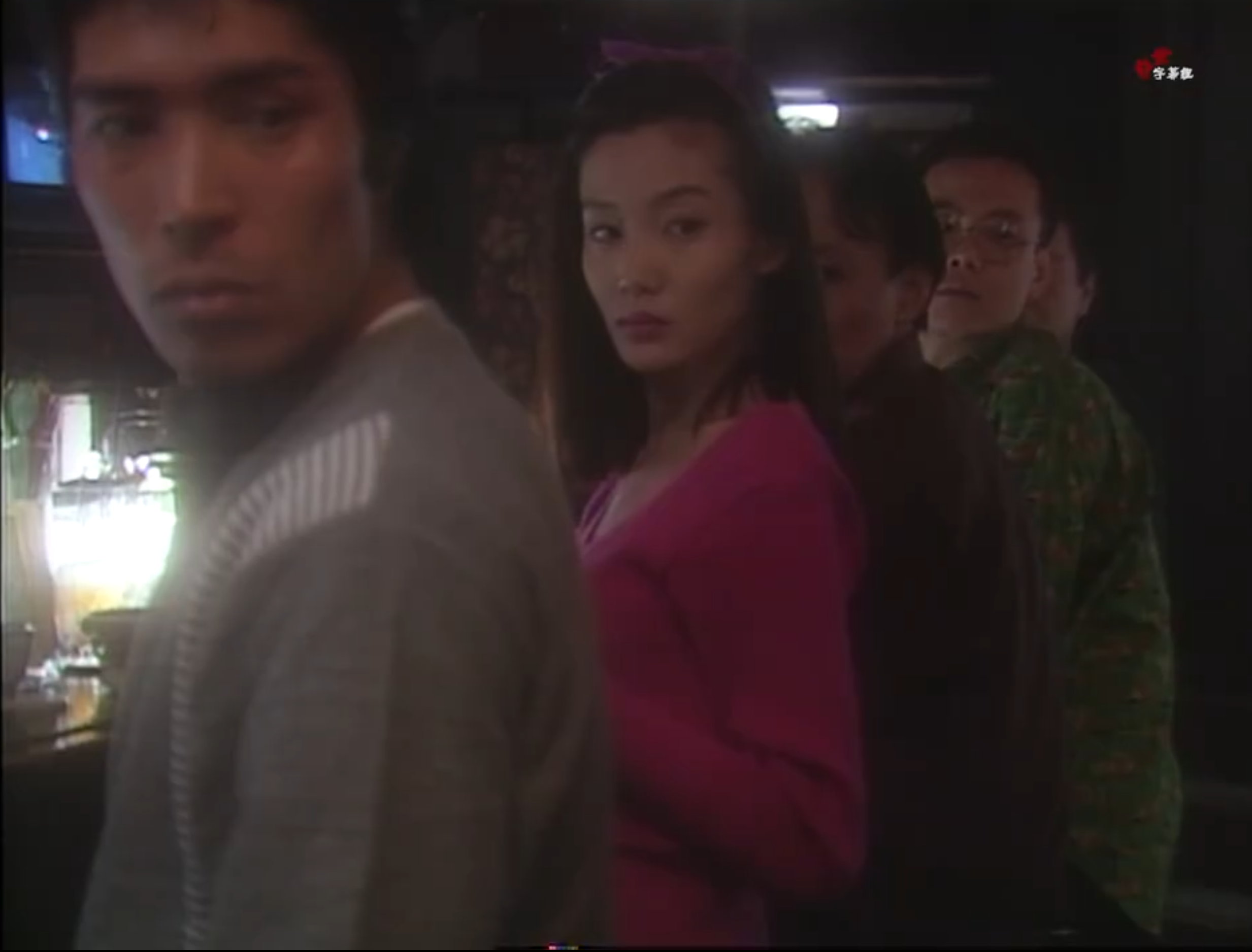
Without Jin, the thing that tips off Naoto is the general turn of their conversation towards making fun of people who believe in psychic powers. As before, Naoto begins to stew, but it’s Naoya’s turn towards distress that works best in my opinion. His having been alright up to this point lends his strained, panic-filled request to leave a more heightened quality. As before, he begs his brother to let them leave, apologizing that it was “[his] fault for wanting to meet people in the first place”, a statement which now feels tragic to me, considering my thoughts on their codependence. 7
The usual explosion, the usual staggering exit – Naoya asks for the bill and similarly gets called out for the mess they’ve made. When they offer to compensate, they’re scoffed at – “That’s exactly it. You think money solves everything …Money, money, money”, leading me again to the thought that there’s some sense of class warfare to the exchange. What’s unclear, here, is why Naoto ends up showing off his spoon bending (the most ‘iconic’ part of the episode) with so little goading. For the most part, the patrons just seem ticked off with someone who, as far as they can tell, smashed some bottles and made a mess. Jin’s character may have been over the top, but his presence at least made it clear why Naoto’s behavior would devolve this way. Here, rather than seeming threatening, it feels pointless or immature. While still immature in the first episode, Etsushi Toyokawa’s strangely mesmeric performance brings out just enough of an edgelord wish fulfillment quality to seem cool even when, technically, he’s having a tantrum.
As before, Hiroko-equivalent’s outburst that they’re fraudsters riles Naoto up all over again and he begins smashing things, shattered glass flying. One of the patrons asks the barkeep why he’s not upset at all the damage, but he seems almost starstruck – here, he is the one who believes in their powers. As Naoya intuits this (or perhaps ‘reads’ it?), the barkeep picks up on what his powers are, which serves as their introduction here, rather than Naoto hamfistedly blabbing it on his younger brother’s behalf. However, he does something much worse, here – when the Hiroko-equivalent starts throwing things at them, Naoto grabs his brother’s arm and forces him to ‘read’ her against his will. Rather than having him be molested by Hiroko, cowering in fear, having Naoto as the instigator goes against the ways that the show develops him (for better or worse) as Naoya’s protector.
Naoya’s vision is approximately the same, except that he only says, “She’s having an affair with someone who isn’t you”, and we only see the barkeep (who then retracts his support of the veracity of their powers).8 So from a singular affair to having slept with every guy in the room is a strange escalation – I wonder, again, if the late-night TV slot made a difference.
As the Jin-esque man goes in for a swing (seemingly protecting his girlfriend, in this case), we get to see Naoto’s powers in action – there’s some cool wind tunnel face-flapping that I dug, and a lot more property damage. As they’re all thrown around in the maelstrom, this is when Naoya touches Reiko and her pal, experiencing his vision of their murders. Naoto rushes to his aid and, apologizing, they finally head out.
Here, when Naoto asks what their9 deal was, Naoya doesn’t call them murderers, instead saying “It’ll be in tomorrow morning’s paper. They’ll be arrested by next Thursday”, implying that he is either already aware of his precognitive abilities, or far more humorous than our Shinji Takeda iteration. Naoto apologizes again, saying this was all his fault, and suggests they go back to the lab. This episode ends, seemingly, with them deciding not to keep on with their journey, with Naoto simply saying “Nothing good ever comes of running away, after all.” It’s an intriguing reversal from the trajectory of the TV series, which characterizes anything other than self-reliance and emotional fortitude as running away, and returning to the lab as an impossibility.
- The title of this episode is technically 常識酒場 (joshiki sakaba), meaning common sense (or, wisdom) bar. I’ve opted to translate it as such because the actual bar they visit, as per the outside signage, is a phonetic spelling of the english phrase – こもんせんす Bar – which tracks with the title structure for the next episode. But for more on that, you’ll just have to wait and see! ↩︎
- Barring the introduction with Shoko, which is not present in this iteration. ↩︎
- Played by Yukijro Hotaru??! ↩︎
- They are shown, briefly, to have suitcases at their feet under the table. ↩︎
- Did I mention this is Gonza, the Saejima family butler? ↩︎
- Since I can’t find anything in the cast list for Mick’s character, and given the resemblance… was this also a role played by Yukijiro Hotaru??? In which case, I am reeling. ↩︎
- So far, I have discussed this in more depth in my synopses of episodes 7 & 8, as well as episode 12 …there will be plenty more to come. ↩︎
- Gonza would never… ↩︎
- I didn’t mention this previously, but this was also true in episode one – Naoto refers to the pair as ‘avec‘ (アベック), a pseudo-french term for ‘couple’ that was popular in the 1980s-90s. ↩︎




Recent Comments