

Posted on August 19, 2026
NIGHT HEAD synopsis – episode 12
Episode 12 – The Apartment
broadcast date: january 7th 1993
Director: Masayuki Ochiai (落合正幸)
Naoya Takayama (高山直也)
Naoto Kirihara – Etsushi Toyokawa (豊川悦司)
Naoya Kirihara – Shinji Takeda (武田真治)
additional cast can be viewed here

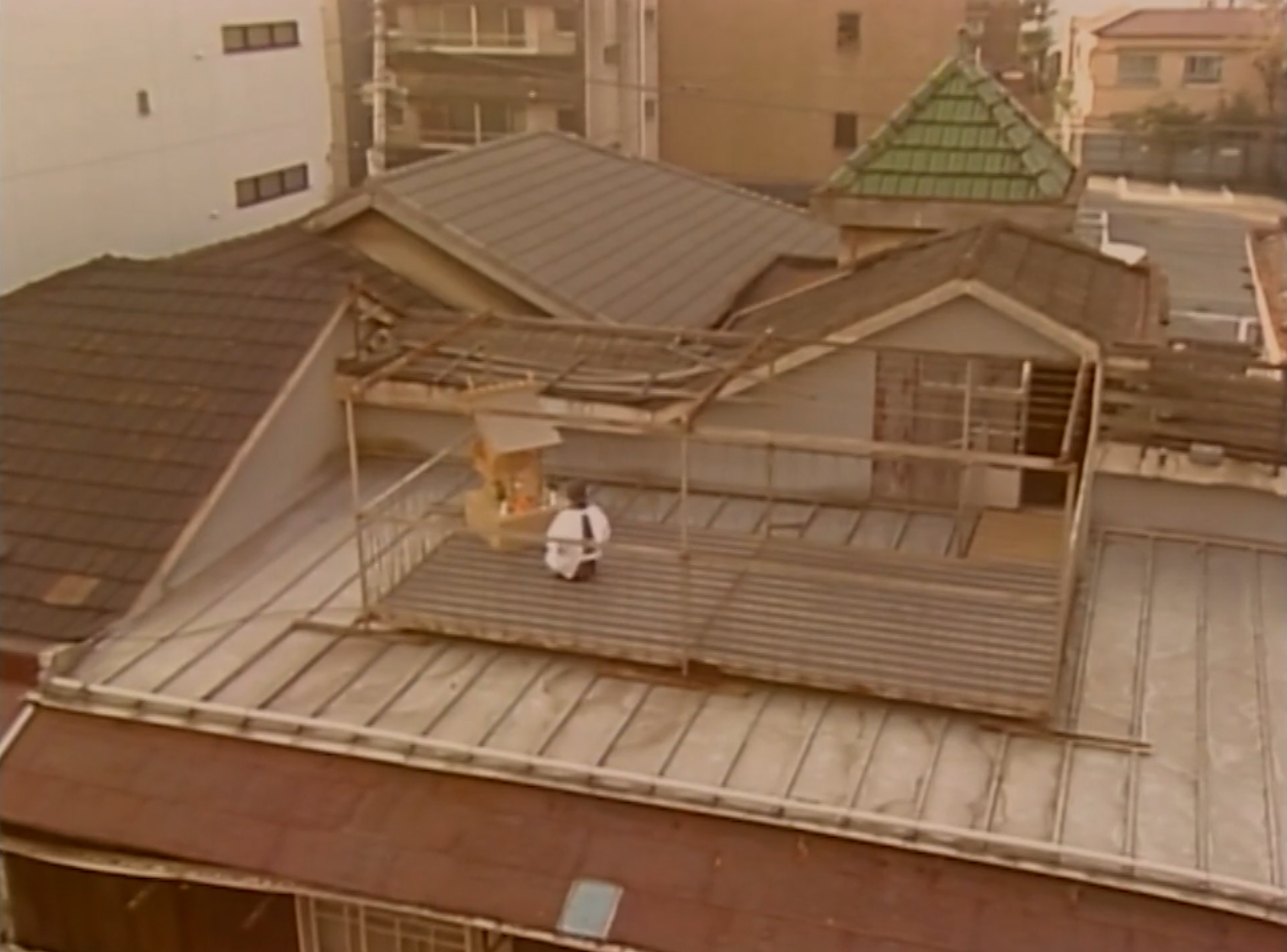
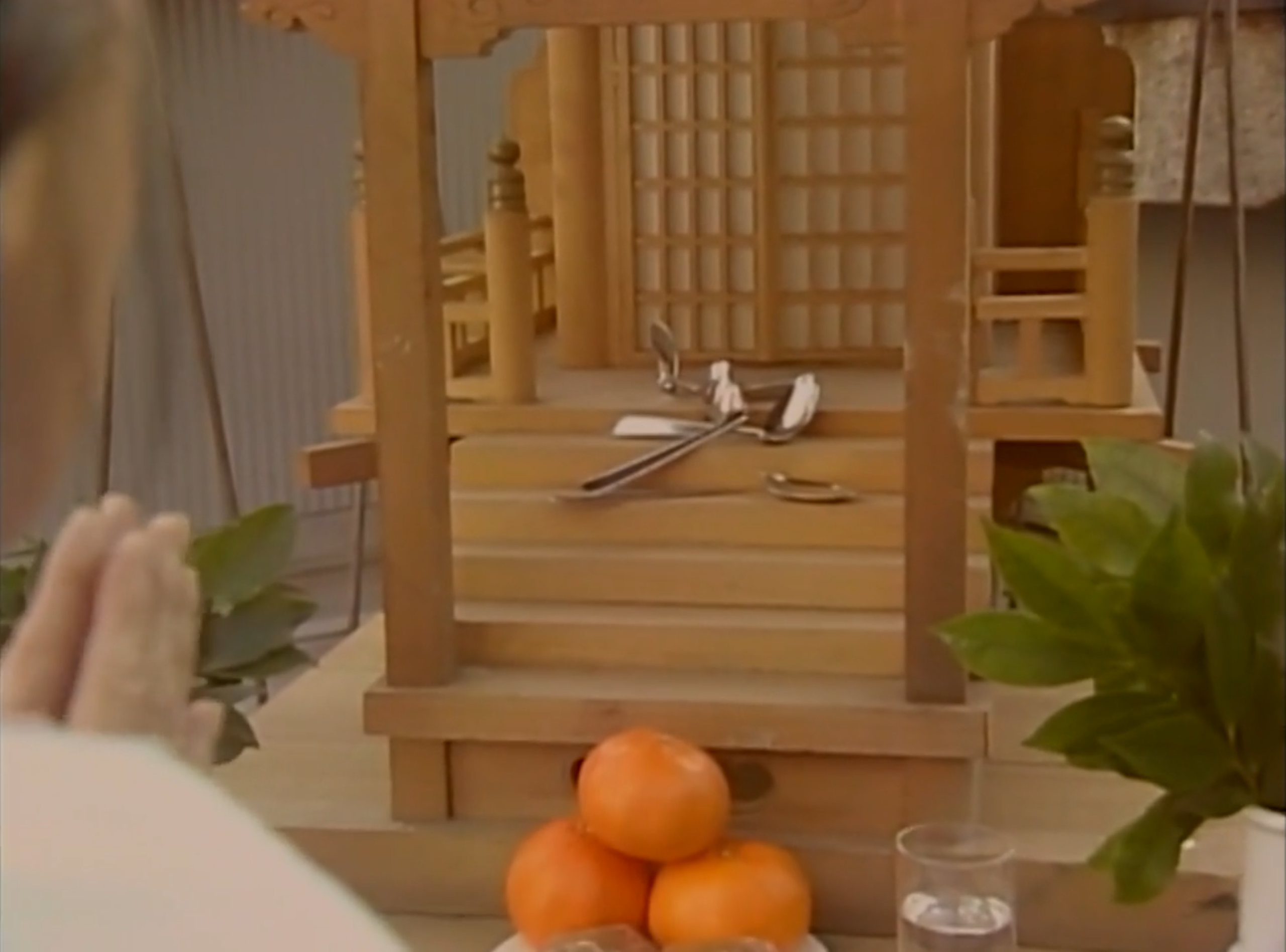
“Early morning.
A densely populated residential area close to the city center.
The sound of ritual hand-clapping—clap, clap—echoes from somewhere.
On the drying balcony of an apartment building stands a small Inari shrine.
An elderly woman is praying fervently.
Her hands are pressed tightly together.
There is an intensity to her devotion that borders on the possessed;
she murmurs in a low voice.
The woman claps her hands again, then takes something from her pocket and offers it at the altar.
It is… a spoon bent into an unnatural shape.”
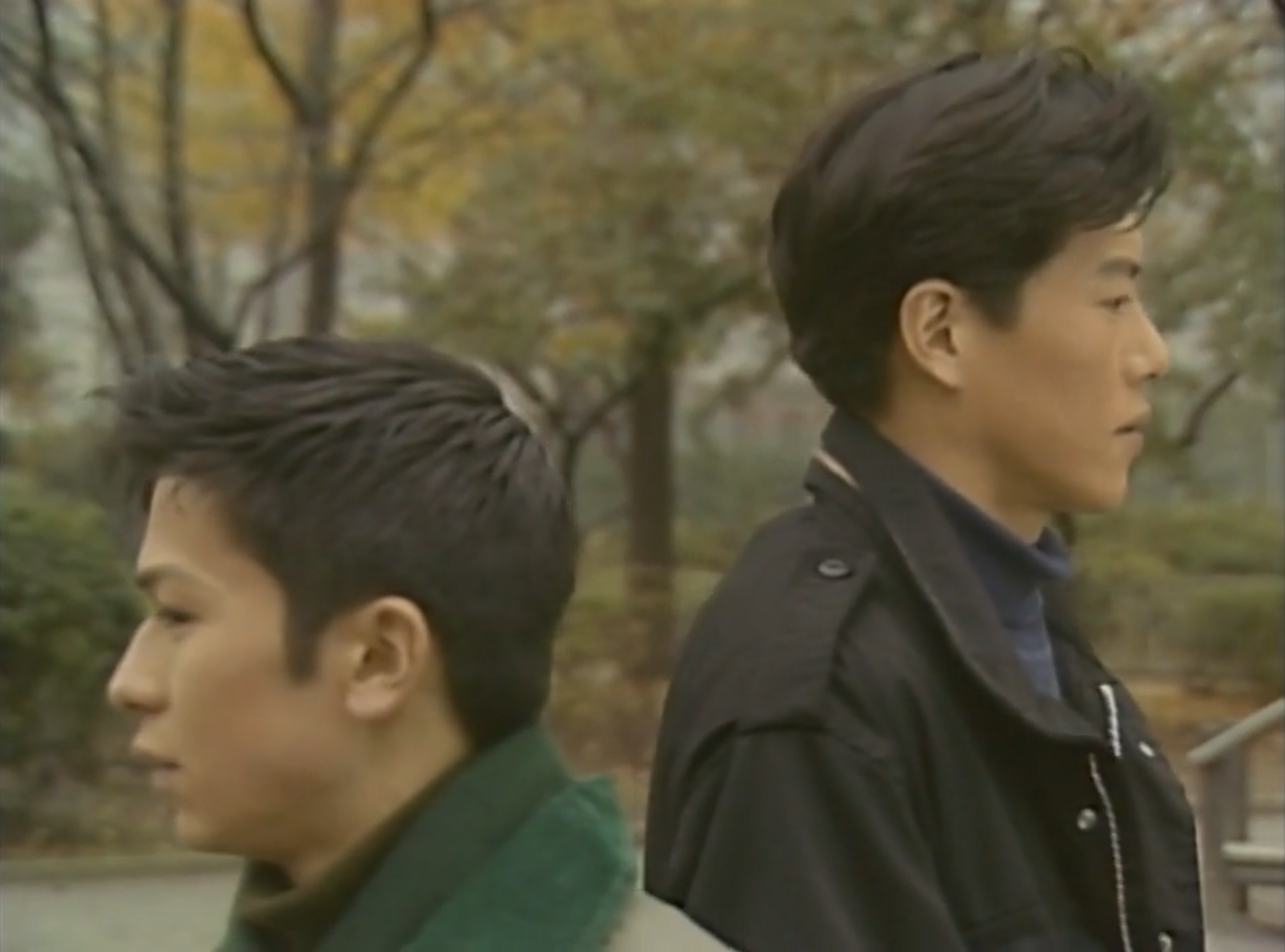
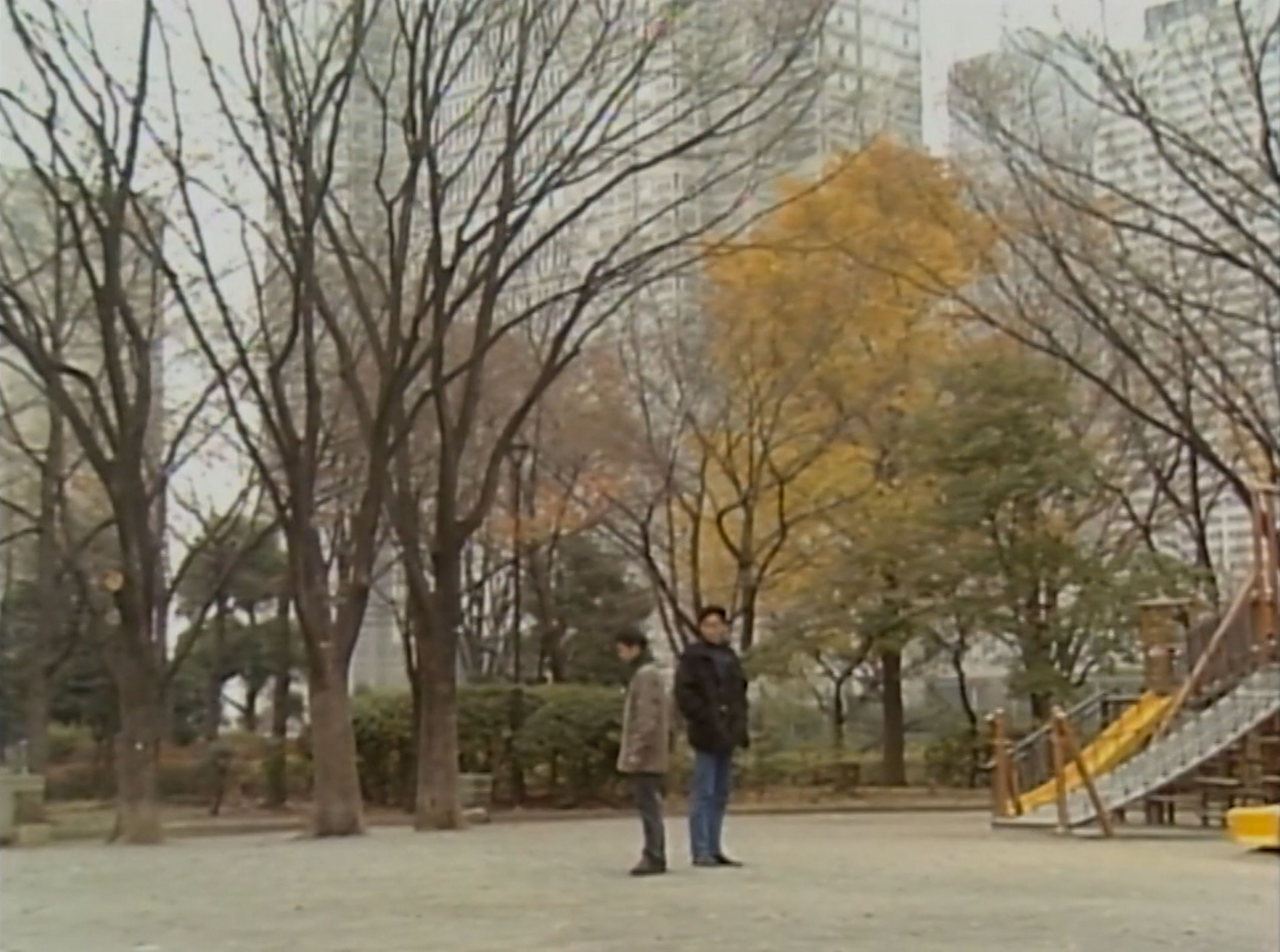
The brothers are at yet another playground1, watching a group of boys playing soccer. Naoya asks his older brother if he remembers playing this together as children, to which he says yes. With a smile, he recalls playing in the nearby park until the sun went down.2 Naoya reminisces less favorably, thinking aloud that this may be when he “first learned what loneliness was.” Naoto discourages him from ruminating, saying that even if he had painful experiences in the past, he can still make up for it now.
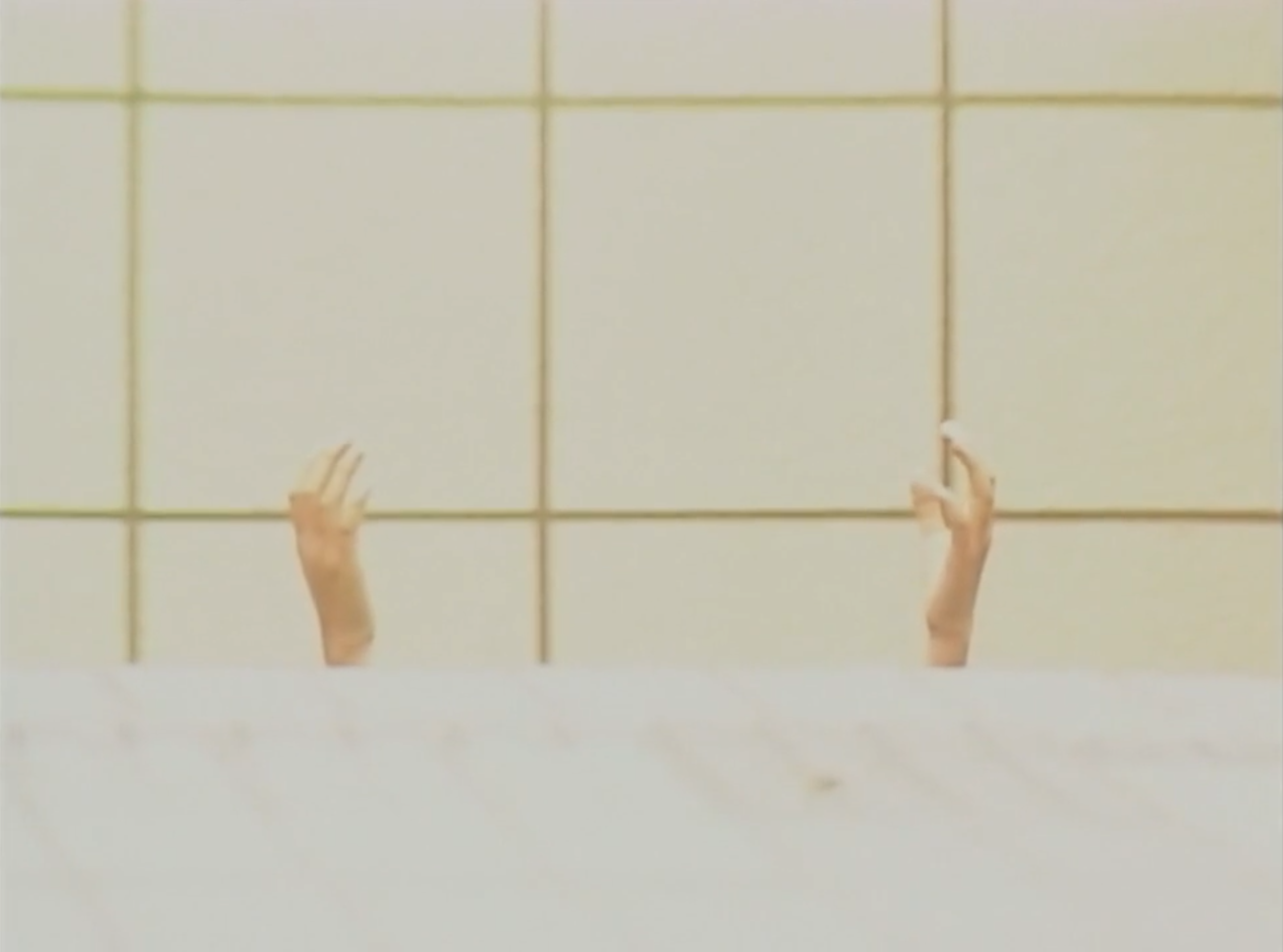
Just then, a small white ball rolls towards them. Surprised, Naoya bends to grab it, and looks up to see a small girl in a white dress, arms outstretched, waiting for the ball’s return. Naoya begins to throw it back to her, only to find himself awash in waves of despair. He can feel that this girl is suffering – “not just pain… deep sorrow” – and she’s calling out to them for help. Naoto, confused, looks all around – he can’t see anyone at all. Increasingly frantic, Naoya tries to explain – and the form of the girl gradually disappears out of sight, arms still raised in desperation.
Having ‘read’ her location from the ball, the brothers drive up outside of an ancient apartment building. Naoya readies himself to head in, but his older brother holds him back, concerned that perhaps they shouldn’t go any further. He’s worried that their involvement may end up attracting negative forces, which may cause the girl more suffering than she’s already going through. Naoya, confused and affronted at the suggestion they wouldn’t help someone desperately calling out to them, tells Naoto that he can sense she has powers like theirs. At this, Naoto agrees – they ought to take a look.
Outside the apartment building, Naoto too can now sense the ominous energy before them, and he cautions that the girl’s shared powers may not be a ‘positive’ thing.3 They enter the building, walking along the eerie halls, peeking in at the few remaining tenants in their various abodes. “A bare lightbulb is burning, even though it is daytime. Signs of the residents’ cluttered lives are visible everywhere. Glimpses of the interiors through gaps in the wooden partitions and ill-fitting doors.” Naoto asks his younger brother if he can sense anything now, but he replies no – something like static is blocking her consciousness.
Just then, an elderly caretaker comes into view, sweeping up leaves. They cautiously ask him if a little girl lives in the apartment, to which he says all their tenants live alone. Just then, the mailman arrives calling the caretaker’s attention away, and the brothers are left wondering what to do next. They decide to leave, thinking this may not be the right place after all – but on their way out, Naoya spots something strange. On the floor of one of the vacated apartments lies a spoon, twisted and warped.
As Naoto examines the room, Naoya begins to panic, a vision overtaking him. He sees the girl surrounded by braying adults, drunk and clamoring, demanding she tell them the winning numbers for the next horse race while she cries. The crescendo of negativity and greed floors him, and as soon as Naoto notices what’s going on, they rush away, a nauseated Naoya throwing up in the hall.
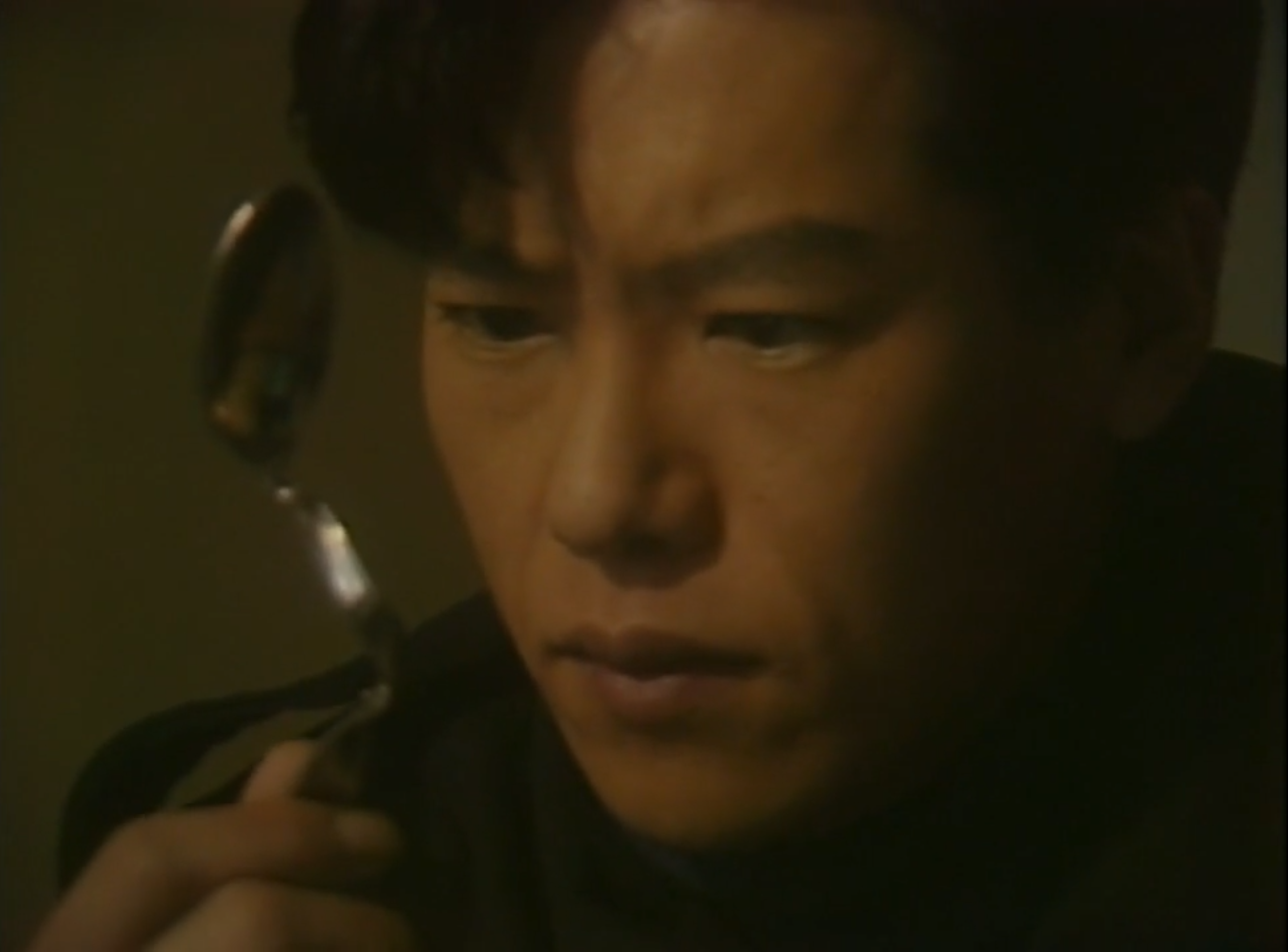
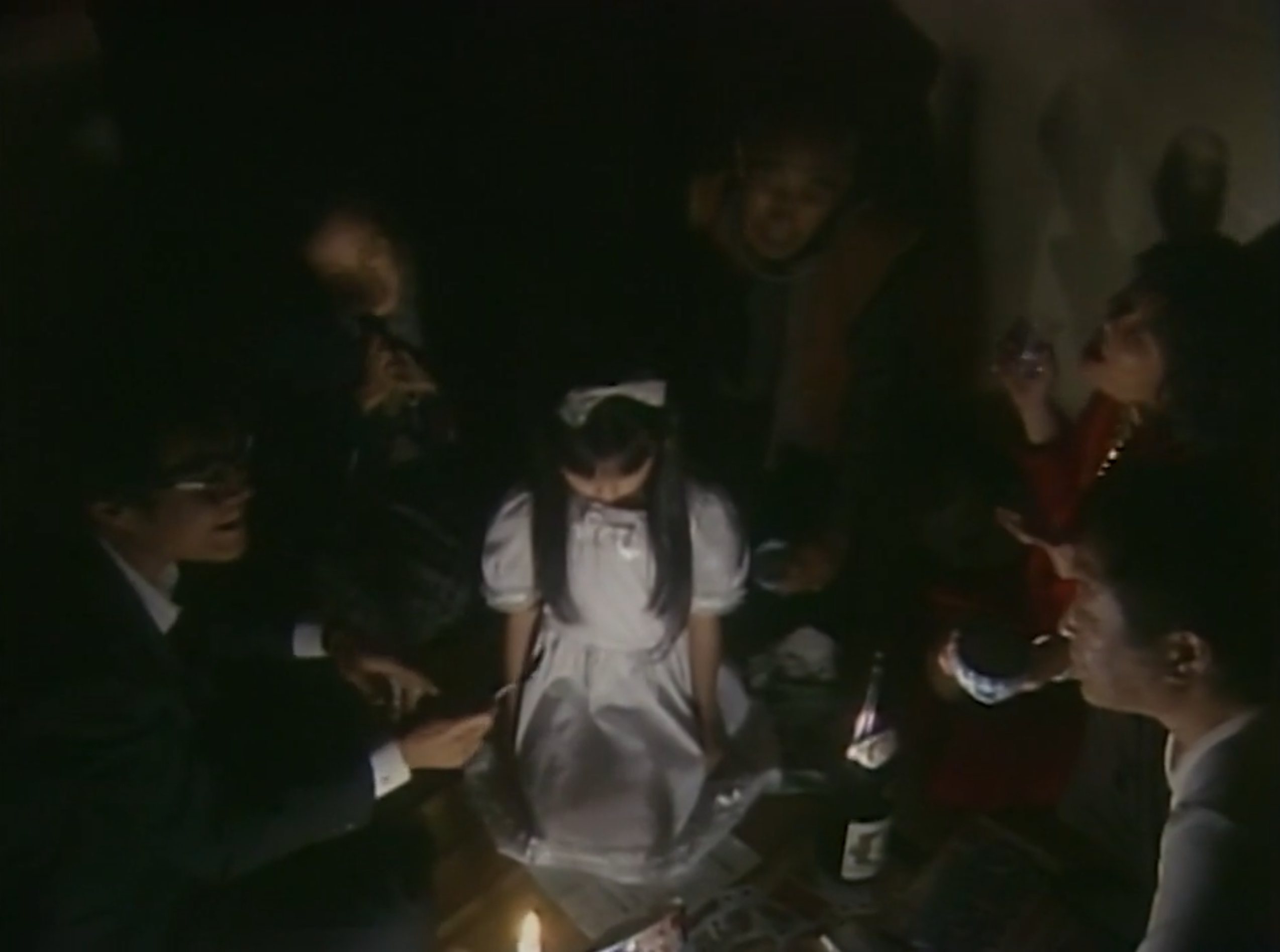
In the car driving away, Naoya thinks aloud that it’s just as his brother predicted, and that perhaps they shouldn’t get involved any further. Naoto asks him what he saw, to which he replies, “Human greed and malice. A force so grotesque that it shuts out even the cries of a child begging for help.” He explains that the residents of the apartment are exploiting her power, all for profit, and a look of rage comes over Naoto. Wincing in distress, Naoya continues to explain that the girl has only recently awakened to her powers and doesn’t understand them – hurt and terrified, she’s just like they used to be.
But this sense gives Naoya pause. Growing agitated, he raises his voice – “Maybe we were the lucky ones. Maybe we were actually happy living with Mikuriya”. But his brother shuts him down, offended that Naoya could forget the agony of being torn away from their parents and locked up in a facility. “But at least Mikuriya never used us like that” Naoya shouts back. Trying to calm down, his older brother says that they still need to do something to resolve things, but Naoya loses it, devolving into a crying mess as he whimpers that he can’t go back – he’s too scared.
Back at their hotel room, Naoya still sobbing, his older brother tries to reason with him. They’re the only ones who can save this girl! But Naoya thinks that he won’t be able to handle another shock like he received at that apartment. Naoto thinks that sensing her power can’t have been a coincidence – that they must be drawn to each other – and he yells at his younger brother not to run away. He levels with Naoya, explaining that he feels particularly close to this girl who shares their powers – if they abandon her, it’s like they’re abandoning themselves. “Our powers aren’t something to be exploited by a bunch of fools – hers aren’t either.” Naoto insists that his younger brother have confidence in himself, and more importantly, to believe – that there is purpose in the things that they’re doing, and in the fact of their having powers at all.
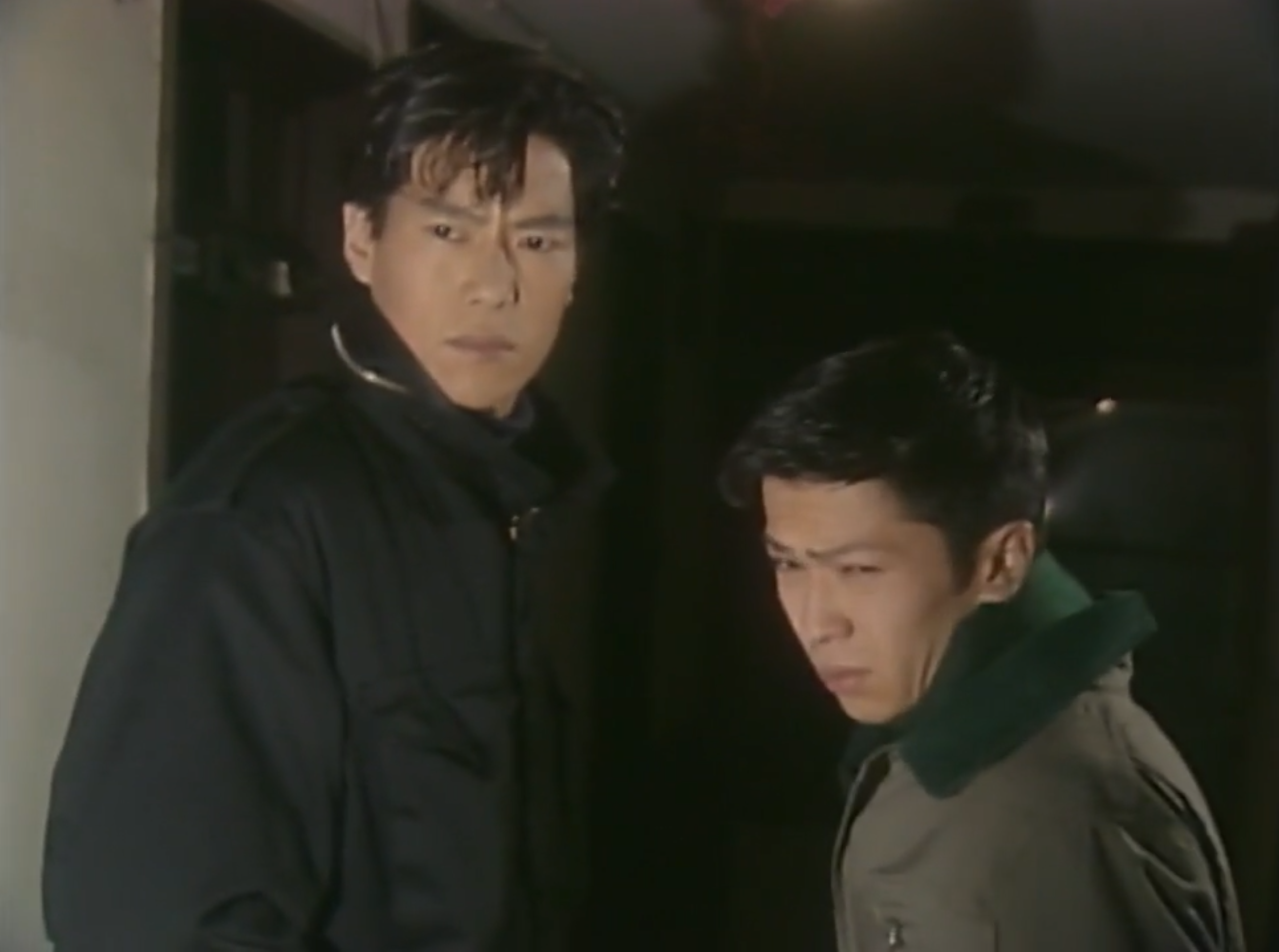
They return to the apartment one more time, Naoto filled with grim resolve. As his younger brother falls in behind, Naoto tells him to stay outside, but Naoya insists he’s coming too. Inside, as they cautiously walk the empty, late-night halls trying to sense the girl’s consciousness, they are abruptly confronted by the kindly caretaker. Shining a flashlight in their faces, he asks them with a smile what brings them there so late at night. But Naoto is done pretending, and insists they be told where the girl is. Immediately, it becomes apparent that the caretaker is done pretending as well, dropping the smile as he asks them where they found out about her. He refuses to say where she is, however – because she belongs to the residents of the apartment.
Just then, all the remaining few who live in the apartment exit their rooms, entering the hallway with grimaces and various weapons. Like stage show villains, they tell the lads that the girl is their golden goose, and they won’t hand her over to anyone. Naoto insists that they don’t understand the suffering they’re putting her through – but he’s scoffed at, told that there’s no reason to pity a monster.
This is, of course, the wrong move – ‘monster’ being one of Naoto’s biggest triggers – and despite Naoya literally holding him back, he begins to find himself overwhelmed with rage. Bristling, growing louder with every word, he spits back that they’ll never understand – that they’re the real monsters. At this, one of the residents comes at him from behind with a baseball bat, only to be thrown backwards – bat, bent. The others similarly charge him, finding themselves seized by Naoto’s psychic powers flowing through them like an electric current as the very lightbulb above their heads bursts from the pressure. Naoya, sat on the floor, screams in distress, begging his brother to stop as their noses and ears begin to bleed – if he uses any more of his powers, everyone there would die.
Suddenly, Naoya understands – the girl has been upstairs this whole time. The lads rush towards her, staggered as Naoya senses a desperate urgency at the other end – but despite blasting their way through doors with Naoto’s power, they’re too late. The girl was apparently taken away by someone working with the residents, and all that remains in the room is a piano and the stench of her despair.
Naoto rushes to try and catch them, but Naoya says there’s no point – he can’t feel her anymore. Just then, a pounding from the other room can be heard, and Naoto breaks down the door to find the girl’s mother, held captive, sobbing and confused. She doesn’t understand why any of this happened, howling that she was just a normal girl. Naoto finds this distressing, and turns away to find his brother, sobbing. Naoya says he can feel the girl’s despair, and that she felt all of this was her own fault – that she wishes she’d never been born. Slowly, Naoto turns away from his brother – quietly, he says almost to himself, that they’re the only ones who should have had to suffer through something like this.
———————————————
…And that’s it. They don’t bother giving chase, and it certainly isn’t a two-parter where they end up using their pre-established research and psychic tracking skills to hunt down her abductors. It’s never explored whether they considered calling child services, or if anyone bothered with an amber alert or some such. All-Points Bulletin? We barely even get All Psychic Brothers! Hey Naoto, what happened to “If we abandon her, we’d be abandoning our own hope as well”? What happened to the guy who said “If we run away here, we might as well just give up?” Well, unless there’s more of this girl later, I suppose you could say they DID give up – it’d be a treat if she returned later, but somehow, I don’t think that’ll happen.
The distraught mother figure is a parallel with Masayuki’s from episode 5, and works well in contrast with their own trauma at either not understanding – or, not remembering – their mother’s reaction at their own childhood imprisonment.4 However, it does feel like they missed a trick not having the lads track down the girl and then having her along for the ride, as this would have been good fujoshi fodder within the realm of BL tropes.5 When Naoto encourages Naoya to buck up and rescue her, he asks “If things go on like this, what kind of life will she have?” – this feels like a further through-line from Naoto’s earlier admonishment that Naoya ought to “make up for it now” rather than dwell on the past. I can see a scenario in which they would want to compensate for their own childhood pain through helping someone in a similar position have a better life – what’s more ‘making up for a childhood lost to psychic trauma’ than raising a stray psychic kid?
Generally, this episode is a mess – but, a mess I enjoyed. It’s melodramatic, it’s over the top – heck, I’d even say it’s camp! In parts, the writing seems to show a fundamental lack of understanding of how to portray the exploitation of children, let alone their psychic powers.6 Take the scenes where Naoya envisions the girl’s distress, for example: everything about that first scene is done well, from the sickening ambiance to Shinji Takeda’s performance – even the soundtrack with its incessant buzzing hints at rot and decay. However, one thing undoes it – the writing. From the script:
“Eerie figures stand lined up in a dimly lit room.
Money changes hands.
Apartment residents surround a young girl;
their faces twisted into hideous grins, blinded by greed.
The girl… is weeping.
Naoya cowers before the overwhelming energy.
Naoya: (staring fixedly at one spot) “It’s awful… just awful…”
The faces of the residents, blinded by insatiable greed as they exploit the girl for profit.
The terrified girl.
Her trembling finger points at a horse racing newspaper.
Naoya is frozen stiff, in a state of shock.
The residents are drunk.
They are fooling around while holding a crying girl.
Naoya screams and recoils…
Being thrown into a dimly lit room and locked inside.
Residents surrounding the girl, shouting and yelling at her.
Their eyes gleaming with greed.
Residents drinking and carousing around a stack of banknotes.
Jeering and taunting the girl.
The spoon placed in the girl’s hand snaps in two.
The residents guffaw, their eyes filled with scorn.
Her small shoulders tremble.
A single tear falls onto her clenched hand.”
Despite there being a superfluous amount of description in the script, it still felt like even the actors themselves didn’t quite know what to do to adequately portray the kind of quote unquote “grotesquerie” that’s supposed to be occurring. While Naoya repeatedly says “It’s awful… just awful…” or “They were making her do some truly awful things”, it’s difficult to even describe the way things play out in the episode without laughing at things like the residents coming out of their rooms slinging weapons. If it felt like episode one was over the top, then this one takes the cake.
The script for this episode also felt too heavily weighted around Naoto-centric dialogue, particularly in the latter half during the confrontation with the residents of the apartment. It strikes me as odd that Naoya wouldn’t speak up more on behalf of the young girl, especially because he’s the one who could directly ‘feel’ her pain. Perhaps that was the point, though, and having felt her pain and fear as if they were his own, he may be cowed into non-confrontation – though I doubt they intended this much nuance. While the use of ‘monster’ is often the amplification switch for Naoto’s powers (and hence why his dialogue look the lead at that point), I feel like that scene would have been more impactful if Naoya had jumped in to defend her as well. To speak up then would reveal growth in both an emotional and psychic context, following through on the empowering nature of his choice to come back despite his earlier lack of confidence, while also showing that he can turn his ‘reading’ into productive empathy.
One of the strangest things this episode presents us with is way back at the beginning, when the two talk about soccer. Naoya often talks about childhood loneliness, but my interests were piqued when Naoto mentioned playing in the park until sunset. Similarly, Naoya’s mention of other kids having eleven people on a team hints that they’re both describing an isolation that occurred before their imprisonment at the lab. It’s feasible that he’s describing the year between their powers awakening and their eventual Mikuriya pickup, though Naoya was institutionalized alone for at least a portion of that time.
While I don’t have confidence that the writer on this episode was paying close attention to the brotherly lore, it’s not out of the question to ponder a situation where their codependence emerged far earlier than I initially suspected. Naoto’s unhealthy attachment to his younger brother may well have been (and continue to be) the most isolating part of Naoya’s life, and my heart went out to him when he said he wished he had friends other than his brother – whether he meant that in the past or present tense.
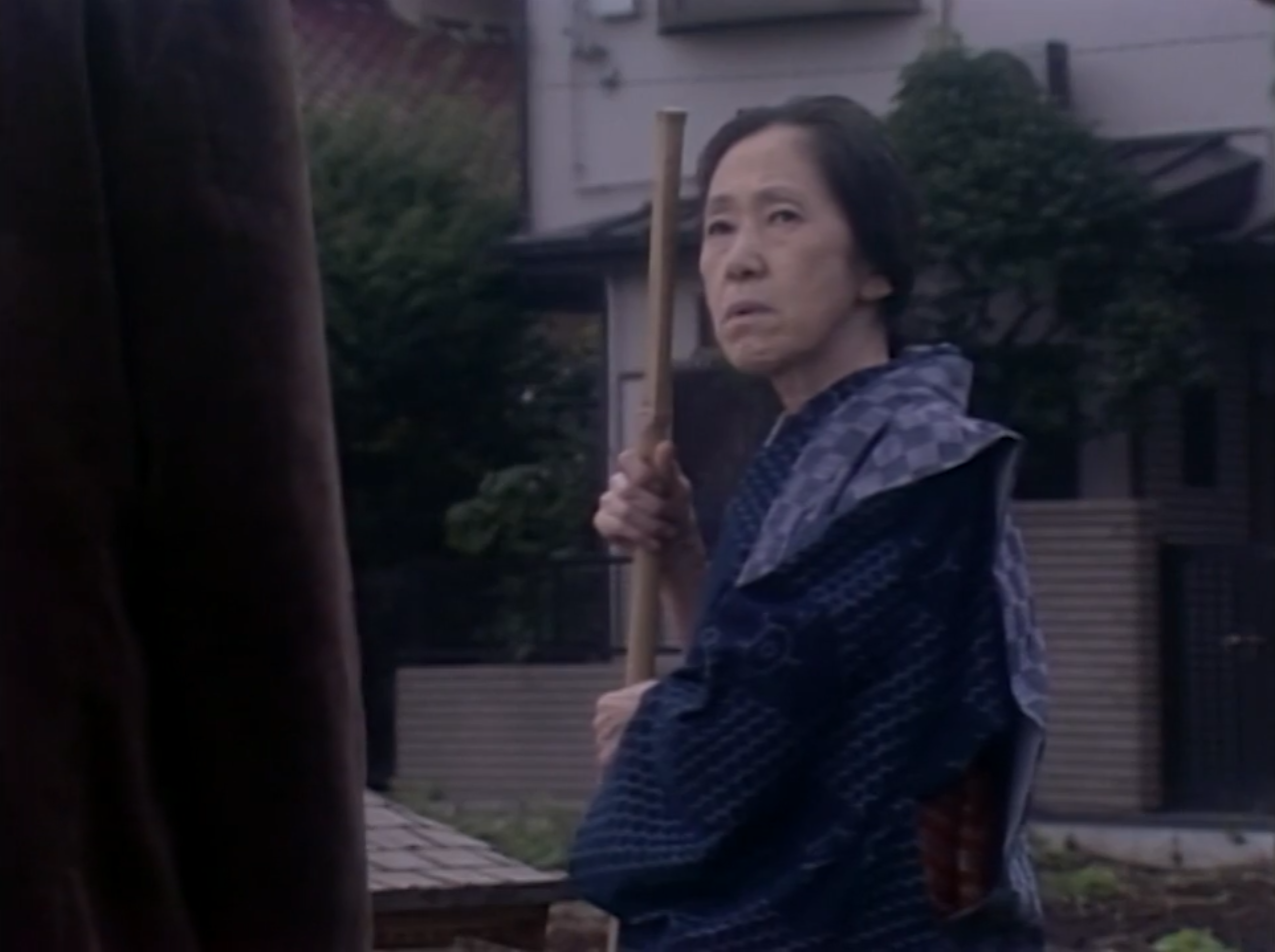
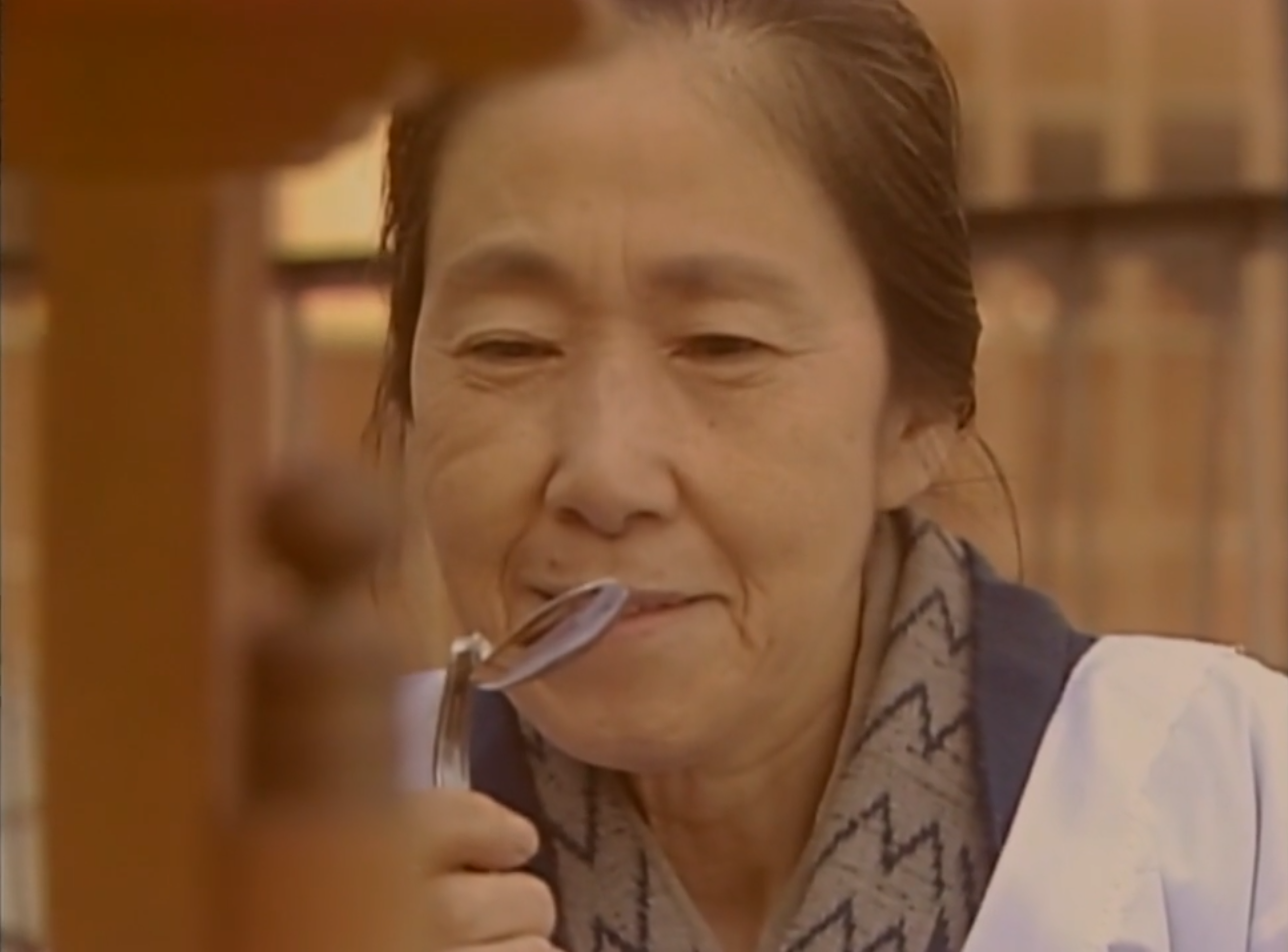
However, the actual strangest thing this episode presents us with is from the very beginning – that elderly woman, with the shrine? Wouldn’t you say she looks awfully familiar…?
- I’ve mentioned my thoughts on this one previously… ↩︎
- I couldn’t really think where else to put this, but, in this episode Naoto’s hair has taken a turn for the straightened (I’m pretty sure toyoetsu’s hair is naturally curly), which I suspect is because his actor began to appear in a supporting role in Ocha no ma (お茶の間) like two days after this ep aired. Based on the airdates for both episodes, and given how quick the turnaround for episode production in japanese television is, it’s likely he would have begun filming for that role at around the same time as this episode of NIGHT HEAD. I partly mention this because I liked his curly moptop (RIP), partly because I’m interested in how productions like this work, but mostly it’s because Ocha no ma is based on a Minetaro Mochizuki manga I’d never heard of! ↩︎
- There’s a couple of instances of this in this episode, including earlier with Naoto telling Naoya not to dwell on the past. The word use is literally ‘purasu’ (plus), paired against ‘mainasu’ (minus). I’ve opted to translate these as ‘positive’ and ‘negative’ forces for clarity, but the implication here isn’t just saying ‘that’s not a good thing’ in the generic sense, it’s implying a kind of psychic ticker tape between good and evil energy. Which is… interesting, given that in the first instance, Naoto is telling his brother not to talk about his feelings. There’s a perfectly good logic to advising against rumination, but it does make me wonder what the guy thinks about regular old talk therapy. ↩︎
- Which they haven’t shown yet, as far as I’m aware! ↩︎
- ‘Found family’ is pretty common, especially with raising small children – makes me wonder if this is a plotline that ever comes up in doujinshi! ↩︎
- Also why is she an amalgam of their two sets of powers? Did they not have an internal doc about how these things work?? ↩︎




Recent Comments