

Posted on July 27, 2026
NIGHT HEAD synopsis – episodes 2 & 3
trigger warning: graphic depictions of murder
Episode 2 – Obsession
broadcast date: october 15th 1992
Director / Screenplay:
George Iida (飯田讓治)
Naoto Kirihara – Etsushi Toyokawa (豊川悦司)
Naoya Kirihara – Shinji Takeda (武田真治)
additional cast can be viewed here
When we last left our two brothers, they were fleeing the scene of a bar room bust-up. Naoto – having failed to keep his cool while overhearing disparaging banter about psychic powers and frauds – also foolishly revealed his younger brother Naoya’s powers of touch-based psychic intuition. In addition to the gleeful patron who molests Naoya to test these skills, he is also briefly touched by a woman as she leaves. He is bowled over by the visions this brings him; she and her partner are murderers, and that brief shove left him doubled over in terror.
We begin episode two with this same couple, acting out the frenzied scene witnessed by Naoya: they shriek and argue and strangle a young woman to death. Reiko, the leader of the duo, reads as particularly unhinged. She beats and berates her companion, Jiro, who is cowed and frantic – though, in the end, he doesn’t seem all that unwilling to help.
Naoya wakes up, screaming, having relived the vision yet again. He gasps out, hyperventilating, that those two have killed five women – she believes that if she doesn’t kill, she herself will die. He collapses into sobs in his brother’s arms.
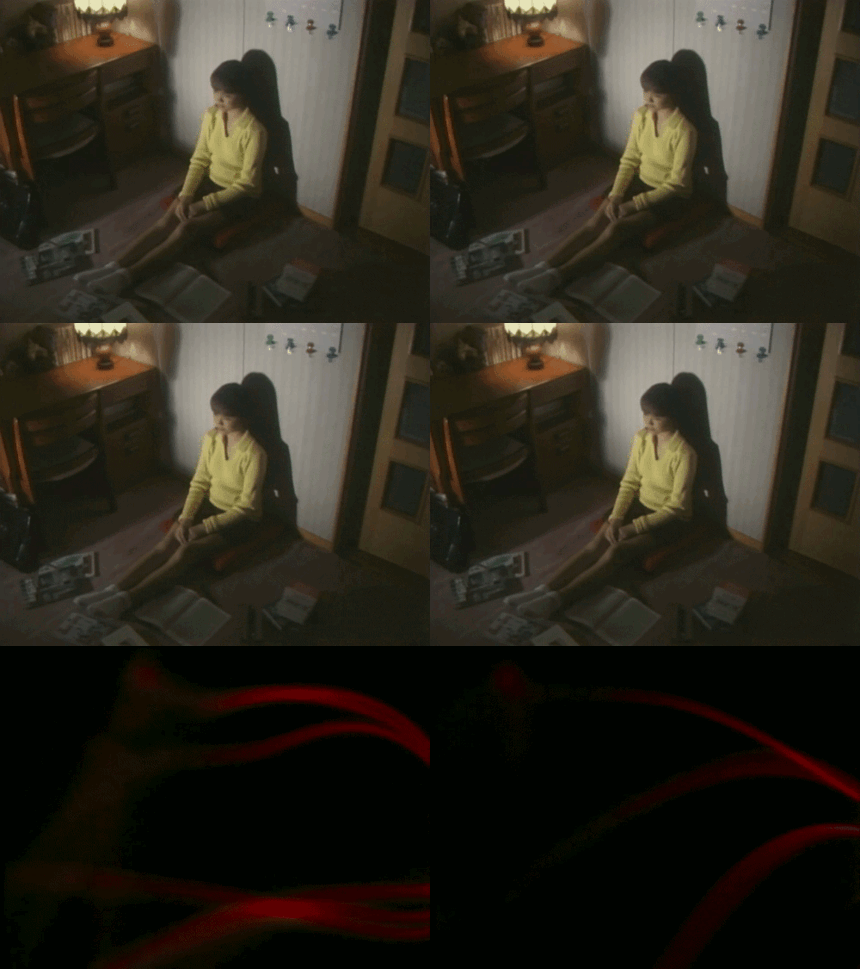
We cut to the bedroom of a teen girl – this is Shoko, the girl who we last saw in the library doing automatic writing, staggered by visions. She sits on the floor, contemplating. As before, a forest and an elderly hand overwhelm the screen. Quietly, she says to herself, “the barrier has been destroyed.” Electricity crackles the screen – her room is now empty. At 2:40 AM, Shoko Futami has disappeared.
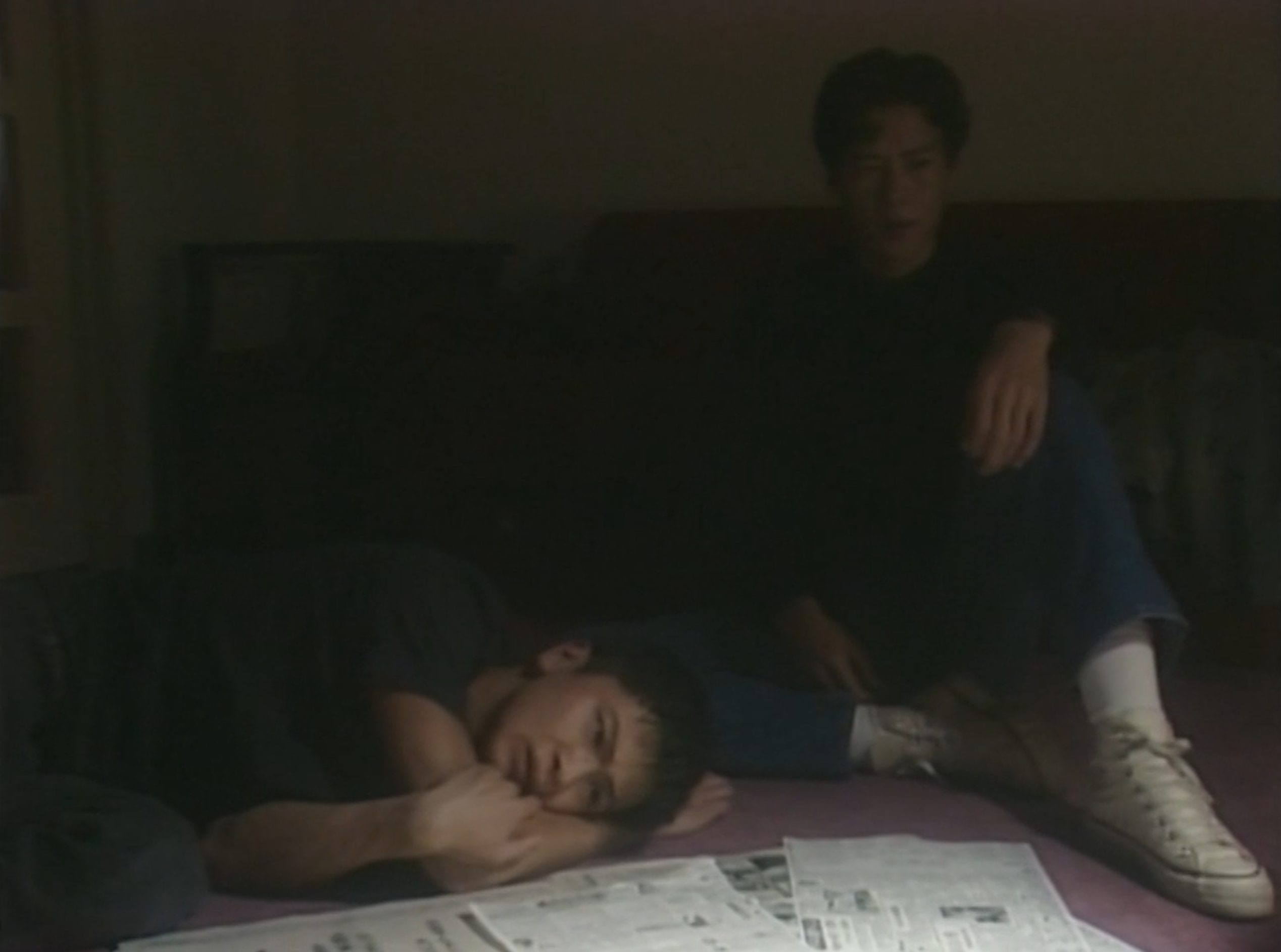
We see Naoto returning from a research trip to find Naoya incapacitated with fear, still suffering from visions of the murdered woman. After calming down, they discuss the newspaper articles Naoto was able to find. Four murders with the same M.O. have already occurred – strangulation of young women in the bathrooms of love hotels – but none describe the woman in Naoya’s visions. Naoya wonders if they ought to return to Mikuriya’s lab. He fears that, having broken the barrier, they will only draw in more negative energy – and with it, visions he will will never be able to escape. Naoto comforts him, but remains practical – there’s no guarantee that if they return the visions will cease. The only thing to be done is to try and stop the killers themselves.
After a brief interlude with our killers, Reiko and Jiro, who bicker over burgers, we return to Naoya who sits doubled over on a park bench. When Naoto returns with breakfast, they sit quietly together under the trees. It is a nice moment of calm for them, and I find myself somehow tickled at the sight of them sitting there eating croissants.
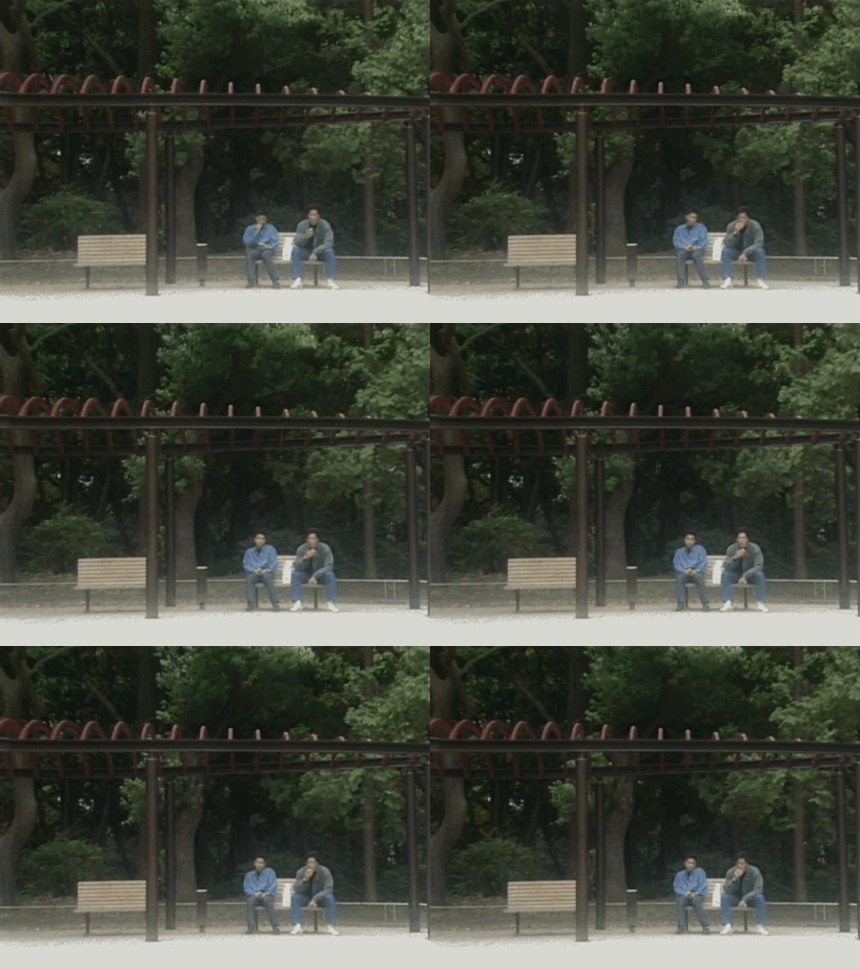
They begin to discuss plot relevant exposition – they talk around the role played by an elderly man, Misaki, which was only revealed upon his death (though they don’t yet go into specifics). They are approached by another elderly man in a wheelchair who cryptically – with psychic resonance – says this: “There is a flow. It flows like a big river. The destruction of the barrier was also part of that chain of events. There is a reason why negative forces are drawn to you. If you do not run away, you will find the answer.” He points directly at Naoya before sighing blissfully and then falling asleep.
Naoya begins to hyperventilate before falling to his knees. The vision returns to him – yet this time, he is himself inside of it – viewing it as if in the room with them. We see Naoto in the park, unfazed, alone with the old man – Naoya has disappeared. In his vision, Shoko also appears. Staring at the scene, she quietly murmurs – “This is not the past.”
With a sudden realization, Naoya leaps to his feet, rushing to the window of the love hotel – he looks at the skyline, doing his best to memorize the location before returning back to the park. He tells his brother the reason the woman in his vision hasn’t appeared in the newspaper – she’s not dead yet, and his vision is of the future. Naoto takes this in stride, immediately responding that they’ll have to save her.
We see our killers brutally abduct the young woman – Shiho – while the brothers try their best to find them. Naoya wonders why his vision this time is so strong, and Naoto thinks that it’s because Shiho may have untapped psychic powers herself, and could be subconsciously crying out for help. As they get closer, the timeline of the vision begins to overlap with the present, and Naoya finds himself living out Shiho’s pain as she’s strangled.
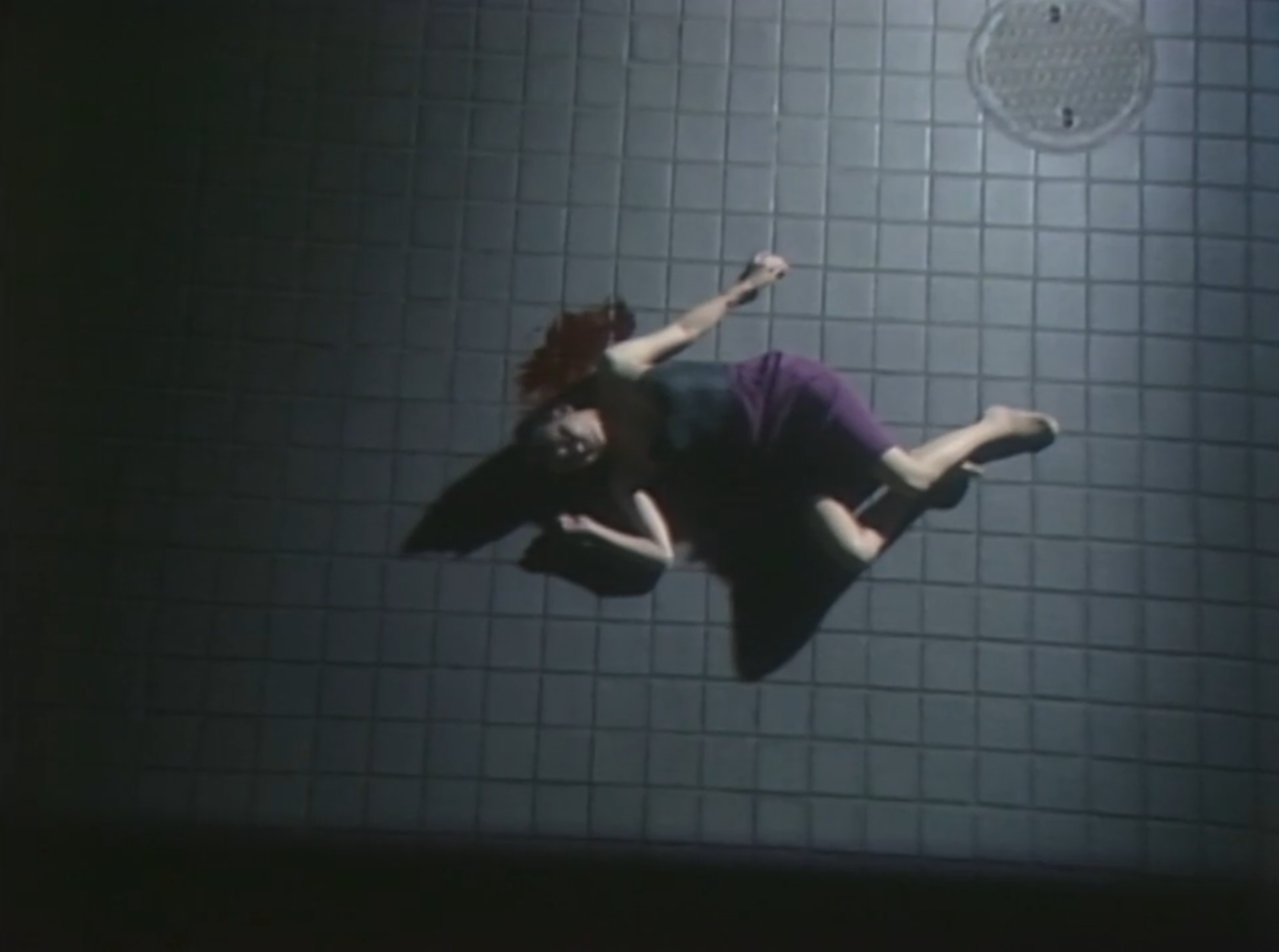
They scramble up to the hotel room, breaking the lock, and manage to halt the duo with a pretty ineffectual “Stop it!” Reiko and Jiro awkwardly stare at them, surprised, while Shiho flops to the floor. Reiko finally rises, seemingly untethered from reality, and pushes past them to the window. Naoya checks on Shiho, who is alive, while Naoto watches the two murderers shriek at each other for a while before Reiko leaps out the window, falling to her death.
After fleeing, gasping and clutching their sides, Naoya asks his brother – “We saved someone? With our powers?” Ambulance sirens ring out as he turns to Naoto with breathless relief. “It was painful, but it turned out alright. It turned out alright…”
———————————————
Episode 3 – Fake
broadcast date: october 22nd 1992
Director: Masato Hijikata (土方政人)
Screenplay: Naoya Takayama (高山直也)
Episode 3 opens on a glowing neon cityscape while the brothers people-watch from a pedestrian overpass. Naoya, sounding glum, says this to his brother – “There are so many people here… but you’re the only one I can really talk to.” Naoto reassures him that things will be different from now on – that’s why they escaped – though Naoya doesn’t seem convinced.
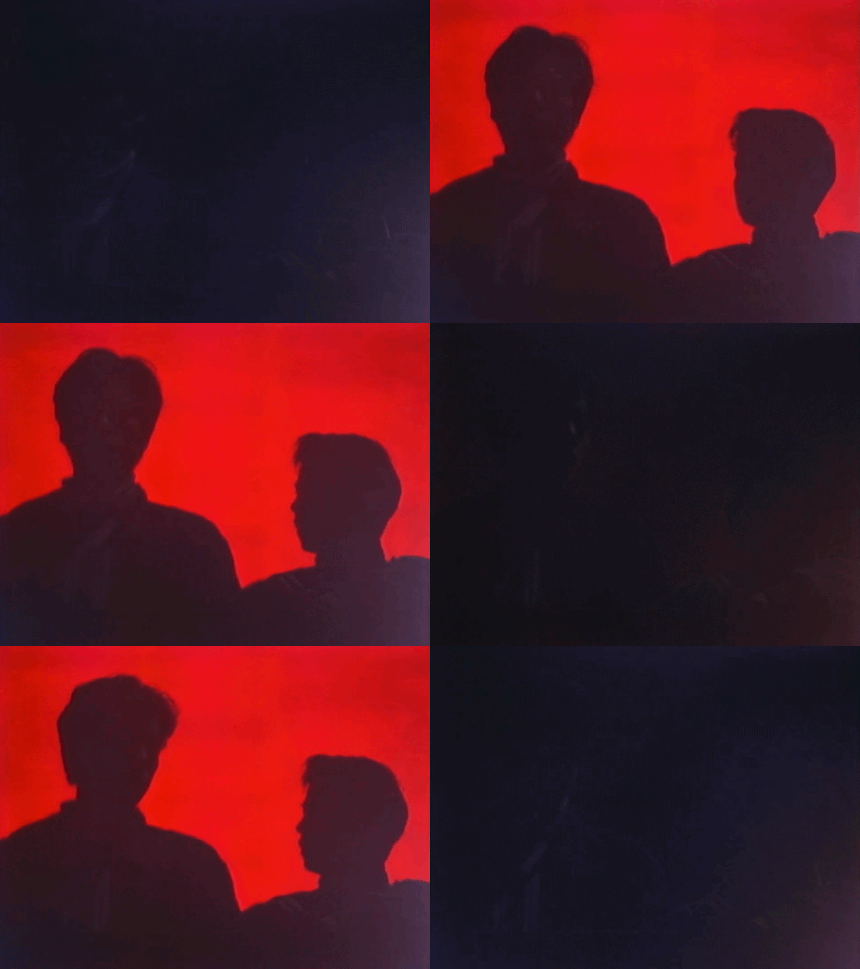
All of a sudden, he gasps – he felt a connection, however brief, with someone else who has the same powers. “They’re suffering too,” he says – “wondering why they ended up with abilities like this.” Cautiously, he turns to his brother – wondering aloud if he might be able to become friends with this new stranger. He sense that the call is coming from a bus passing underneath, and they head out to catch it.
On the bus, we see a bunch of party animals playing music out of a boombox and chatting raucously. We see several of them watching a young man – Toshihiko – attempting to shakily raise a can of coffee to his lips before dropping it, much to his chagrin. A friend in sunglasses – Toru – comments that he’s surprised a slacker like him would work so hard on his rehab. We learn that this young man was in a motorcycle accident and is still suffering from the aftereffects. Through the general noise and chaos of the other passengers, we see the lads are also on the bus. They quietly wonder who it was that called them, and why they can’t sense them now.
Much like the bar scene in episode 1, the conversation amongst the passengers turns to Miracle Mick. He has apparently failed to show up for a television program, and is now missing. The boisterous youths wonder why this is – is he drumming up publicity because his career’s on the outs? Have his powers disappeared? Rolling her eyes, one young woman – Yui – grimaces that there’s no such thing as psychic powers in the first place. Naoto and Naoya turn to look at each other, knowingly.
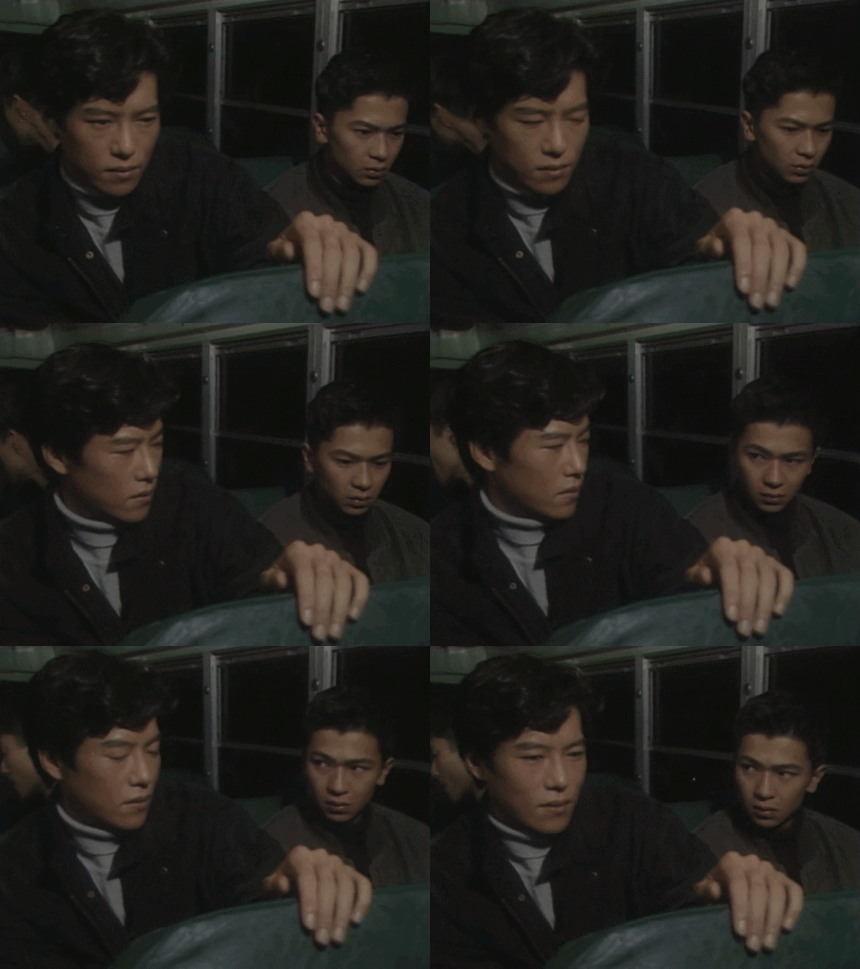
We now learn that Mick claims to have healing powers, as Toshihiko morosely wishes he could get him to heal his arm. Another girl, Kumi, gleefully interjects – did they know Mick used to be a magician? “Before he made it big, he ran a magic supply shop called ‘Miracle House’”. Naoya continues to stare nervously at his older brother, who seems unmoved. “Don’t worry,” he says. “I’m better than I was before.”
We cut to another passenger, an older man with sunglasses and a baseball hat pulled low, who appears to be traveling incognito. While white-knuckling it through the banter around him, the glamorous young woman beside him – Kimie – chain smokes and calls him a coward. “You try to skimp on the taxi fare and that’s how you end up sharing a ride with creeps like these.” The man hisses at her that the bus is less conspicuous, and she glowers back again that he’s spineless. She scoffs, “You’re spooked just because one person committed suicide after an advice session?” The man flounders – “Just a suicide? How can you talk like that? A person died – someone actually died.” She seems unperturbed, replying that someone named Okubo said he’d cover it up. The man responds, “I never wanted this. Okubo and the others cooked up this whole ‘psychic’ act … ‘life counseling’ where I predict the future? It’s a total joke.”
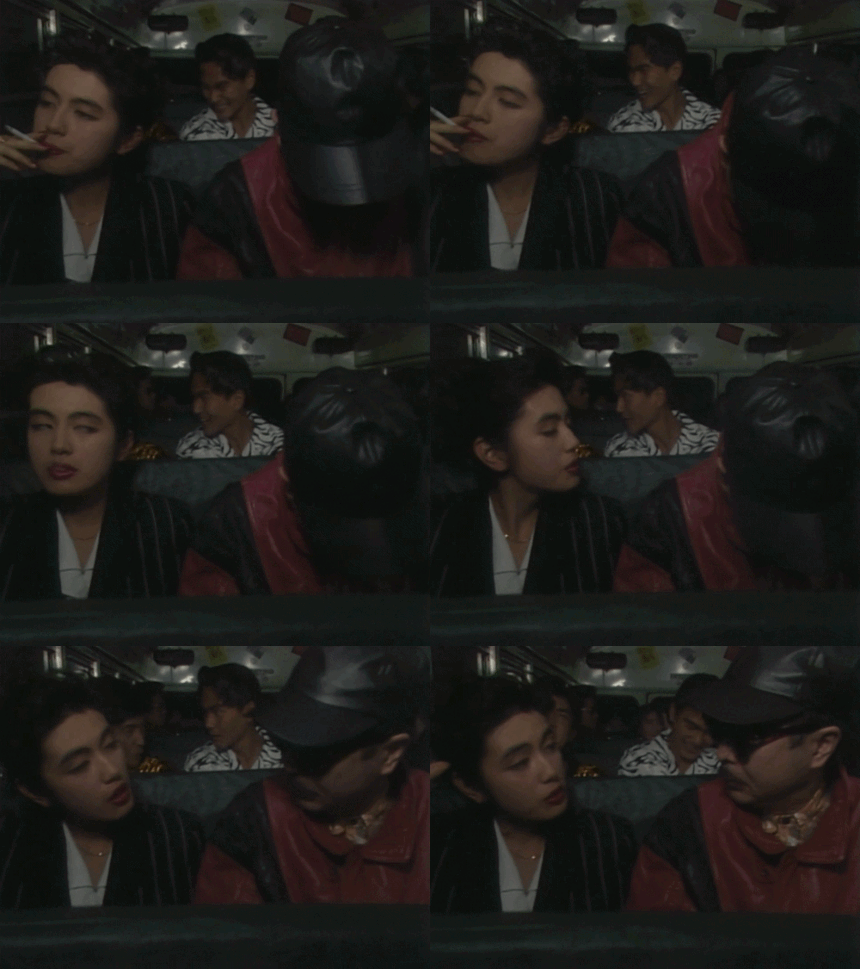
We see the lads behind him – “That’s Miracle Mick … I guess we’re connected by fate,” Naoto says with a smirk. Sarcastically, he asks if what Naoya sensed was Mick’s “power”, to which Naoya vehemently says no. Yet, they wonder – why is the one who did call them shielding their power?
Mick, in a reverie, thinks back on a conversation with his manager Okubo. In his own recollection, he told his manager that he wanted to quit – that he was a magician, that tricks like spoon bending and making things float are alright so long as you’re not claiming to be an actual psychic. “Things like ‘psychic life consultations’ or healing people? That’s just too much … I’m not a god.” His manager scoffs, reminds him of all the money he’s put into him, and reminds him that he hooked him up with Kimie. But all that will be gone once the money dries up. As Mick grimaces at his own memory, Naoya comments that he’s running away – “He doesn’t look happy at all.”
As the bus crowd keep up their rowdy banter, Kimie becomes increasingly fed up. Eventually she stands, turns, and yells at everyone to shut up. This does nothing, and Mick begs her to stop, which backfires. Kimie blows up at him, shouting – “Don’t you feel frustrated? Come on! You’re the guy who pulled in a 30% rating for a prime-time special! You’re a star – act like one, idiot!” At this point, the rest of the passengers notice who Mick actually is. Through all the fuss, the brothers quietly look on like outsiders on a class trip. Naoto quietly asks his younger brother if he’d like to get off the bus – “You don’t want to see what happens next, right?” But Naoya wants to stay – he’s sure that the person who called out to them is there, on the bus.
The young man in the sunglasses, Toru, says this is a great chance for them all to get a private spoon-bending performance from Mick. The group agree, delighted, and even Kimie seems to find it amusing. Mick gives in almost immediately, with a quick-change into his Miracle Mick hat and stage persona, and begins to ham it up with big gestures. But the tension is broken by Toru, who calls for them to stop – he steps forward with a shit-eating grin, grabbing the spoon off Mick before snapping it himself. As the trick is revealed, everyone laughs uproariously – except for Toshihiko, the boy with the injured hand. Toru turns to Kumi and asks if he can borrow her bracelet which is made out of a recycled fork, which he straightens again – he proposes that Mick try and bend this instead. They all agree to place bets, everyone betting against – including Kimie. If Mick can’t bend it, he’s paying.
The crowd starts up in a rousing chant – Mick! Mick! Mick! – while the man himself flounders. Full of quiet menace, Naoto asks his brother – which does he think is better? Tensely, Naoya asks what he means. Naoto’s tone gives way to rising anger as he clarifies – “Better as-is? Or better if it breaks?” His younger brother, immediately worried, tells him not to do it – that it’s better if he doesn’t – but the surrounding noise all cuts out as Mick flusters at the front, the crowd clapping and jeering. Naoto responds – “Everyone here is scum. It doesn’t matter.” His frustration is palpable, though he appears to almost be laughing as his brother begs him to stop.
The tension finally breaks when Mick is unable to make the fork bend – the crowd scoffs, and Yui repeats: “I told you, there’s no such thing as psychic powers.” But with this statement, Naoto loses it – snapping the fork in Mick’s hand. Shock and amazement spread across the bus, while Naoya tells off his brother, who apologizes without seeming all that remorseful. Suddenly, Naoya feels something – he can’t tell who it is, but the person who called to them is angry.
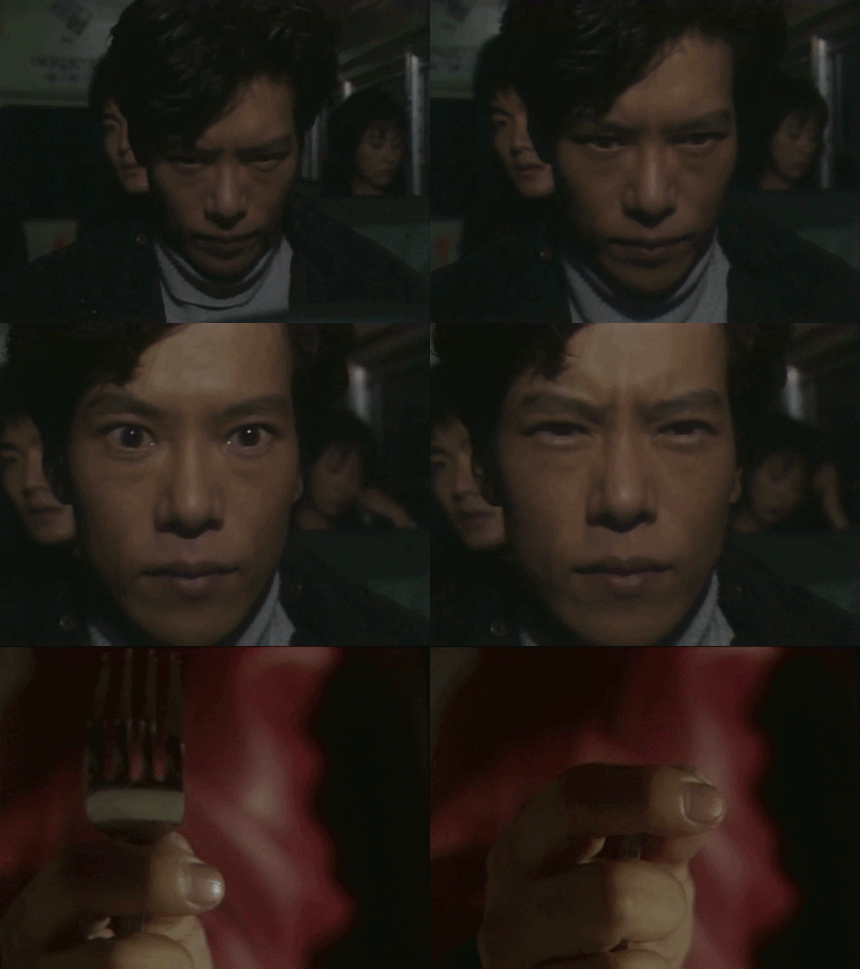
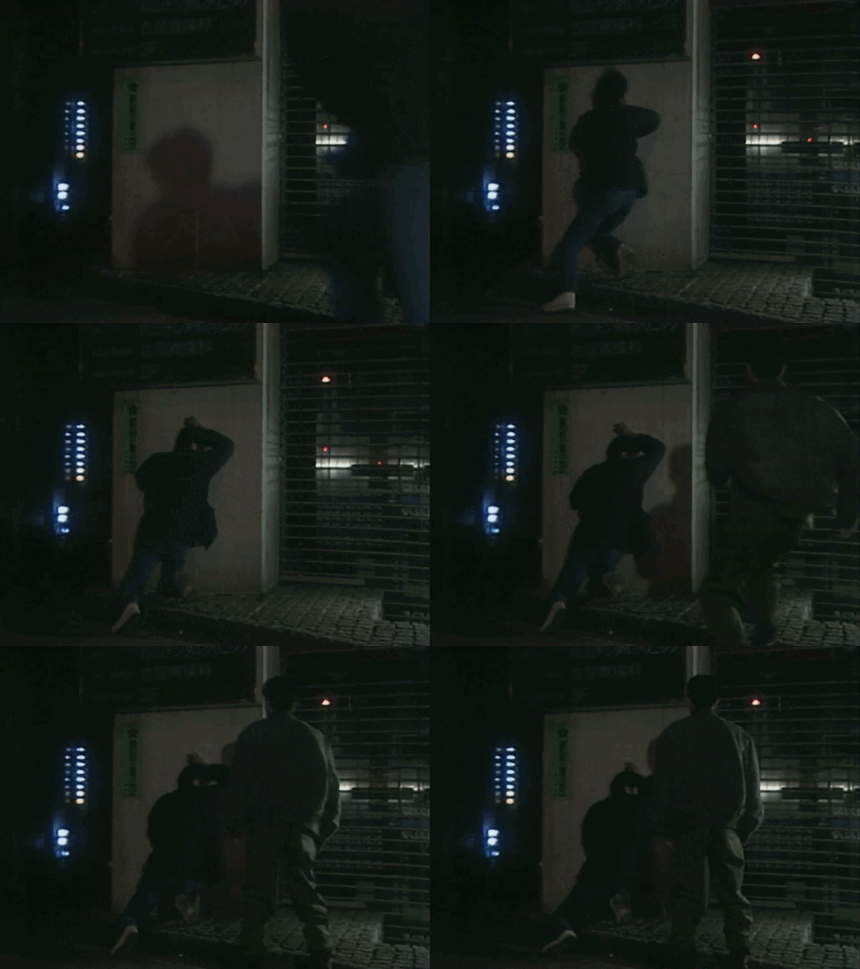
Toshihiko leaps up, overjoyed that psychic powers appear to be real. He crowds up to Mick, who is overwhelmed that the fork actually broke – but when asked to confirm that his powers are real, he agrees without thinking. But now that he’s ‘confirmed’, Toshihiko begins to pester – beg, even – for Mick to heal his arm. Mick is thrown for a loop, and claims he can’t do it – but rather than admitting it’s something he can’t do at all, he says he can only heal congenital problems. Toshihiko collapses in tears, while the young man in sunglasses, Toru, rises. Angrily, he says to Mick that he’s got money and he’s willing to pay – Mick demurs, insisting it must be congenital, to which Toru pulls of his sunglasses to reveal an ocular impairment.1 Toru becomes increasingly agitated with Mick, demanding he heal his eye – seemingly because of the bravado of Mick’s claims rather than any desire to actually be healed. Mick relents as Toru screams in his face, admitting he’s a fraud, but things have escalated too far. Naoya seems surprised and shocked at this turn of events, and fails to intervene as everyone piles onto Mick, kicking him furiously while he begs for mercy. As the bus screeches to a halt, Naoto leaps off – Naoya following soon after.
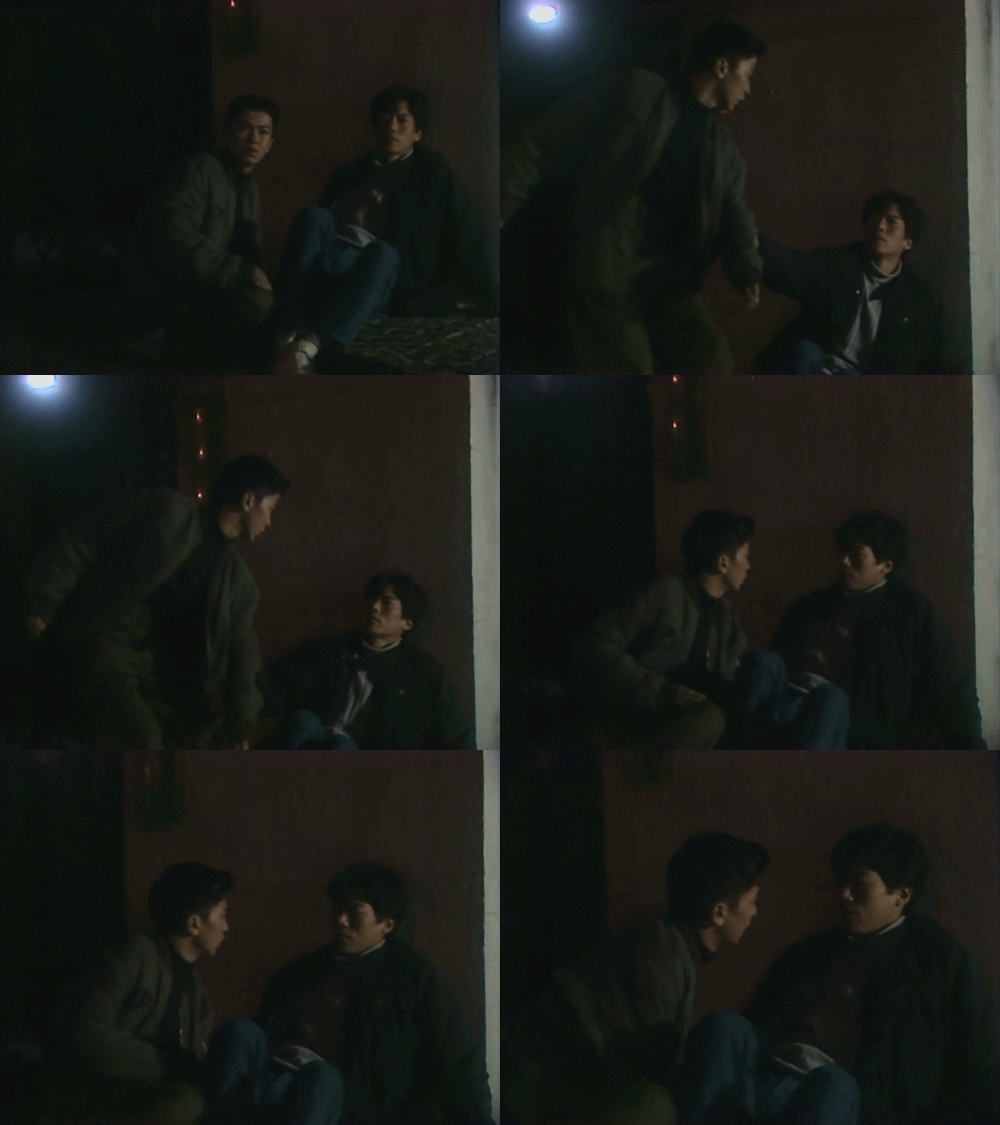
Naoya finds his brother collapsed against a wall, sobbing. Despite the dramatics, he seems to show genuine remorse for his actions – “I did something stupid again … Because deep down, I have this urge to prove my strength to everyone…” he even goes so far as to call himself ‘scum’, using the same wording as he used earlier for the gang on the bus. A shadow passes over them, responding that he’s absolutely right. The brothers turn to see Yui, the passenger who kept insisting that psychic powers aren’t real. Naoya stutters, shy – is she the one who called out to them?
She scoffs. “Called out to? Don’t be ridiculous. I just felt a bit of sympathy because your loneliness seeped into me. I didn’t actually call out to you.” With this, Naoya seems crestfallen, but she continues – “What do I stand to gain from knowing you guys? Sure, I don’t have great power like you do, but it’s already hard enough having to hide the power I DO have … If you had done nothing, Mick would just have been a little embarrassed.” At this, Naoto winces, apologizing. Before turning to go, she says one last thing – “Just so you know, you aren’t the only ones dealing with a handicap.” Naoya gets up to run after her, but Naoto pulls him back down, shaking his head. “Don’t leave me alone. Not now.”
———————————————
A couple of fun episodes – episode 2 ties particularly well with the first. It was nice seeing Naoya get a win, as well as showing us more of his powers (particularly the toll they can have on him.) Credit to Shinji Takeda especially, because he played the distress with aplomb.
I’ll address the use of this term briefly, but it’s actually both Naoto and Yui who use the phrase ‘ハンディ(handi)’ – literally, from the english – meaning ‘handicap’ to describe their powers. Perhaps it was meant in the same way as in games and sports, though I doubt it, given the melodrama and the intentional use of a character with an impactfully non-specific disability. But also, it was definitely the era for the term to be used the other way – the Americans with Disabilities Act was only passed in 1990, and while that wouldn’t directly impact Japan, it did raise conversations worldwide on the subject, and the english loanword may well have been thought of as less discriminatory than what it was used in place of. Am I an expert on disability rights buzzwords in Japan in 1992? No, but I don’t think Naoto would be either. I wonder if he would even know the term at all, given how sheltered they’re supposed to have been. In which case, the double use of the word is just plain clunky – but I can’t lay this one on George, since this episode was written by Naoya Takayama.
Naoto seems to show the most regret not at causing the beating of an old man, but at his prank setting a chain reaction in motion that agitated someone who was passing as able-bodied. He can certainly relate to Toru, someone who also becomes violently angry hearing others speak callously about something they’ve always struggled with, similar to his own explosion in the first episode. I think there’s a really interesting conversation that could be had around the ways that this show engages with limitations put on those who have psychic powers and how this can be equated with ‘normal’ disabilities – whether it manages it here, I’m not sure. Do I think there’s validity to the comparison? Perhaps, though I think that’s a theme they could have explored better without needing to resort to the direct use of the term. But I do think the experiences of another person struggling – and angry about it – can certainly resonate, regardless of the terminology used.
A separate note on outdated terminology: the bus that they’re on is noted as being a ‘disco shuttle’. Why this particular place gets its own shuttle I couldn’t tell you, but I do think I would like to see an episode where the lads go to the club – whether they would like it is another matter. Who knows, maybe they’d have a nice time for once!
It’s good to see an episode with some growth for Naoto – or, his pain at a lack of growth. His powers can often come off as OP, so I appreciate that we’re seeing vulnerability as well rather than leaving Naoya with the brunt of the emotional toll. It’s also interesting to note that in both of these episodes, the lads have encountered other psychics. How common is this meant to be? Is this something that will be explored? Guess we’ll find out!
- This seems to be some kind of Ptosis, perhaps from Ankyloblepharon or Anophthalmia, though I’m not an expert (and this is likely just movie magic, and thus, not really possible to ‘diagnose’). There’s something that rankles with me about big ‘reveals’ like this being used for shock – while I see the character justification in this case, we, the audience, can still take the time to know more :^) ↩︎



Recent Comments