

Posted on April 27, 2026
you should be watching: The Sealer
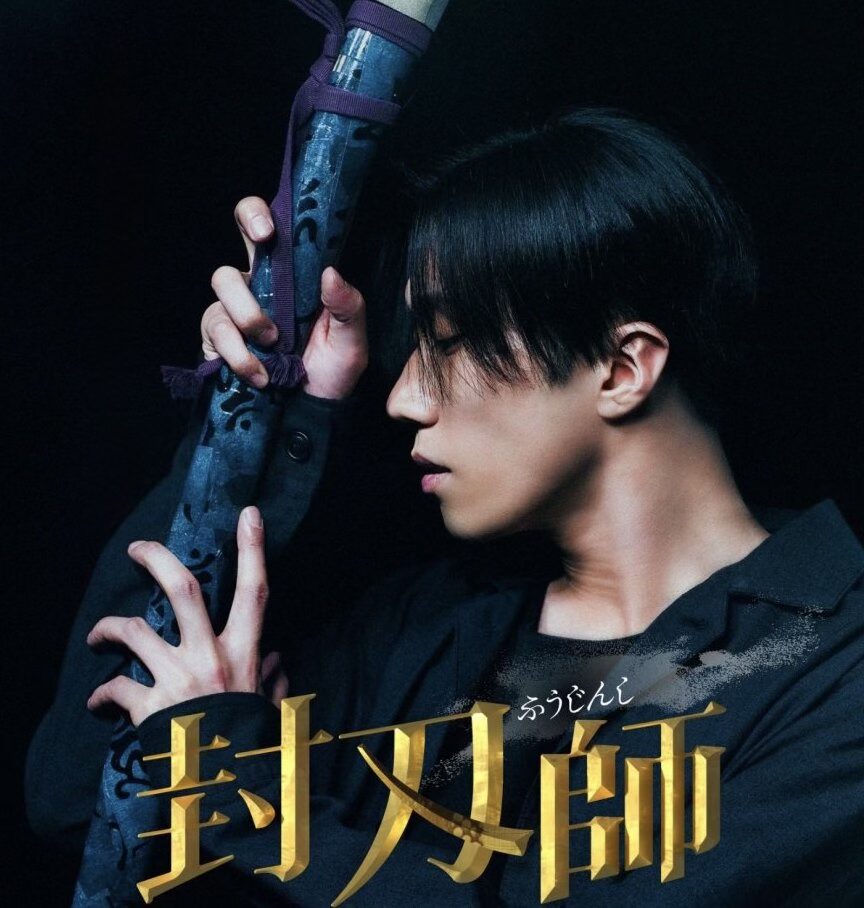
I hesitate to call 2022’s The Sealer (aka fuujinshi) a “hidden gem” only because I wish it wasn’t hidden at all. Are you looking for an urban fantasy series with excellent fight sequences featuring industry greats? Then I don’t know how you haven’t seen this already – but read on to learn more!
Our protagonist, Kakeru – the titular ‘sealer’ – is called upon to deal with those who wield weapons known as blades of filth that grow from the darkness in our hearts. Upon gaining a blade of filth, the character will lose their mind before going on a murder spree – followed, of course, by a kick-ass fight with the protagonist. He has a neat fighting style that relies on a primarily defensive use of the scabbard of a sword to subdue the troubled characters – initially, this means that our sealer must witness the agonies and resentments built up as their ‘filth’ with every parry. This is a unique, if stressful, way of going about things, because the resentment accrued isn’t necessarily justifiable, nor does it make the characters (and their murders) redeemable. This leaves a deliciously uncomfortable gap, at times, between the crushing, masculine vulnerability of the first episode’s salaryman, devastated by an office bully*, to the sheer delusional petulance of a professor who murders a pack of co-eds because he felt his work wasn’t given the praise it deserved. When we see a cop coded as being a wholly ‘good’ character go ham on a squad of yakuza, we cheer – yet her character is, notably, conflicted (and we are also given space to ponder the morality.)
Speaking of that cop, it’s absolutely worth mentioning that she’s portrayed by the inimitable Rina Takeda – THE high kick girl!!! – an action luminary who lived up to her reputation. Similarly, the inclusion of Tak Sakaguchi, another action superstar (best known to me for kamen rider kabuto) along with the incredible stunt coordination of Minoru Tomita (best known to me as the guy who did the GARO fight on the suspended railway) left me delighted, and completely befuddled. With such incredible action sequences, I am somewhat shocked that I don’t see much of anyone out there talking about or recommending this show. I went in expecting a more spare, supernatural-to-edgelord type experience (a preferred genre, mind you), and walked away electrified by its action performances.
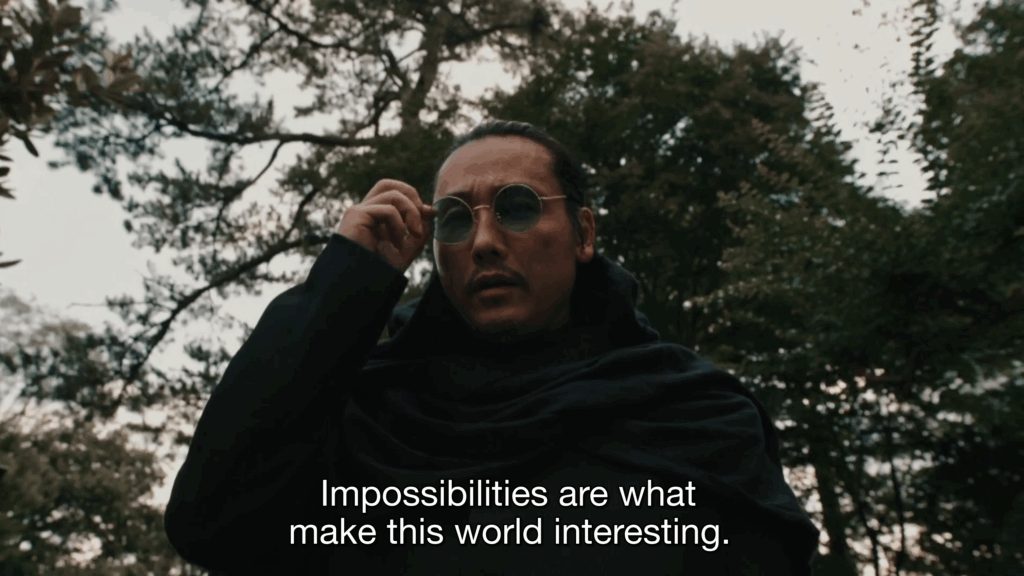
The cast of byplayers is also largely good fun – Taichi Saotome, who plays the protagonist, is a household favorite after his roles in Don’t Say Mystery and Knockin’ on Locked Door, elevating the campy melodrama of each to new heights. In this, he shines – with limitations. As the sealer, he must take on some level of the ‘filth’ every time a blade is put away, eventually permeating his body to the point of saturation. we see his pain as the filth gradually builds up, and it certainly feels real – though, we aren’t given much beyond that. As usual, I would have liked to see more of his daily life, his living space, his meals, his interactions with other characters… on the plus side, this is a desire I had because I liked the world and characters they crafted, but I wanted to see more!
Along with Kakeru, we have his team at Sealer HQ, including his partner, Sho. His role is ostensibly that of backup – but not for battle, as such. spoilers, but, he’s meant to stick with Kakeru in the event that the filth overwhelms him – to take him out before he can turn into a monster himself. As presented, this is a melancholy bond – for his partner to also be his future executioner. Aware of Kakeru’s health and wellbeing through cohabitation, training, a witness to his every battle as the very thing he must seal away poisons him in the process. I’m fascinated by the nuance of Sho checking in with Kakeru – is this because he cares, as a friend? or as part of a lifelong bond that will be, by its very nature, its own end? Yuya Endo, the actor who portrays Sho, does a serviceable job – I’ve liked him in other projects as well, but I’d say the role as written is more interesting than his actual performance, which was somewhat reserved. He is at his best when he stands by during fights as a sort of sarcastic audience to the action on display – but, I also enjoyed his relationship with Hajime, his father.
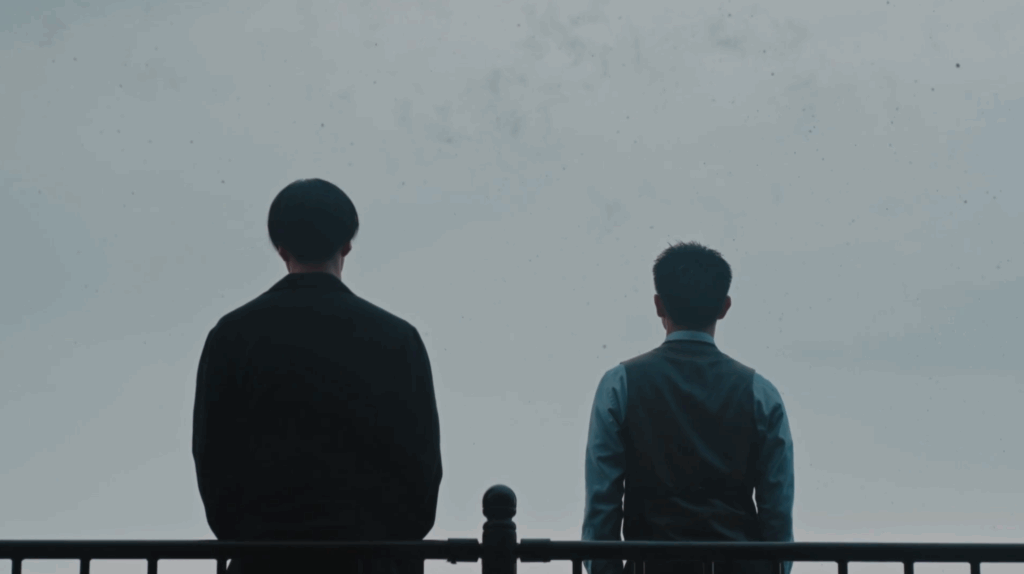
Hajime, as portrayed by Jun Hashimoto (another household favorite), brings a finely balanced performance that can handle the weightiness of theme while lending a sense of unexpected, but welcome, humor. I am most fond of him as the bookshop-owning uncle in Shiori and Shimiko, but previously I was most familiar with his performance as the villain Hideo Akaishi in kamen rider revice. It’s worth noting that another revice alumni (Toshihiro Yashiba – aka Weekend Dad) also gets a cameo role as the newspaper editor in chief, which he plays with aplomb.
in terms of negatives, the show’s initial premise – that the filth of the blade wielders’ resentments is directly related to their rampages, and is shown to Kakeru as they fight – falls apart pretty quickly. I had been intrigued when a pizza delivery guy (played by Yuki Tamaki) starts murdering customers along his route – where we could have seen a scathing commentary on how gig economy workers are mistreated and dehumanized, instead they end up dropping the flashbacks entirely, and rely on the notion that the character just… loved killing to begin with!
After reading Gabriella Lukács’s ethnography Scripted Affects, Branded Selves, I’m somewhat more aware of the level of overreach that television producers in Japan can have in interfering with the content of a drama that has already been okayed. She mentions that meddling with plotlines or scripts is the norm, particularly regarding what is perceived to be (by the largely conservative upper management and execs) to be too controversial, or outside the purview of what advertisers may want. While this book was written in the early 2000s, and therefore doesn’t address the ‘gig economy’ as such, it discusses the comparable emergence of the ‘freeter’ (freelance or part-time workers) amidst the rise of neoliberal economic policy in Japan. In this context, where “producers seemed to be in agreement that they did not want to upset their sponsors by playing up concerns with the insatiable appetite of the new economy for flexible labor” (p.161), Japanese dramas have been noted for valorizing the precarity of underpaid, overworked and tenuously protected non-contract employment as “autonomy”. As such, it wouldn’t surprise me if a plot involving a critical (or perhaps, murderous) look at the impacts of the gig economy on workers might be nixed before it could air – especially if, say, you had JustEat or Deliveroo as a sponsor. The general outcome is that the fights, while still phenomenal, become less episodically character-driven – but it’s early on enough that it doesn’t impact the show all that much.
To be honest, if you haven’t seen this already, you don’t even have an excuse – it’s free on viki! what the heck are you waiting for!!!
* in a star turn from kamen rider gaim himself, Gaku Sano, feat. kamen rider agito’s Toru Hojo/Jun Yamasaki




Recent Comments